
01
Charcoal, copper and plain water
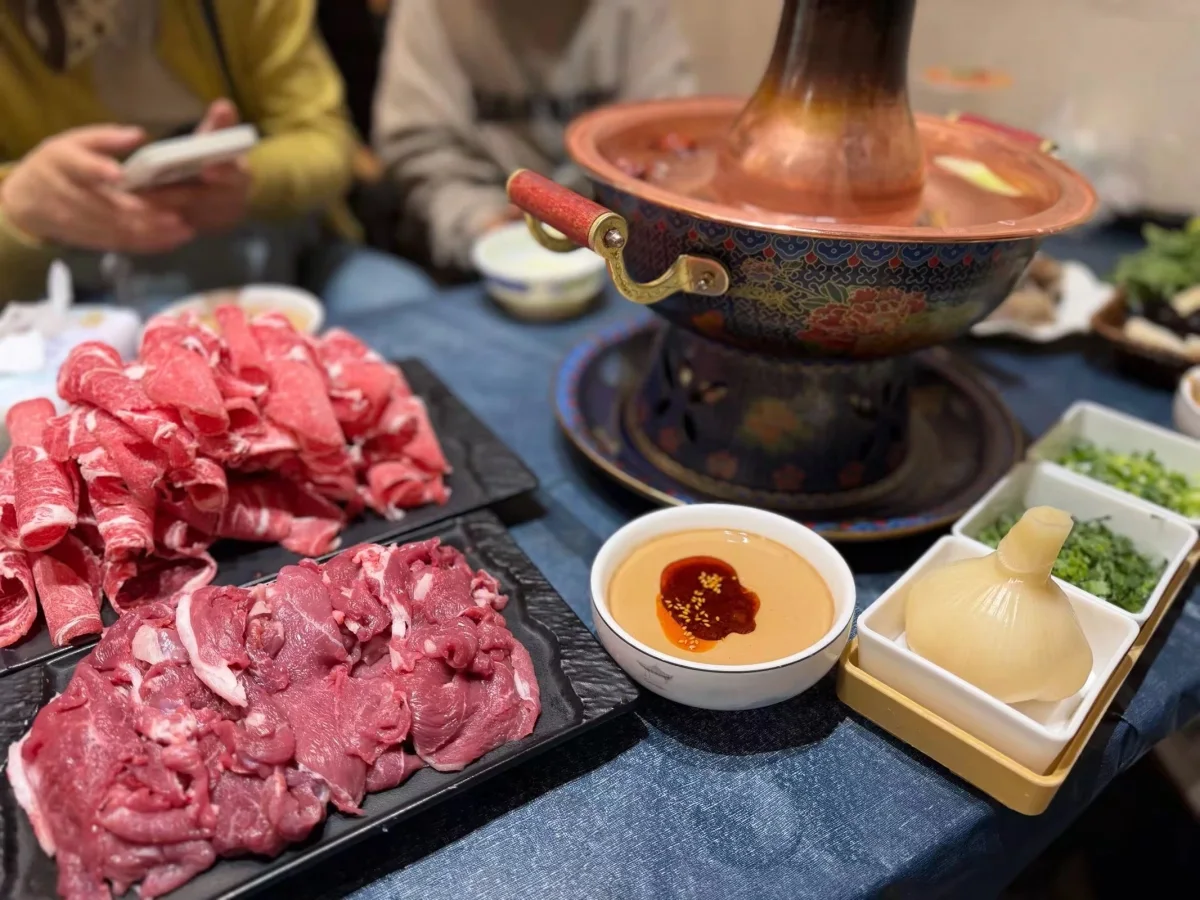
A head of sugar garlic is a must on a Lanzhou hot-pot table.
In the middle of the table, in our photograph taken before the meal began, stands a copper pot whose bowl and stand are enamelled blue and painted with flowers, with a tall copper chimney through the centre, where the charcoal burns. Beside it are two black plates of lamb: one of thin rolls with fat curling through them, one of flatter slices cut by hand, deep red and lean. In front sits the dip, a bowl of pale sesame paste with a pool of red chilli oil and sesame seeds in the middle, and next to it a whole head of sugar garlic and two dishes of chopped scallion and coriander.
Nothing goes in the water but the meat. There is no spiced broth to taste of before you start; the soup is whatever the lamb makes of it. A slice is held in the boiling water with chopsticks until it changes colour, a few seconds for a thin one, and then dragged through the dip. The vegetables go in only when the meat is finished.
The plates themselves are part of the reputation. Lanzhou shops pile the meat high with nothing hidden underneath, and fresh-cut lamb arrives as a heap of slices weighed by the jin rather than a neat fan of a few pieces.
02
Fresh-cut from the hind leg
The busiest shops in 2025 and 2026 sliced Minqin lamb from the hind leg to order.
The shops that Lanzhou people argue about sell fresh-cut lamb, 鲜切, sliced by hand from meat that has not been frozen. The usual cut is the hind leg of a wether, 羯羊, a castrated male. Before slicing, the cooks strip off the outer membrane and dig out the lymph nodes. One leg yields only a little shank, 羊腱子, so where a shop sells it, it goes to whoever comes first.
Where the sheep come from is printed on the menu. Minqin, a county on the edge of the desert north of Wuwei, sends lamb to Lanzhou’s hot-pot shops; so do the Tan sheep, 滩羊, of the drylands along the Yellow River towards Ningxia, a breed prized for meat that tastes of lamb without being gamy. Beef, when it is offered, may be named too: in 2025 one shop’s came from yellow cattle raised in Kangle county in Linxia.
Frozen rolls, 卷子肉, are still on every menu. They are cheaper to buy and quicker to cook, curling in the water the moment they change colour, and most tables order a box of rolls as well as a plate of fresh-cut meat. Fresh-cut slices are thicker and chewier and taste more of the animal; they are ready as soon as the water comes back to the boil.
Lanzhou’s fresh-cut shops multiplied in 2025, when several of the busiest were charging 58 yuan a jin for fresh-cut lamb, a price at which one shop barely broke even.
03
The two-thing dip, garlic and tea
In Lanzhou the sesame never comes alone.
The dip is sesame paste, as in Beijing, but Lanzhou tops it with chilli. Ask for 两货, liang huo, “two things”, and you get sesame paste and chilli sauce stirred together in one bowl. Even the plain sesame dip arrives with a spoonful of red chilli oil floating on top, as in our photograph. The best shops grind their own sesame paste and make the chilli oil hot, pouring oil over the chilli flakes shortly before service, which is more fragrant than cold chilli oil.
A shop’s dip is usually mixed in advance and costs a few yuan a bowl; in 2025 it was 5 yuan. Diners then add what they like at the table: a little sesame oil, chopped scallion, coriander. Some shops serve a split bowl, sesame for the lamb on one side and a sweeter, spicier shacha sauce for the beef on the other.
Then there is the garlic. A whole head of sugar garlic, 糖蒜, garlic pickled in vinegar and sugar until it is sweet, sour and no longer sharp, sits on every table. Lanzhou people peel a clove and bite it between slices of lamb. There are two kinds: white sugar garlic pickled in white vinegar, as in our photograph, and black sugar garlic pickled in darker rice vinegar.
To drink, many Lanzhou tables order sanpaotai, 三泡台, the local gaiwan tea, a lidded cup of green tea with rock sugar and dried fruit that is topped up with hot water through the meal.
04
Lamb-tail fat, then four vegetables
The order of eating is fixed.
Before the first slice, many shops hand over a piece of lamb-tail fat, 羊尾油, free, to rub round the pot or drop into the water so that the broth starts with a little richness. The pot is fed with charcoal, and the small cover on top of the chimney is opened to let the fire roar or closed to calm it when the water boils too hard.
The vegetables come last, and in Lanzhou they are almost always the same four: Chinese cabbage, tofu, radish and glass noodles, 白菜、豆腐、萝卜、粉丝. Some shops add frozen tofu, greens or wide sweet-potato noodles, or sell a mixed platter, seven kinds for 18 yuan at one shop in 2025, but the four are the core.
They go in when the broth is at its best. After a few plates of lamb the clear water has turned cloudy and tastes of meat, and the glass noodles and cabbage soak it up. Lanzhou diners finish with a bowl of that broth, sometimes with bread torn into it, or with crisp deep-fried slices of steamed bread, 炸馍片, ordered as the staple.
05
What it costs
In 2025 two people ate well for about 130 yuan.
At the fresh-cut shops that set the price in 2025 and 2026, hand-sliced lamb cost 58 yuan a jin and a one-jin box of rolls 48 yuan. With a vegetable platter at 18 yuan and the dip at 5 yuan a head, two people who ordered a jin of each kind of meat paid about 130 yuan. Fresh-cut meat can be ordered by the half jin, which suits a table of two.
The busy Tan-sheep shops cost more. In 2024 three people paid 327 yuan at list price at one of them, or 240 yuan with a membership discount, about 80 yuan a head, after queueing for a table.
06
Lanzhou mutton hot pot at home
Buy good lamb and keep everything else simple.
For 4: 1.2 kg boneless lamb leg, or 800 g leg and a 400 g box of frozen lamb rolls; a piece of lamb fat; 6 tablespoons sesame paste; 3 tablespoons chilli flakes; 4 tablespoons oil; salt; 2 heads sugar garlic; scallion and coriander; half a Chinese cabbage, 1 block firm tofu, 1 white radish and 100 g glass noodles. A copper pot, electric hot pot or wide pan on a table burner.
- 1. Slice
Trim the lamb of membrane and any glands. Chill it in the freezer for 40 minutes until firm, then slice it across the grain as thin as you can.
- 2. Dip
Loosen the sesame paste with cold water, a spoonful at a time, until it flows, and salt lightly. Heat the oil until shimmering and pour it over the chilli flakes. Spoon chilli oil onto each bowl of sesame, or stir it in for the two-thing dip.
- 3. Cook
Fill the pot with water, bring it to the boil and rub the lamb fat round it. Swish a few slices at a time until they change colour, dip and eat with sugar garlic, scallion and coriander.
- 4. Finish
When the meat is gone, cook the cabbage, tofu, radish and soaked glass noodles in the cloudy broth, salt it, and drink it last.
Do not season the water. In Lanzhou the flavour comes from the lamb, the dip and the garlic.
07
How to order it
Order meat by weight and let the table fill up.
Fresh-cut first
Order 鲜切, fresh-cut lamb, by the half jin or jin, and a box of rolls if you want both textures.
Two-thing dip
Ask for 两货 to get sesame and chilli together; ask for more dip if you run out.
Garlic
Make sure there is sugar garlic on the table, white or black.
Four vegetables
Cabbage, tofu, radish and glass noodles, cooked after the meat.
When
Autumn and winter are the season, and evenings are busiest; expect to queue at the best-known shops.
08
More from Gansu
Other pages on the atlas.
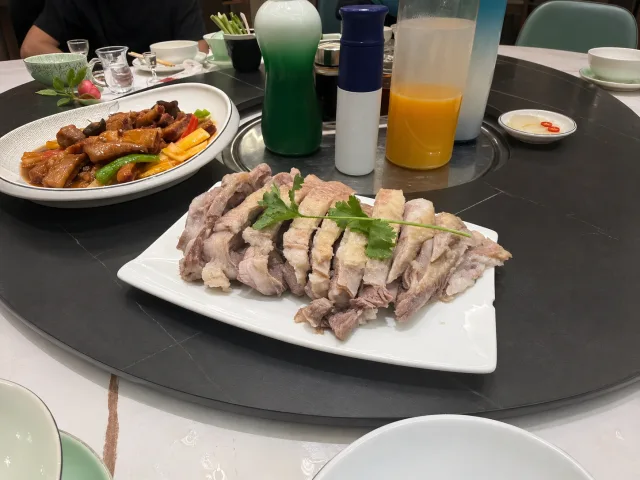
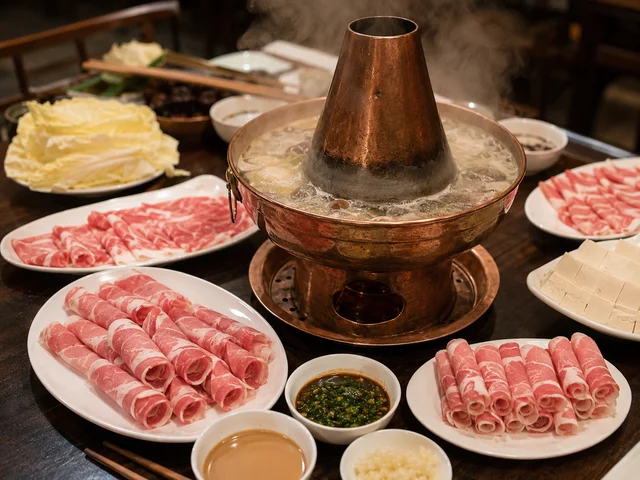
Beijing copper-pot mutton
The capital’s version of the same meal.
Read about Beijing copper-pot mutton →Hand-grabbed mutton
Lamb boiled in plain water and eaten by hand.
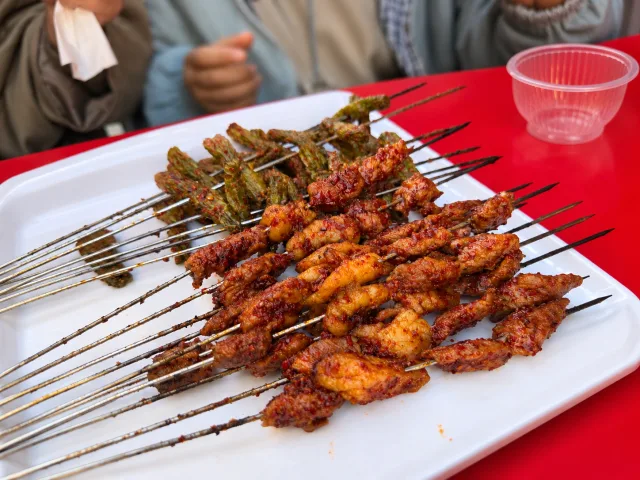
Read about hand-grabbed mutton →Lanzhou chili lamb skewers
Big skewers under a heap of chilli.
Read about Lanzhou chili lamb skewers →Gansu food
From Lanzhou noodles to the Hexi Corridor.
Explore Gansu →Gansu classics
- Lanzhou Beef Noodles
Hand-pulled noodle soup · Breakfast and lunch
- Tianshui Malatang
Boiled skewers tossed in chili oil · Lunch, dinner, street food
- Lanzhou Niangpi
Cold steamed wheat sheets · Snack or light meal, summer, festival tables
- Lanzhou Hand-Grabbed Mutton
Boiled lamb on the bone · Lunch or dinner, banquets and weddings
- Lanzhou Chili Lamb Skewers
Chili lamb skewers · Afternoon street food
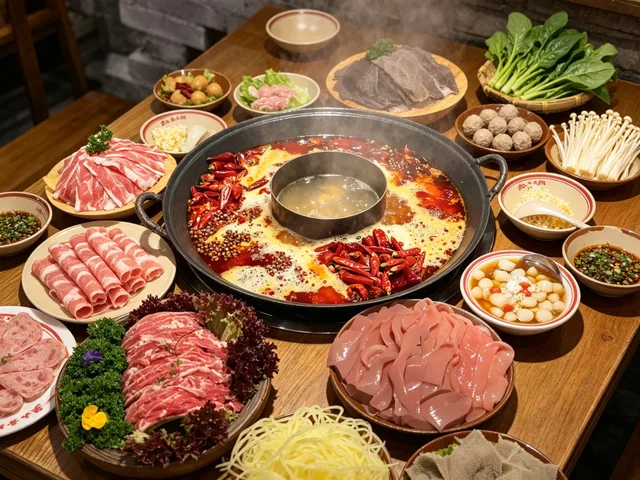
Hot pots from other regions
FAQ
Questions about Lanzhou Mutton Hot Pot
What is Lanzhou mutton hot pot?
Thin-sliced lamb cooked in a charcoal copper pot of plain water and dipped in sesame paste and chilli, with sugar garlic, followed by cabbage, tofu, radish and glass noodles.
How is it different from Beijing copper-pot mutton?
It is the same kind of meal. Lanzhou’s best shops cut the lamb fresh rather than serving frozen rolls, and the sesame dip almost always comes with chilli oil on top or mixed in.
What is liang huo?
“Two things”: sesame paste and chilli sauce stirred together in one dip bowl.
Where does the lamb come from?
Gansu and the neighbouring drylands: Minqin lamb and Tan sheep are both named on Lanzhou menus. The usual cut is a wether’s hind leg.
How much does it cost?
In 2025 and 2026 fresh-cut lamb cost 58 yuan a jin at popular shops, and two people ate for about 130 yuan.
Is the broth spicy?
No. It is plain water; all the heat is in the dip.
Why is there a whole head of garlic?
It is sugar garlic, pickled until sweet and mild, eaten a clove at a time between slices of lamb.
Sources
Sources and further reading
- 1 Lanzhou’s mutton hot pot price war: fresh lamb cut to order at 58 yuan a jin (video, in Chinese)Lao Yang Liu Yaosu (老杨六要素), Bilibili (November 2025) ↗
- 2 Fresh-cut lamb at 58 yuan a jin in a charcoal copper pot, Lanzhou (video, in Chinese)Lao Yang Liu Yaosu (老杨六要素), Bilibili (August 2026) ↗
- 3 The first mutton hot pot of autumn: Tan sheep lamb and a carefully made dip bowl (video, in Chinese)Lao Yang Liu Yaosu (老杨六要素), Bilibili (October 2024) ↗
- 4 Mutton hot pot hidden in an old Lanzhou residential district (video, in Chinese)Jincheng homie (金城homie), Bilibili (September 2022) ↗
- 5 Lanzhou mutton hot pot: a plate piled with nothing but meat (video, in Chinese)Mengyou Xiaoye (梦游小夜), Bilibili (October 2023) ↗
Last updated November 2026