
01
Not a shrimp, and not a mantis
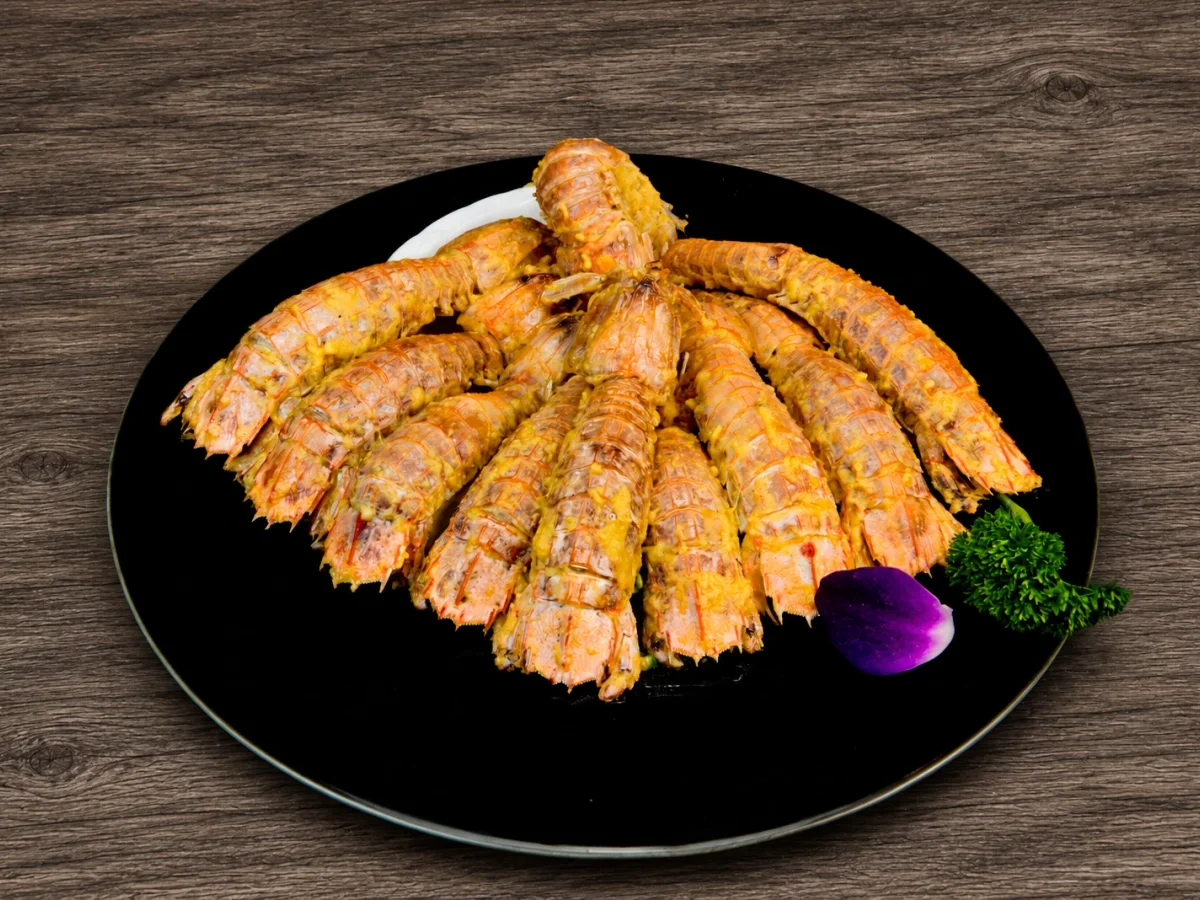
Pipixia is the mantis shrimp, a burrowing crustacean whose sweet meat and spring roe sit inside a spiny, segmented shell.
The mantis shrimp is neither a true shrimp nor a mantis. It is a separate order of crustaceans, named for a pair of folding claws like a praying mantis’s, which it uses to smash or spear its prey: shellfish, crabs and sea urchins, whose shells it breaks open. It lives in burrows in mud and sand along all of China’s coasts. Its body is a series of armored plates ending in a spiny tail fan, and inside them lie the white, slightly sweet meat and, in spring, the female’s bright roe.
The species most often eaten in China is the Japanese mantis shrimp, Oratosquilla oratoria, one of the main crustaceans in Chinese fisheries. Fishermen on the south coast use the local name for several related species.
| Name | Where | Meaning |
|---|---|---|
| 皮皮虾 pipixia | Most of China today | The name most of China now uses, on menus and online |
| 虾爬子 xiapazi | The north | “Crawling shrimp” |
| 虾蛄 xiagu / 虾姑 | Standard name; Minnan | The formal name for the group |
| 濑尿虾 | Guangdong, Hong Kong | “Peeing shrimp,” for the water it squirts |
| 花不来虫 | Zhoushan, Zhejiang | An old fishermen’s name that calls it a “bug” |
02
From duck feed to a spring luxury
Mantis shrimp are caught wild, not farmed, and the catch is shrinking.
Mantis shrimp are caught with trawls, gillnets and traps in the Bohai, Yellow, East China and South China seas. China landed about 228,000 tonnes in 2025, around an eighth of its whole crustacean catch. The Bohai Sea, ringed by Tianjin, Hebei, Shandong and Liaoning, is the main ground in the north and the animals’ spawning and nursery area, and it is heavily fished: the national catch has fallen by about a third in twenty years. Every year the Bohai and Yellow seas close to fishing from May 1 to September 1.
Fifty years ago fishermen saw mantis shrimp as a nuisance that clogged their nets. A Zhoushan fishmonger remembers that even in the early 2000s only the females full of roe were worth selling and the rest went to feed ducks. Now, in spring, they are one of the most sought-after seafoods on the coast, and some of the most expensive.
03
Spring and the full-roe female
The prize is a female in spring, packed with roe from head to tail.
Spring is the breeding season, and the females fill with roe. Cooked, it sets into a firm, rich, orange-red strip down the length of the body, and much of the shrimp’s appeal, and price, comes from it. Coastal people have a name for a female at her best: 满膏, “full of roe.” In the Bohai Sea the roe starts to build after the Qingming festival in early April, and the thirty-odd days from mid-April to early May are the peak, just before the fishing ban. In Zhoushan, further south, February to April is the best season.
Every coast has its own way to spot one. In Rizhao, buyers look for three milky lines across the underside near the neck and a slimmer neck, and hold the shrimp up to the light: a solid line down the middle of the back is roe. Males have one extra pair of small legs. In Taishan, Guangdong, the roe is called 格, and a shrimp showing a broad yellow or orange line against the light is “full.”
Freshness matters as much as roe. A good mantis shrimp feels heavy for its size, has a hard head and white gills, and is lively; a soft head means it has been out of the water too long. Taishan buyers also touch the tail, which should spring back hard, and look for a bluish, glossy shell rather than a pale, dull one. Once it dies, the meat shrinks and dries inside the shell.
04
The north: steamed and eaten plain
Around the Bohai Sea, the best mantis shrimp gets the least cooking.
Around Tianjin and Rizhao, spring mantis shrimp are steamed or boiled with nothing added and eaten with a dish of vinegar and ginger. Tianjin’s rule is eight to ten minutes from the moment the water boils; overcook them and the meat toughens. The shell is cut or pulled apart at the table and the meat comes out in segments, sweet and firm. Tianjin cooks treat heavy soy-and-sugar sauces on Bohai seafood as a waste of it.
Prices swing with the catch. At Rizhao’s Shijiusuo seafood market in April 2026, mantis shrimp sold for more than 80 yuan a jin before the Qingming holiday and 30 to 50 yuan once warming water brought big catches. Rizhao people also mix the peeled meat with fresh toon shoots, a spring vegetable with a strong, oniony scent.
05
Zhoushan: salt-boiled, braised and raw
Zhoushan, the fishing islands off Zhejiang, may cook mantis shrimp more ways than anywhere.
The everyday Zhoushan method is what locals call 烤, which in their dialect means boiling in salted water: the shrimp go in once the water boils, with plenty of salt, and come out as soon as the shells turn red and the meat firms. Wu Shanjun, who runs Jiayuanhui (嘉苑荟), a restaurant for private banquets of Zhoushan dishes, holds that the salt must be generous and that this brothy version is the best, because salt-and-pepper frying hides the shrimp’s own taste. At Yidianhe (一点和), a small, well-liked restaurant at the Shuangqiao bridge, the owner Han Bo cooks roe-filled shrimp boiled or with salt and pepper, scrambled with eggs, or cut open and red-braised, which takes twice as many shrimp as a normal portion. Home cooks also stir-fry them with rice cakes, trimmed of head, legs and spines, a dish set beside the island’s famous swimming crab with rice cakes.
The boldest version is raw. For 呛, live shrimp are cut up and steeped in brine for half a day or a day, then eaten as they are; restaurants now do a softer version called 生腌, borrowed from Chaoshan, with a soy-based marinade. A roe-filled shrimp marinated raw, in Wu Shanjun’s words, eats like ice cream; at Jiayuanhui it comes cut into short lengths in a dark marinade under diced green and red pepper and garlic, set over dry ice, and is called 富贵虾, “rich man’s shrimp.” Spicier styles have arrived from elsewhere: salt and pepper, typhoon shelter and salted egg yolk, usually made with the smaller shrimp.
In spring 2026 Zhoushan’s Xincheng Fengmao market charged 90 yuan a jin for shrimp with roe and 60 to 70 for those without; at the Dongmen market in Dinghai, stallholders picked out the roe-filled females and laid them in rows on white foam trays; and a Huizhong community grocery sold small live ones for 15 yuan.
Sources [4]
06
Guangdong: blanched, or fried with salt and pepper
In Guangdong it is 濑尿虾, and the coast of Taishan is famous for it.
Cantonese restaurants keep mantis shrimp alive in tanks, and diners choose them by size. In Taishan, a coastal county of Jiangmen, the prized kind is the “long neck” (长颈), up to 20 centimeters long, with a thin shell and plenty of meat. Locals prefer it simply blanched or steeped in salted water. Visitors usually order it fried with salt and pepper: the shrimp are deep-fried first, which firms the meat and loosens it from the shell, then tossed over a fierce flame with garlic, chili and salt-and-pepper powder. Typhoon-shelter style, buried in fried garlic, is the other favorite.
In August 2026, after the summer fishing ban ended, a Taishan market charged about 60 yuan a jin for ordinary short-necked shrimp, about 100 for long-necked ones and 130 to 150 for those with roe. Fishermen waste nothing: shrimp that die before reaching market are shelled at once for steaming with egg, or dried on rooftops, 25 kilograms of fresh shrimp making about one kilogram of dried meat.
07
Where to eat it
The best mantis shrimp is eaten close to where it is landed: spring in the north and in Zhoushan, late summer in Guangdong after the fishing ban lifts. Inland it is mostly fried with salt and pepper or typhoon-shelter style.
Zhoushan: Dongmen market and Jiayuanhui
In Dinghai, stallholders at the Dongmen market sort the roe-filled females onto their own trays, and at the Xiyuan market they cost about 90 yuan a jin in spring 2026. Jiayuanhui (嘉苑荟) serves the raw-marinated “rich man’s shrimp” at its private banquets; Yidianhe (一点和), by the Shuangqiao bridge, is the everyday choice for boiled, salt-and-pepper or red-braised shrimp.
Taishan: Shadi fishing port
After the ban ends, people drive to Shadi port to buy long-necked shrimp straight off the boats and have the harbor restaurants cook them. On Shangchuan Island, Xinhai Yucun (鑫海渔村) keeps the long-necked kind in tanks; most tables order it.
Taishan: Haojing Seafood Restaurant
In Taicheng, Haojing (好景海鲜酒家) sells about 100 jin of mantis shrimp a day and on busy days buys twice, for lunch and dinner. It cooks them blanched, steeped in salted water, with salt and pepper or typhoon-shelter style. Fucheng market nearby sold short-necked shrimp at about 60 yuan a jin in August 2026.
Rizhao: Shijiusuo seafood market
The town’s seafood market, where prices fell from over 80 yuan a jin before Qingming 2026 to 30–50 yuan in mid-April, a fortnight before the fishing ban.
Mind the spines
The shell and tail are sharp. Cut along both sides with scissors, or ask the restaurant to cut it.
Don’t confuse it
In Yantai, Qingdao and Dalian, mud shrimp (蝼蛄虾) look a little similar but have soft shells; they are a different animal.
08
Cooking mantis shrimp at home
Plain is best when the shrimp is good.
Rinse live shrimp well and handle them carefully; their claws and tail spines can cut.
Live mantis shrimp; salt; ginger and vinegar for dipping. For salt and pepper: oil for frying, chopped garlic, chopped green and red chili, salt-and-pepper powder.
- 1. Steam
Bring water to the boil, lay the shrimp in the steamer and steam for 8 to 10 minutes, as Tianjin cooks do.
- 2. Or salt-boil
For the Zhoushan method, drop the shrimp into boiling, well-salted water and lift them out as soon as the shells turn red and the meat firms.
- 3. Dip
Serve with finely chopped ginger in vinegar.
- 4. Fry for salt and pepper
Deep-fry the shrimp in hot oil until the meat firms and pulls from the shell; drain.
- 5. Toss
In a little oil, fry plenty of garlic and chili until fragrant, add the shrimp and salt-and-pepper powder and toss over high heat.
- 6. Peel
Cut along both edges of the shell with scissors, lift off the back plate and eat the meat and roe.
09
More seafood on the atlas
Other shellfish pages.
Crayfish
China’s summer shellfish feast.
Read about crayfish →Garlic oysters
Zhanjiang’s grilled oysters under garlic.
Read about garlic oysters →Drunken crab
Raw crab steeped in wine, a cousin of raw-marinated mantis shrimp.
Read about drunken crab →Across China classics
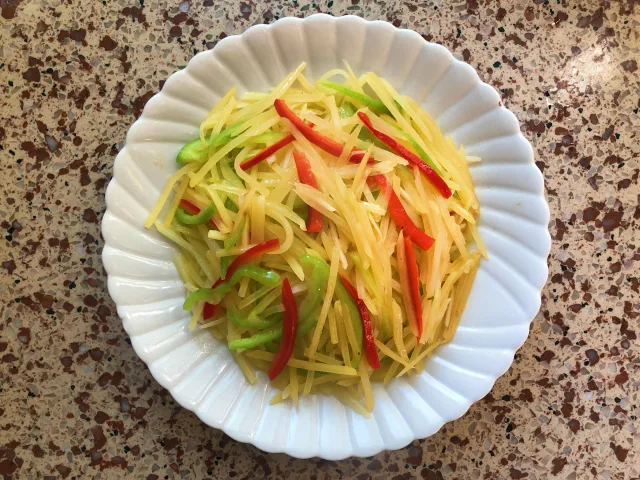
- Stir-Fried Shredded Potatoes
Stir-fried vegetable side dish · Everyday meals with rice
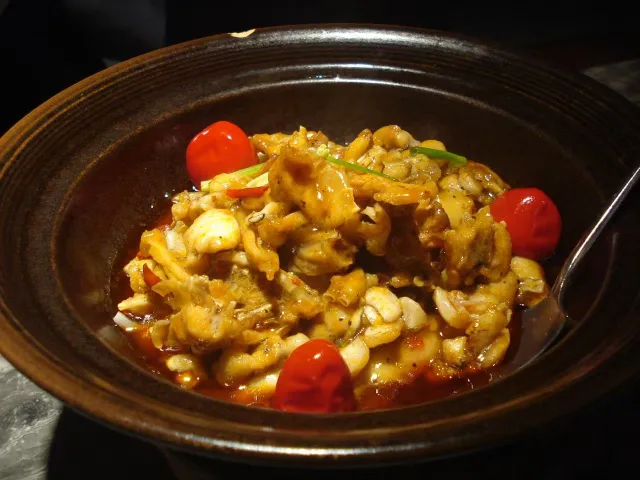
- Bullfrog
Spicy braised or dry-pot frog · Shared dinner, late night
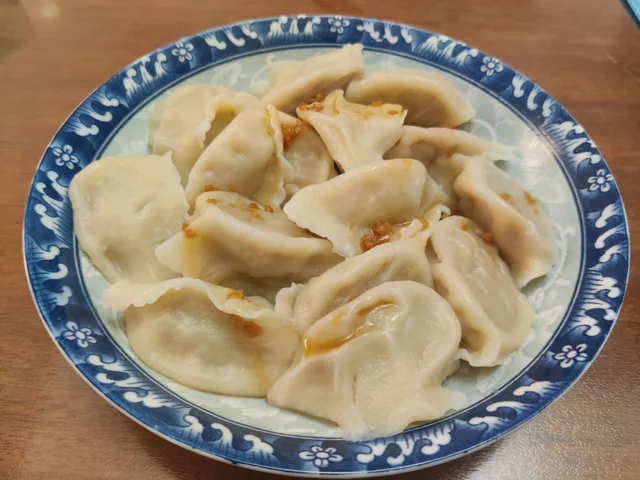
- Jiaozi
Boiled, steamed or pan-fried dumplings · Everyday meals; New Year’s Eve in the north
- Chow Mein
Fried wheat noodles · Lunch, late-night meals, takeaway
- Hot and Sour Soup
Thickened soup · With dumplings, at banquets
- Tea Eggs
Tea-marbled boiled eggs · Breakfast and snacks
FAQ
Questions about Mantis Shrimp
What does mantis shrimp taste like?
Sweet and delicate, with white meat that comes out in segments; the spring roe is rich and firm.
When is the best season?
Spring. Around the Bohai Sea, mid-April to early May; in Zhoushan, February to April. The northern seas close to fishing from May 1 to September 1.
How do I tell a female with roe?
Hold it to the light: a solid yellow-to-orange line down the back is roe. Females also have milky lines on the underside near the neck.
Why is it called 濑尿虾?
When caught it squirts water from its belly, which Cantonese speakers compared to a child peeing.
Where does it come from?
It is caught at sea along the whole coast, with trawls, nets and traps; the Bohai Sea is the main ground in the north.
How do you peel it?
Cut along both sides of the shell with scissors, then lift off the back plate.
Sources
Sources and further reading
- 1 “Jiangmen seafood: Taishan mantis shrimp” (江门海鲜,鲜上鲜 | 台山濑尿虾) (in Chinese)Jiangmen Municipal Government Information Office (Jiangmen Fabu), via Tencent News (August 28, 2026) ↗
- 2 “Mud shrimp blown ashore in Yantai” (烟台海边蝼蛄虾根本捡不完) (in Chinese)China Meteorological News, via People’s Daily app (September 1, 2023) ↗
- 3 “Size Selectivity and Exploitation Pattern of Traps for Japanese Mantis Shrimp (Oratosquilla oratoria) in the Bohai Sea”Fishes 11(6): 343, MDPI (2026) ↗
- 4 Zhu Wei, “The comeback of the mantis shrimp, a feast of spring” (皮皮虾的逆袭“虾生”,是春天里的味觉盛宴) (in Chinese)Zhoushan Evening News, p. 4 (April 28, 2026) ↗
- 5 A year of Bohai Bay seafood by the month: mantis shrimp from mid-April to early May (天津海货年历) (in Chinese)Tianjinzu (天津族), via NetEase ↗
- 6 Yang Hui, “Mantis shrimp flood the market and prices fall” (皮皮虾大量上市,价格降了) (in Chinese)Rizhao Daily, via Dazhong News (April 17, 2026) ↗
Last updated November 2026