
01
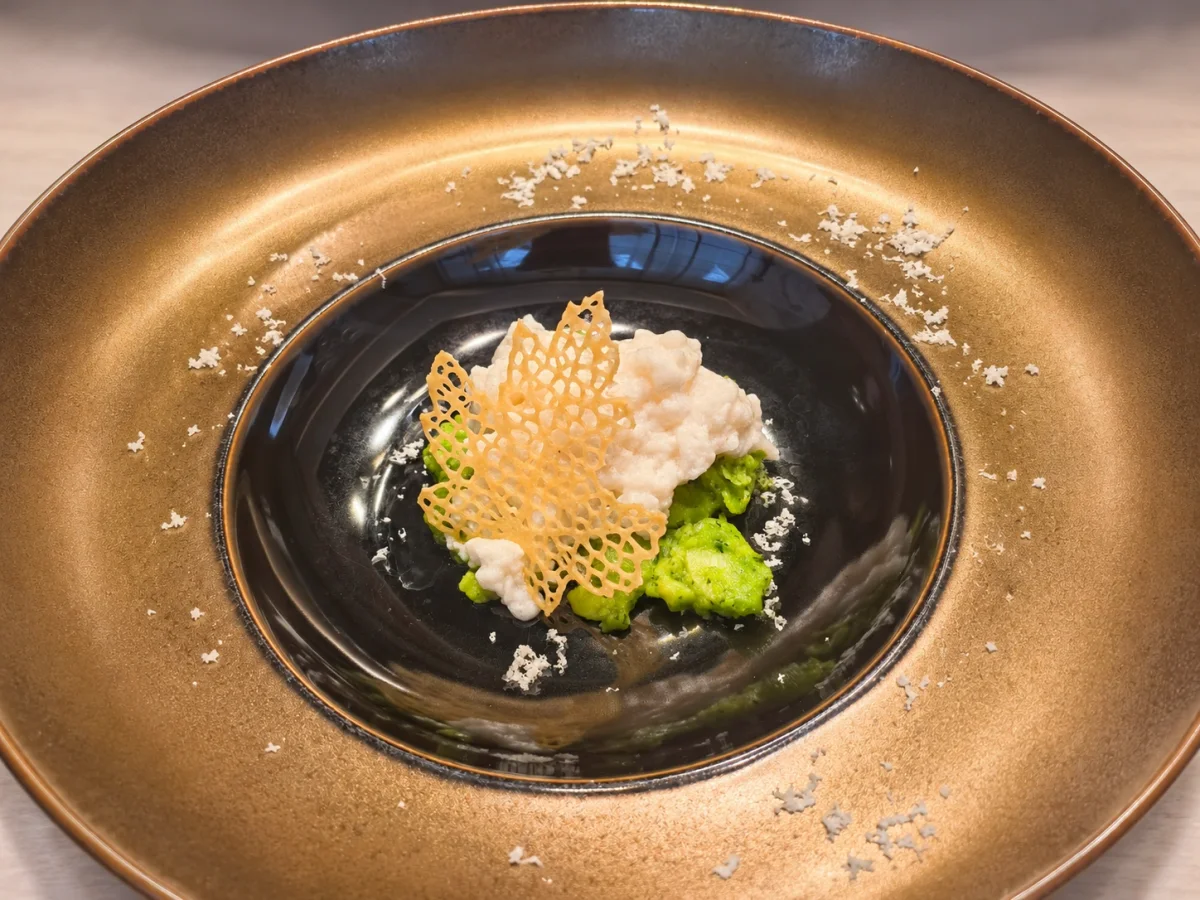
A heap of white, made of chicken
This non-spicy Sichuan dish is made mainly from chicken breast and egg.
It looks like a pile of fresh snow or a cloud on a plate, pure white, with a scattering of red ham crumbs on top. Under a spoon it is light and soft, somewhere between a soufflé and very soft scrambled egg white, and it tastes clean, salty and rich with chicken. There is no visible meat at all.
Cookbooks agree on what it should be. A 1991 national cookbook calls it a traditional famous Sichuan dish, “white as snow, tender and smooth, salty and savoury”; a 2001 Sichuan home cookbook says “white as snow, soft as mud,” and recommends it for the old and the sick. The second half of the name, 淖 (nào), is the character for mire or soft mud, which is what the chicken paste becomes in the wok.
It belongs to a side of Sichuan cooking that visitors rarely meet: banquet dishes built on clear stock, careful knife work and gentle heat rather than chilli. It is so laborious to make that it almost vanished, and in 2024 few restaurants served it.
02
Pound, whisk, push
The dish has four ingredients and three hard steps.
First the chicken. Cooks take a breast, strip off every bit of white membrane and beat it with the back of the cleaver, not the edge, so that sinews stay whole and can be picked out. Pounding takes 15 to 40 minutes, and afterwards the paste is chopped over with the blade to cut any fine sinew left in it. A blender is no use: it chops the sinew into the paste, and the dish loses its tenderness. The paste is loosened with water or cold stock added a spoonful at a time, seasoned with salt and a little white pepper, and some cooks push it through a sieve.
Then the egg whites, usually four for 150 grams of chicken, whisked until they stand in stiff peaks and a chopstick stays upright in them. By hand, on a flat plate, it takes a practised cook about four minutes; whites whipped by machine can leave liquid at the bottom. A little starch slurry goes into the chicken, the chicken is folded into the foam, and the whole thing must be cooked at once, before the bubbles collapse.
Last, the frying. Many cooks pour boiling stock into the batter just before it goes in, which warms it so that it sets quickly and absorbs less fat. The wok is seasoned, filled with lard and heated, and the batter is pushed slowly with a ladle for a minute or two until it sets in soft, separate flakes. Heaped on a plate, a good one stands up and trembles; one that slumps flat is not “snow”.
03
What the old cookbooks say
Sichuan’s own cookbooks have printed the dish with almost the same proportions for nearly thirty years.
The 1974 Sichuan recipe asks for the breast of an old, white-skinned hen, so the dish comes out pure white, and notes that the same chicken base, with shark’s fin, sea cucumber or spinal cord stirred through it, makes a whole family of other dishes. The 2001 home cookbook allows a substitute for the ham on top: dried shrimp, or even tomato.
| Book | Chicken | Egg whites | Stock | Fat |
|---|---|---|---|---|
| Sichuan Recipes (1974) | About 125 g breast of an old white hen | 4 | About 125 g clear stock | Lard |
| Chinese Cookbook: Sichuan (1981) | About 125 g breast | 4 | About 250 g meat stock | Lard, medium heat |
| Famous Chinese Dishes: Sichuan (1991) | 125 g breast | 4 | 250 g stock, boiling | 100 g lard |
| Everyday Sichuan Cooking (2001) | 150 g breast | 3 | 400 g chicken stock | Lard |
04
Chicken tofu pudding and jinao shark’s fin
The chicken paste behind the dish is the base of several famous Sichuan dishes.
Sichuan cooks call this kind of paste 鸡糁 or 鸡茸, and they use it in several ways. Simmered gently in clear stock, it sets into soft curds and becomes 鸡豆花, chicken “tofu pudding,” floating in a bowl of crystal-clear broth. A 1960 national cookbook explains the difference: chicken tofu pudding needs the breast of an old hen, because only old meat sets into curds; a young bird’s paste will not set, and turns into jinao.
Fried as jinao, the paste was a base for luxury. The same 1960 book cooks it with pork spinal cord; the Beijing Hotel’s 1979 cookbook folds it over braised shark’s fin as the head dish of a banquet. Some modern versions add costly ingredients such as bird’s nest.
05
How to tell a good one
Four things separate a good plate from a poor one.
It stands up
The heap should hold its shape and tremble when the plate is moved. A flat, spreading pool means the egg whites were under-whipped or the foam collapsed before it reached the wok.
It is smooth
There should be no grainy bits or threads. Grit means the chicken was not pounded long enough or the sinews were left in; a top Chengdu kitchen still leaves the faintest texture, but nothing you have to chew.
It is white
Pure white, with the red of the ham on top. Yellow or brown patches mean the wok was too hot.
It is not greasy
The flakes should look moist, not oily. Warming the batter with boiling stock before it goes in helps it set before it soaks up the lard.
06
Snowflake chicken at home
This makes one plate, in proportions from a 2023 recipe.
150 g chicken breast, trimmed of all membrane; 100 g cold water; 2.5 g salt; 1 g ground white pepper; 4 egg whites (about 100 g), very fresh and with no trace of yolk; 2 tablespoons potato or pea starch mixed with 2 tablespoons water; 300 g light chicken stock or water; 3 tablespoons lard (or a mix of lard and neutral oil); 5 g finely chopped cooked ham or lean cured pork.
- 1. Pound
Beat the chicken with the back of a heavy knife on a clean board for 15 minutes or more, folding it over and picking out sinews as they appear. Chop over it once with the blade. It should be a smooth paste with no strands.
- 2. Loosen and season
Work in the cold water a spoonful at a time until the paste is a smooth, thick cream. Add the salt and pepper, then stir in the starch slurry.
- 3. Whip the whites
Whisk the egg whites until stiff, so a chopstick stands up in them. Fold the chicken cream into the foam until evenly mixed. Bring the stock to the boil and stir it in quickly.
- 4. Fry gently
Heat the wok, swirl a little oil and pour it off, then add the lard. Over medium-low heat pour in the mixture and push it slowly with a spatula, about two minutes, until it has just set into soft white flakes. Heap on a warm plate and sprinkle with the ham.
Do not let the wok get so hot that the bottom browns; the dish should stay white. Serve straight away, before it begins to weep.
07
How to order it
Look for it in older-style Chengdu restaurants.
Where to find it
Restaurants that cook “old Sichuan” banquet dishes are the ones that keep it; in 2023 it was 68 yuan a plate at Furonghuang, a Michelin-listed Chengdu restaurant.
Order it first
Its taste is delicate; eat it before the chilli dishes arrive.
Eat it hot
It is lightest straight from the wok and begins to sink as it cools.
For children and older diners
Soft, mild and needing no chewing, it is the dish for anyone at the table who cannot take chilli.
08
More Sichuan dishes without chilli, and more chicken
Other pages on the atlas.
Kung pao chicken
Sichuan’s most famous chicken dish, with chilli and peanuts.
Read about kung pao chicken →Steam pot chicken
Yunnan’s clear chicken soup made in a steam pot.
Read about steam pot chicken →Leshan qiaojiao beef
Another Sichuan dish whose broth is mild.
Read about qiaojiao beef →Sichuan food
Beyond mala: the province’s range of flavours.
Explore Sichuan →Sichuan classics
- Mapo Tofu
Tofu dish · Lunch or dinner, with rice
- Kung Pao Chicken
Chicken stir-fry · Lunch or dinner, with rice
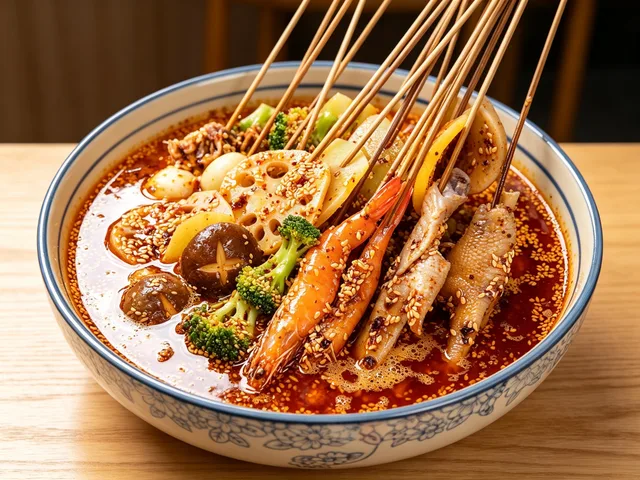
- Sichuan Hot Pot
Hot pot · Shared meal
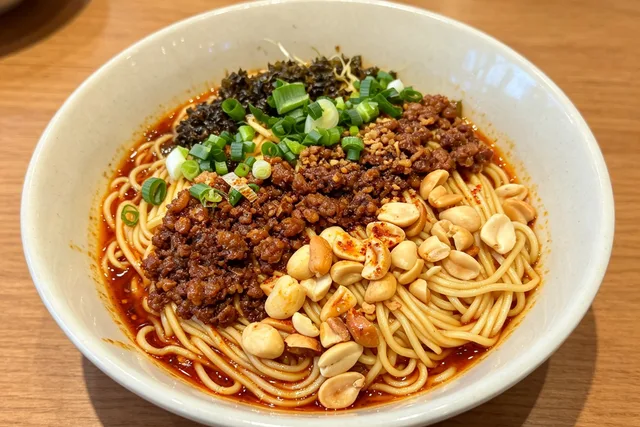
- Dan Dan Noodles
Small dressed noodles · Snack
- Bobo Chicken
Cold skewers · Snack
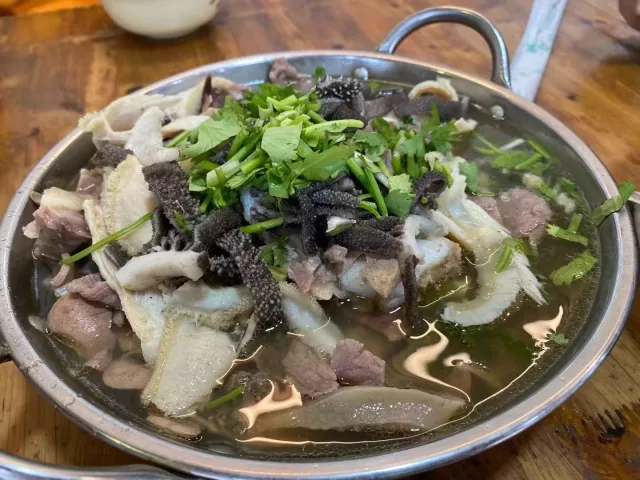
- Leshan Qiaojiao Beef
Beef and offal in herbal bone broth · Breakfast or lunch, shared pot
FAQ
Questions about Snowflake Chicken
What is snowflake chicken?
A non-spicy Sichuan dish of chicken breast pounded to a paste, mixed with whipped egg white and soft-fried in lard into a fluffy white heap, topped with ham crumbs.
How do you pronounce 鸡淖?
Jī nào. 淖 is the character for mire or soft mud, describing the soft paste.
Is it spicy?
No. It is seasoned only with salt, white pepper and stock, and garnished with ham.
Why is it called “eating chicken without seeing chicken”?
Because the chicken is pounded so fine and folded into egg white that no meat can be seen.
Can I use a blender instead of pounding?
Chefs advise against it: a blender chops the sinews into the paste, which makes the dish less smooth. Pounding lets you pick the sinews out.
What is the difference between snowflake chicken and chicken tofu pudding?
Both start from the same chicken paste. Snowflake chicken is soft-fried in lard; chicken tofu pudding is simmered in clear stock until it sets in curds and served in the broth.
Where can I eat it?
At Chengdu restaurants that serve traditional banquet dishes; it is less common than chilli dishes and usually costs more than its ingredients suggest.
Sources
Sources and further reading
- 1 Sichuan Recipes, vol. 1 (四川菜谱·一), p. 122: snowflake chicken (in Chinese)Sichuan Vegetable, Aquatic Products and Catering Company (1974), indexed by laocp.tech ↗
- 2 Chinese Cookbook: Sichuan (中国菜谱·四川), p. 149: snowflake chicken (in Chinese)China Financial and Economic Publishing House (1981), indexed by laocp.tech ↗
- 3 Famous Chinese Dishes, new edition: Sichuan (中国名菜谱·四川风味), p. 119: snowflake chicken (in Chinese)China Financial and Economic Publishing House (1991), indexed by laocp.tech ↗
- 4 Everyday Sichuan Cooking (大众川菜), p. 174: snowflake chicken (in Chinese)Sichuan Science and Technology Press (2001), indexed by laocp.tech ↗
- 5 Famous Chinese Dishes, vol. 7: Sichuan (中国名菜谱·第七辑), p. 80: chicken jinao with pork spinal cord (in Chinese)Light Industry Press (1960), indexed by laocp.tech ↗
- 6 Famous Chinese Dishes, vol. 7: Sichuan, p. 93: chicken “tofu pudding” (鸡豆花) (in Chinese)Light Industry Press (1960), indexed by laocp.tech ↗
- 7 Beijing Hotel Recipes (北京饭店名菜谱), p. 101: chicken jinao with shark’s fin (in Chinese)Beijing Publishing House (1979), indexed by laocp.tech ↗
- 8 Shu Junyu and Liu Dong, Is there a non-spicy Sichuan dish? This one almost vanished (2024) (in Chinese)West China City Daily (bilingual) ↗
- 9 A head chef’s home method for snowflake chicken: 150 g breast, four egg whites (video, in Chinese)Wang Gang (美食作家王刚R), Bilibili (September 2023) ↗
- 10 Snowflake chicken in one take: how long it takes to whisk egg whites by hand (video, in Chinese)Wang Gang, Bilibili (October 2023) ↗
- 11 Non-spicy Sichuan dishes are the hardest: snowflake chicken with the Chengdu chef Zhang Yuanfu (video, in Chinese)An Qiujin (安秋金), Bilibili (April 2022) ↗
- 12 “Eat chicken without seeing chicken”: a chef on snowflake chicken (video, in Chinese)Lin Shuwei (林述巍JACKLIN), Bilibili (December 2022) ↗
- 13 A plain-fronted Chengdu restaurant with a Michelin listing: Furonghuang (video, in Chinese)Zhentan Gao Wenqi (真探高文麒), Bilibili (May 2023) ↗
Last updated November 2026