
01
Cold chicken under hot scallion oil
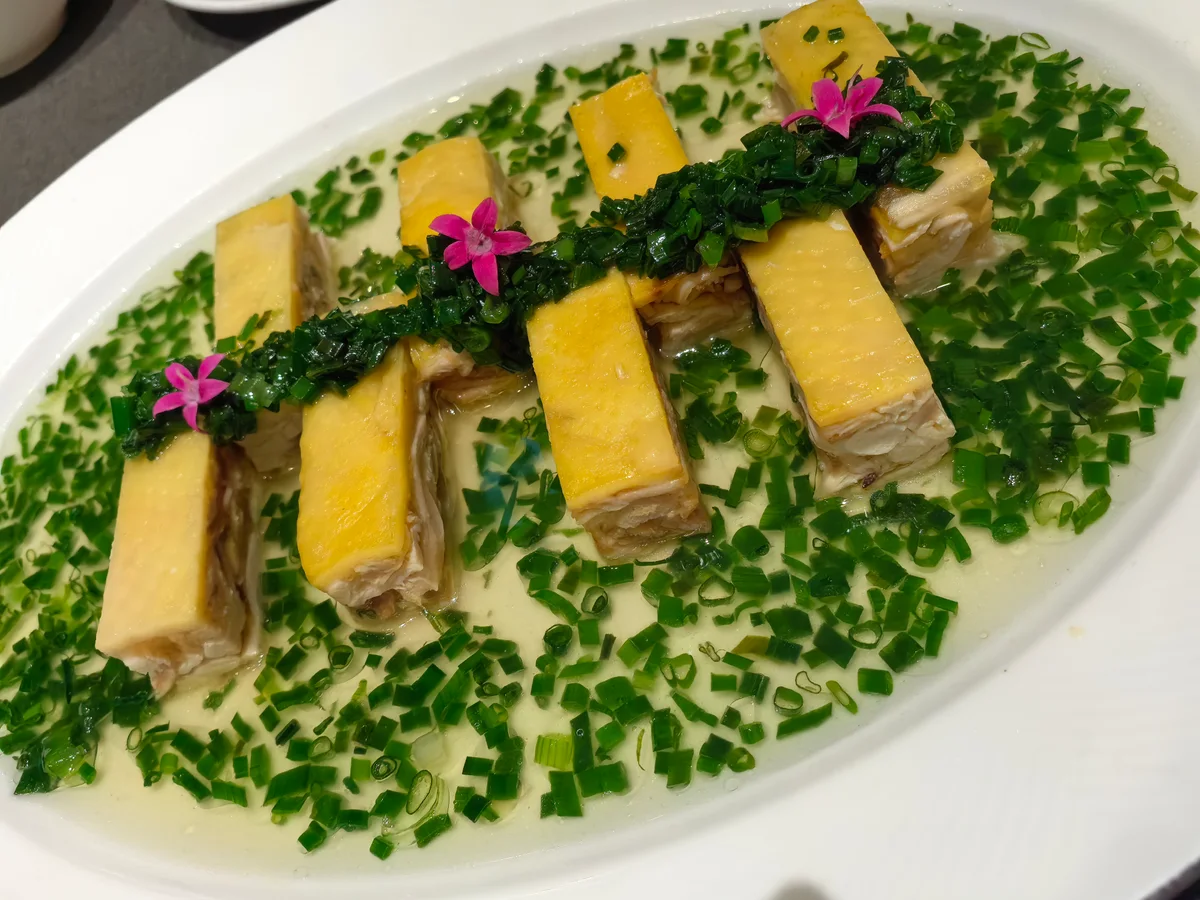
Scallion oil chicken is poached chicken, served cold, with scallion oil spooned over it. The scallion is the whole seasoning.
The name says what it is: 葱 is scallion, 油 oil, 鸡 chicken. A whole bird is poached, plunged into iced water so the skin tightens, then cut up and laid on a plate. Just before serving, very hot oil is poured over a pile of chopped scallion greens, sometimes with ginger, so that they wilt and turn bright green; that oil, salted and loosened with a little stock or soy, goes over the chicken.
Fuchsia Dunlop, who spent years cooking and eating around the lower Yangtze, describes it as a light, refreshing dish much loved in Shanghai, where cooks use small three-yellow chickens, poach them whole and chop them on the board before the oil goes on. Chinese cooks take the bird off the heat while the meat by the bone is still faintly pink, which keeps the flesh silky. Home cooks chop it through the bone; restaurants sometimes bone the chicken and cut it into neat strips under a blanket of scallion.
02
The yellow chicken
A dish this plain depends on the bird.
Shanghai cooks want sanhuangji, “three-yellow chickens,” small birds with yellow feathers, beak and feet. Dunlop writes that success depends almost entirely on the quality of the chicken and the stock, and advises the best free-range bird you can find. Shen Jialu traces the reputation of the city’s poached chicken to the 1980s, when Xiaoshaoxing on Yunnan Road bought Pudong chickens from farm families east of the river and killed them to order. Some restaurants name their bird: one hotel kitchen serves a Chongming “two-yellow” chicken, from the island at the mouth of the Yangtze.
03
One poached chicken, several cold dishes
In Shanghai the same gently poached chicken turns into a family of cold dishes.
Plain poached chicken has a long history in the lower Yangtze. In 1792 Yuan Mei, writing in Nanjing, praised “plain sliced chicken” from a fat bird as having the pure flavor of the ancient sacrificial broth, handy in the countryside or at an inn when there was no time for proper cooking; his one instruction was not to use too much water. Today Shanghai’s cultural center describes white-cut chicken as usually eaten with soy sauce and scallion oil, the soy for salt and the oil for fragrance, and names Xiaoshaoxing and Zhen Ding Chicken among its classic shops. Scallion oil chicken puts that oil on top.
| Dish | After poaching | Eaten with |
|---|---|---|
| 白斩鸡 white-cut chicken | Chopped and served plain | Soy sauce, often scallion oil on the side |
| 葱油鸡 scallion oil chicken | Hot oil poured over chopped scallion and spooned on | Nothing more; the oil is the sauce |
| 糟鸡 wine-lees chicken | Cut into large pieces and steeped in lees brine | Eaten cold, tasting of the lees |
| 虾油卤鸡 shrimp-oil chicken | Steeped a day or two in salty shrimp-oil brine | A New Year dish from capon |
| 醉鸡 drunken chicken | Steeped in cooking liquid with Shaoxing wine | A cold starter |
04
A Cantonese connection
Shanghai’s Cantonese restaurants helped make scallion oil chicken a city dish.
Poached chicken is just as important in Guangdong as in Shanghai, and the two cities’ dishes have long been in conversation. Shen Jialu writes that Shanghai’s Cantonese restaurants tailored their menus to local diners, using Jiangnan ingredients and introducing or creating dishes such as roast suckling pig, sweet and sour pork and scallion oil chicken; some called it haipai, Shanghai-style, Cantonese food. When tourism to Shanghai began to grow, foreign tour groups were usually taken to Cantonese restaurants, and scallion oil chicken was among the dishes that gave them their first impression of Chinese food.
The Cantonese cousin, white-cut chicken with a ginger and scallion dip, is served with the sauce on the side. In Shanghai the scallion oil goes on top before the plate reaches the table.
05
The whole chicken that goes home
At a Shanghai wedding banquet, the chicken came last and was rarely eaten there.
Shen Jialu describes the wedding feasts held in Shanghai restaurants: cold dishes, a run of hot dishes such as shredded pork, stir-fried shrimp and oyster-sauce beef, and then, late, a whole chicken and a whole duck. The chicken was usually scallion oil chicken, the duck crispy fried duck. By the time this pair arrived the guests were eighty or ninety percent full, and by unwritten rule the host’s family took both home to eat over the following days.
At home it is a mother’s dish. Praising one family’s cooking, Shen puts their scallion oil chicken beside their red-braised eel. He also notices it losing ground: children who eat with one eye on a phone pass over their mother’s scallion oil chicken, steamed fish and oil-blasted shrimp for dishes with no bones or shells to spit out.
06
From the market stall to the 87th floor
Shanghai sells scallion oil chicken at every level, from wet-market cooked-food stalls to hotel dining rooms.
The everyday place to buy it is the cooked-food counter of a neighborhood wet market. In 2026 one such stall in Shanghai sold half a scallion oil chicken for a little over 20 yuan, and its fans praised two things: smooth skin and tender meat, and a thick layer of chicken jelly underneath, the cooking stock set firm in the cold. Some stalls pack the chicken with a big tub of sauce; a stall at the Meitian market on Zunyi Road was known for giving plenty of scallion sauce, with goji berries and red dates in it, and regulars mourned when they kept finding it shut in spring 2026.
At the other end is the Dining Room at the Park Hyatt, on the 87th floor of the Shanghai World Financial Center, where Yang Chao, executive chef since 2019, serves “Chef Yang’s old Shanghai scallion oil chicken.” He jokes that the scallions cost more than the chicken. The bird is a tender Chongming two-yellow chicken, the stock is made from old hens, and the oil is cooked from five kinds of allium: French chives, small scallions, the thick Beijing scallion, shallots and a fleshy local scallion. It arrives buried under bright green scallion paste. Diners argue about it like any famous dish: some call it the best in Shanghai, others found it ordinary for the price.
| Where | What | Price |
|---|---|---|
| Wet-market cooked-food stall, Shanghai, 2026 | Half a scallion oil chicken | A little over 20 yuan |
| The Dining Room, Park Hyatt Shanghai, 2025 | Dinner including Chef Yang’s scallion oil chicken, a group of seven | About 505 yuan a head |
07
Cooking the chicken off the heat
The chicken is barely simmered; most of the cooking happens in hot water with the heat off.
Cooks agree on the method even when their timings differ. The water should never boil hard, or the skin splits and the meat tightens. A common home trick is to lower the whole bird into the pot and lift it out three times before leaving it in, so the skin firms and the cavity fills with hot water. Dunlop simmers boned thighs for three minutes on the lowest heat with ginger, scallion whites, star anise, cassia and Shaoxing wine, then turns off the heat and leaves them covered for 25 minutes; a whole bird needs about half an hour of gentle heat. Restaurant-style recipes often go further: one rubs the bird with 6 grams of salt for every 500 grams and leaves it two to four hours, then poaches it in a white master stock with Shaoxing wine, ginger, scallion and a few spices, five minutes on the heat and twenty-five off.
Then comes the ice bath, which is what makes the skin of cold chicken taut and springy rather than flabby. Shanghai’s cultural center puts the whole skill in boiling and cooling: the bird is dipped in hot and iced water in turn until its springy skin contrasts with the soft meat, the color should be yellow, and it is cut only at the last minute before serving. Dunlop leaves the chicken in iced water for ten minutes, dries it and brushes it with a little sesame oil. For anyone worried about the pink at the bone, she suggests checking that the thickest part has reached 74°C.
08
Scallion oil in restaurants and at home
Restaurants keep the oil clear and green; some home cooks make it darker with soy.
Dunlop’s sauce is the clear kind: oil heated until it shimmers, taken off the heat, a handful of chopped scallion greens and some minced ginger stirred in for only a moment so they stay bright green, then chicken stock, salt and white pepper. She says it should taste fairly salty, because it seasons the whole plate. A restaurant-style recipe goes further: peanut oil is cooked with leek whites, shallots or onion and scallion whites until golden, strained, heated again to about 210°C and poured over a big pile of finely chopped scallion greens, then seasoned with salt, chicken powder and a little sugar. Some home cooks make a darker sauce instead, seasoning the fried aromatics with soy sauce, a spoon of oyster sauce and a pinch of sugar before adding the scallion greens.
| Clear | Soy-based | |
|---|---|---|
| Who makes it | Restaurants; Dunlop’s recipe | Some home cooks |
| Aromatics | Scallion greens, sometimes ginger; restaurant oil first cooked with leek, shallot and scallion whites | Onion, scallion whites and ginger fried slowly, then removed; fresh scallion greens at the end |
| Seasoning | Stock, salt, white pepper or a little sugar | Soy sauce, oyster sauce, a little sugar |
| Looks | Green and glossy over pale chicken | Brown, with green scallion on top |
09
Making scallion oil chicken
Use the best chicken you can buy; everything else is simple.
This follows Dunlop’s version with boned thighs, which is the easiest to get right at home. For a whole small chicken, dip it in and out of the simmering water three times, then keep it at a bare simmer for about 30 minutes before the ice bath.
For 3 to 4 as a cold starter: 2 chicken thighs, about 675 g on the bone or 500 g boned; a 20 g piece of ginger plus 2 teaspoons minced ginger; 2 scallion whites; 2 star anise; a small piece of cassia; 1 tablespoon Shaoxing wine; 4 scallion greens, chopped (about 6 tablespoons); ½ teaspoon sesame oil; 3 tablespoons cooking oil; 100 ml chicken stock; salt and white pepper.
- 1. Poach
Bring 1.5 liters of water to the boil, add the chicken, return to the boil and skim. Add the lightly crushed ginger and scallion whites, the star anise, cassia and wine, and simmer on the lowest heat for 3 minutes.
- 2. Rest in the water
Turn off the heat, cover the pan and leave the chicken in the hot water for 25 minutes.
- 3. Chill
Lift the chicken into a large bowl of iced water for 10 minutes. Drain well, pat dry, brush with the sesame oil and leave to cool.
- 4. Cut
Cut the chicken into bite-sized pieces or strips and arrange them neatly on a plate.
- 5. Make the oil
Just before serving, heat the oil over a high flame until it shimmers. Take the pan off the heat, stir in the scallion greens and minced ginger for a few seconds so they stay green, add the stock, bring to the boil and season with salt and white pepper until fairly salty.
- 6. Dress
Spoon the hot sauce over the chicken and serve.
10
When and how it is eaten
It is a cold starter and a partner for rice or congee.
At a Shanghai meal scallion oil chicken comes out with the cold dishes at the start, beside smoked fish, drunken chicken and wine-lees dishes. At home it is eaten with rice, and the sauce and jelly left on the plate are good stirred into noodles. Poached chicken also has a partner in chicken congee, which Dunlop says developed alongside it in 1920s Shanghai as a late-night snack.
Sources [1]
11
More on the atlas
Other Shanghai dishes and other poached chickens.
Scallion oil noodles
The other Shanghai dish built on scallion oil.
Read about scallion oil noodles →White cut chicken
The Cantonese poached chicken with a ginger and scallion dip.
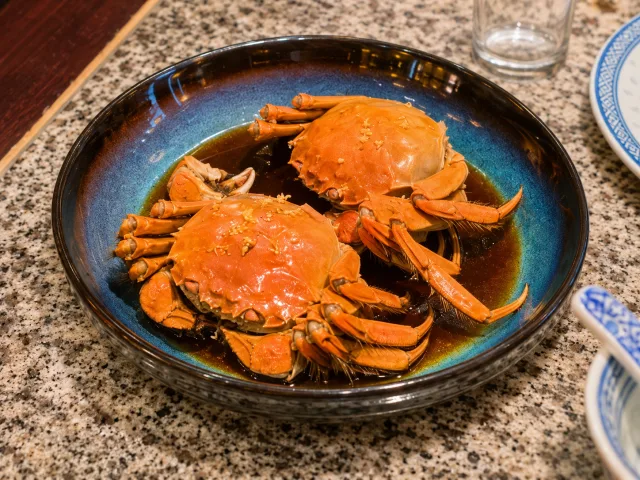
Read about white cut chicken →Drunken crab
Another cold Shanghai starter.
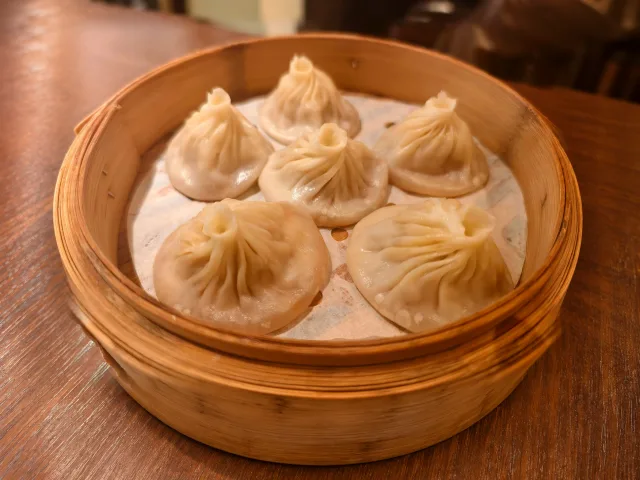
Read about drunken crab →Xiaolongbao
Shanghai’s soup dumplings.
Read about xiaolongbao →Shanghai classics
- Drunken Crab
Crab steeped in wine and soy · Cold starter in autumn and early summer
- Xiaolongbao
Steamed soup dumpling · Breakfast, lunch or a snack
- Spring Rolls
Fried wrapped snack · Spring Festival, dim sum or a snack
- Scallion Pancakes
Layered wheat flatbread · Breakfast or a hot street snack
- Scallion Oil Noodles
Tossed noodles · Breakfast, lunch or a late snack
- Qingtuan
Steamed glutinous rice dumpling · The weeks before Qingming, early April
FAQ
Questions about Scallion Oil Chicken
What is scallion oil chicken?
A Shanghai cold dish of poached chicken, chilled in ice water, cut up and dressed with hot oil poured over chopped scallion.
Is it served hot or cold?
Cold or at room temperature; only the scallion oil is hot when it goes on.
What chicken is used?
In Shanghai, small yellow-skinned three-yellow chickens; at home, a good free-range bird or boned thighs.
What is the difference from white-cut chicken?
The chicken is cooked the same way. White-cut chicken is served with a soy dip; scallion oil chicken has the scallion oil poured over it.
Is it Shanghai or Cantonese?
Poached chicken is important in both. In Shanghai it is a standard cold starter, and the city’s Cantonese restaurants helped make scallion oil chicken popular.
Why is the meat pink near the bone?
Chinese cooks take poached chicken off the heat as soon as it is done so it stays silky; check that the thickest part reaches 74°C if you prefer.
Why put the chicken in ice water?
It tightens the skin so it is springy, stops the cooking and firms the meat so it cuts cleanly.
Does the sauce have soy in it?
Both ways are common: a clear sauce of scallion, ginger, stock and salt, or a darker one with soy, oyster sauce and sugar.
When is it served at a banquet?
With the cold starters, or as the whole chicken near the end of a wedding feast.
Can it be made ahead?
Poach and chill the chicken in advance, but make the scallion oil just before serving so the scallion stays green.
What is the jelly under the chicken?
The cooking stock, rich in gelatin, set firm as it cools. Many fans think it is the best part.
How much does it cost?
At a Shanghai wet-market stall, a little over 20 yuan for half a chicken in 2026.
Sources
Sources and further reading
- 1 Fuchsia Dunlop, Land of Fish and Rice, Chinese edition Yu Mi Zhi Xiang (鱼米之乡), translated by He Yujia: “Appetizers” (cold chicken with spring onion oil; white-cut chicken) and “Rice” (chicken congee) (in Chinese)CITIC Press (2021)
- 2 Shen Jialu, Shanghai Lao Weidao (上海老味道), 3rd ed.: “Twelve gold medals”, “Busy or not, don’t forget the June crabs”, “Paofan and its golden partners”, “The last gift of the rice plant”, “Dried-fish pork jelly and shrimp-oil chicken”, “The chicken that was castrated” (in Chinese)Shanghai Culture Publishing House (2017)
- 3 Shen Jialu, Shoubei shang de Yi Cuo Yan (手背上的一撮盐): “Old Cantonese flavors, a hundred lively years” and “Sun Wukong arrived with a scallion” (in Chinese)Shanghai Bookstore Publishing House (2021)
- 4 Shen Jialu, Shanghai Lao Weidao Xuji (上海老味道续集): “Mother’s cooking” (in Chinese)Shanghai Culture Publishing House
- 5 Suiyuan Shidan (1792), poultry list: plain sliced chicken (in Chinese)Yuan Mei, Wikisource ↗
- 6 Sliced Cold ChickenShanghai Mass Art Center, via International Services Shanghai (2024) ↗
- 7 Shanghai scallion oil chicken for the New Year: dipping the bird three times, a gentle simmer, ice water and a soy-based scallion sauce (video, in Chinese)Wen Sen Te Bie E (文森特别饿), Bilibili (2023) ↗
Last updated November 2026