
01
Steamed taro, sugar and fat
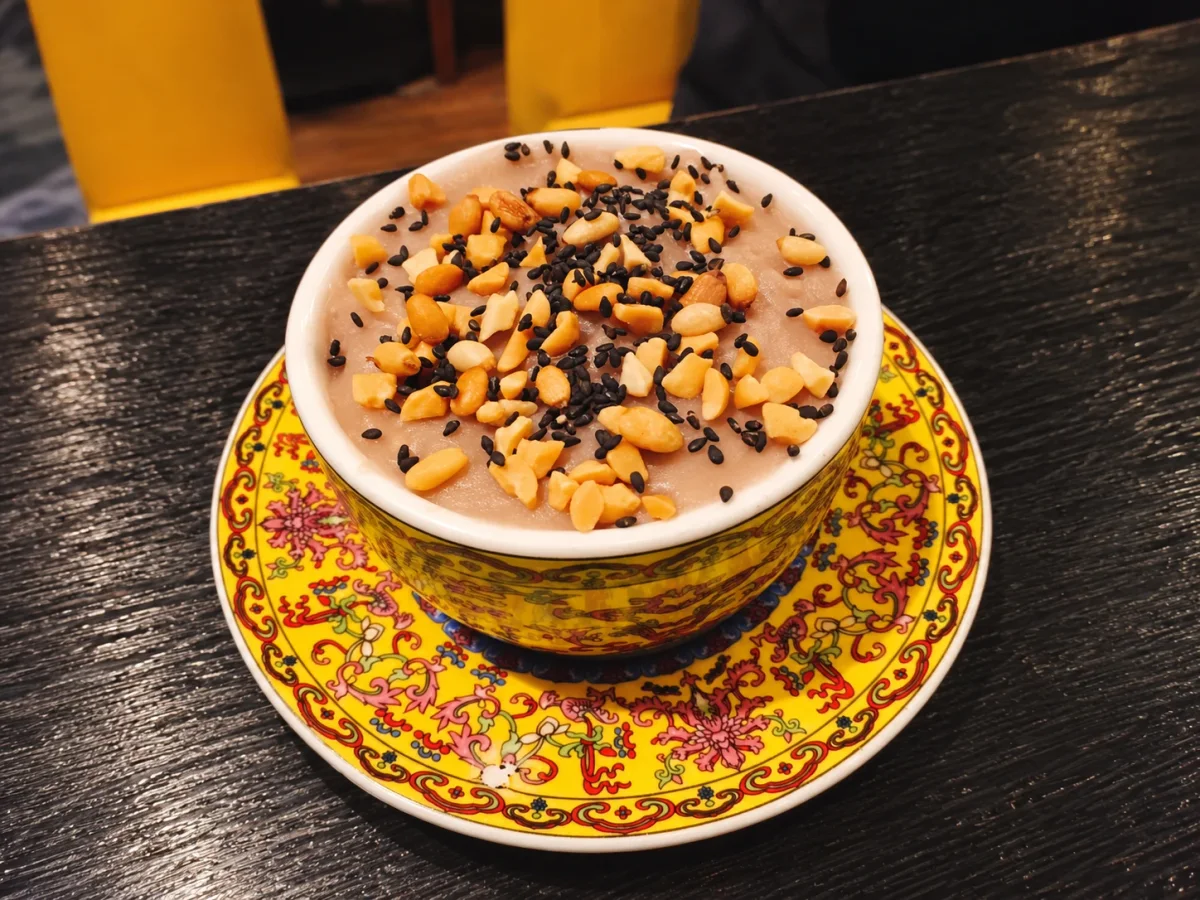
Taro paste is taro steamed soft and mashed with sugar and lard until it is smooth, heavy and glossy.
Taro is a starchy corm with a mild, nutty, faintly floral flavor. Steamed and mashed, it turns into a thick paste the color of lilac and ash; mixed with sugar and fat, it becomes one of southern China’s favorite desserts. Traditional recipes use lard, which makes the paste silky and rich and gives it a sheen, and in Fujian the finished paste is topped with more oil.
The name means simply “taro mash.” Fuzhou and the rest of eastern Fujian treat it as the city’s signature sweet; the Teochew people of Chaoshan in eastern Guangdong make their own version, orh nee, which they carried to Singapore and Malaysia. In Singapore the words taro and yam are used interchangeably, so English menus there often call it yam paste.
02
The last course of a Fuzhou banquet
In Fuzhou, taro paste is the dish that tells you a banquet is over.
At a Fuzhou wedding or feast the savory dishes come and go, and the meal ends with a bowl of hot taro paste. The Fujian provincial government calls it the last treat of a banquet. Unlike most Western desserts it is eaten hot, and it stays hot for a long time: the paste is dense, and its glossy, oily surface hides how much heat is underneath. It looks cool and settled; the first spoonful is scalding.
The banquet version is also the most elaborate. Cooks steam the paste a second time, for about an hour, so it sets smooth, then finish it with oil and decorate the top with chopped red dates, melon seeds and candied cherries. A showier restaurant style, taiji taro paste (太极芋泥), swirls a contrasting paste through the lilac one in the yin-and-yang pattern of the taiji symbol.
03
The Lin Zexu story
Taro paste has been attached to the legend of Fuzhou’s most famous son, and no record supports the story.
Lin Zexu (1785–1850), the Fuzhou-born official remembered for destroying British opium at Humen in 1839, is the city’s most famous son, and taro paste has been attached to his legend. In the usual telling, foreign diplomats in Guangzhou served Lin a cold dessert to mock his ignorance of foreign food; Lin invited them back and served taro paste, which looked cool and still, and the guests, taking it for something cold, burned their mouths. Versions differ on whether the foreign dish was ice cream and who was mocking whom.
The story appears in no record from Lin’s time, and it has the shape of many patriotic anecdotes told about Qing officials. It is best taken as Fuzhou folklore.
Sources [10]
04
Betel-nut taro
Good taro paste needs a floury, fragrant taro, and Fujian grows a famous one.
Not every taro mashes well. Small taros are waxy and slippery; taro paste wants the big, floury corms that fall apart when steamed. In Fujian the prized kind is the betel-nut taro (槟榔芋). Around Fuding, in the north of the province, it has been grown for nearly six hundred years: the corms are large and shapely, the flesh fine, loose and crumbly, and it is strongly fragrant when cooked. Home recipes elsewhere in China usually call for Lipu taro from Guangxi, a similar large, floury type, which in 2022 cost 15 to 20 yuan apiece at a market and a little over 5 yuan online.
Real taro paste is a soft lilac-grey, not purple. Taro on its own gives only a faint color, and a vivid violet paste has usually had purple sweet potato or purple sweet potato powder added. That is not always a trick: many home and shop recipes deliberately mix in purple sweet potato for color and sweetness, sometimes two or three sweet potatoes to one taro. But the flavor of such a paste is more sweet potato than taro.
05
Teochew orh nee
The Teochew version is fried rather than steamed again, and served with gingko and pumpkin.
Chaoshan, the Teochew-speaking corner of eastern Guangdong, has its own taro paste tradition, built on two local abundances: taro and cane sugar. By the Qing dynasty Chaozhou had become China’s sugar capital, and Teochew desserts lean on both. Teochew orh nee is made by stirring mashed taro in a wok with lard and sugar until smooth and shiny, often with fried shallots for fragrance. It is served with gingko nuts cooked in syrup and chunks of sweet pumpkin. Its sister dessert is huang sua orh, taro sticks fried and tossed in sugar until they are coated in white crystals.
After Shantou opened as a trading port in 1860, many Teochew people sailed to Southeast Asia and took orh nee with them. In Singapore it is still a fixture of Teochew restaurants and hawker stalls, though it has changed: some restaurants top it with water chestnut syrup, many hawkers use coconut cream and sweetcorn, and vegetable oil has largely replaced lard. Older Teochews in Singapore remember eating orh nee with slices of sugared pork belly, a pairing now rarely seen.
Sources [2]
06
From banquet dessert to milk tea
Taro paste has since left the banquet table for cups and cakes.
By 2020 taro paste was one of the main flavors of milk tea on both sides of the Taiwan Strait. Drinks lined the cup with a layer of sweet taro paste, then added milk, tapioca pearls or taro balls. In December 2020 the Taiwanese chain Macu launched a taro paste boba milk made from Dajia taro, at NT$70 to NT$75 a cup. On the mainland, taro paste joined osmanthus and brown sugar as the standard flavors of autumn and winter, until salty milk teas pushed them aside in 2025.
Bakeries followed, with taro paste toast, mochi, mooncakes and cakes. The paste in these is usually lighter and sweeter than the Fuzhou kind, often made with milk or butter instead of lard and with purple sweet potato for color. It is also not cheap: in 2022 an extra scoop of taro paste in a drinks shop cost about six yuan for 80 grams, which is why making it at home became a popular project.
07
Where to eat it
Fuzhou has more places selling taro paste than anywhere else, from a 1937 sweet-soup shop to dessert bars. Teochew orh nee is easiest to find in Chaoshan and in Singapore’s Teochew restaurants.
Meiyabo peanut soup shop 没牙伯花生汤
A sweet-soup shop on Laoyaozhou Street in Taijiang District, open since 1937 and named after its toothless founder. Its taro paste is Fuding betel-nut taro, steamed, mashed and topped with sesame, sold in small bowls beside peanut soup, sticky rice and lotus-root starch; in 2024 a bowl of each, with a piece of peanut cake, came to 17.5 yuan.
Xianfeng market 先锋市场
Stalls sell taro paste by the jin, along with taro paste balls and sticky rice cakes, and let you taste before you buy.
Bing Furen 饼夫人
A Fuzhou bakery whose taro paste cakes are baked to order, with a crisp crust around the paste.
Tangchao Tangshui Pu 糖潮糖水铺
A dessert shop that heaps taro paste on snowflake ice made with milk, over tapioca pearls and taro balls.
Chaoshan and Singapore
Teochew restaurants serve orh nee with gingko and pumpkin as the last dish; in Singapore many use vegetable oil or coconut cream rather than lard, so ask if it matters to you.
08
Making taro paste at home
All you need is a floury taro, sugar and a generous amount of fat.
This follows the Fuzhou method, with the Teochew stir-fried finish as an alternative. Sweeten to taste: traditional taro paste is very sweet and very rich.
For a platter, in the proportions of the taiji taro paste in the 1982 Fujian volume of the Chinese Cookbook: 1 kg floury taro (betel-nut or Lipu type); 375 g white sugar; 250 g lard (or a neutral oil); an egg (optional); to finish, 100 g red dates, 50 g candied winter melon and 15 g each of melon seeds and glacé cherries, or crushed peanuts and black sesame. For the Teochew style, shallots fried in lard, gingko nuts cooked in syrup and steamed pumpkin.
- 1. Steam
Peel the taro (wear gloves; the raw sap can itch), cut it into chunks and steam over high heat for about 35 minutes, until a chopstick slides through.
- 2. Mash
While hot, mash or blend the taro with 325 g of the sugar, 125 g of the lard and 50 ml water until smooth, picking out any tough fibers. A blender gives a silky paste; a fork leaves it a little grainy, as some prefer.
- 3. Bind
For the Fuzhou banquet style, beat in an egg, pack the paste into a bowl and steam again over high heat for about an hour so it sets smooth.
- 4. Or fry
For the Teochew style, stir the paste in a wok with lard and fried shallots over low heat until it is glossy and leaves the sides of the pan.
- 5. Finish
Pour about 100 g melted lard over the top. The 1982 recipe steams half the chopped dates with the last 50 g of sugar for five minutes, fries them to a paste in the last 25 g of lard and spoons it over, scatters the rest of the dates and the diced winter melon on either side and marks out a taiji symbol with melon seeds and cherries. Or scatter crushed peanuts and black sesame; for orh nee, add gingko nuts and pumpkin.
- 6. Keep
Leftover paste keeps about three days in the fridge and freezes well; it also makes a filling for toast and buns.
09
More from Fujian and more sweets
Other pages on the atlas.
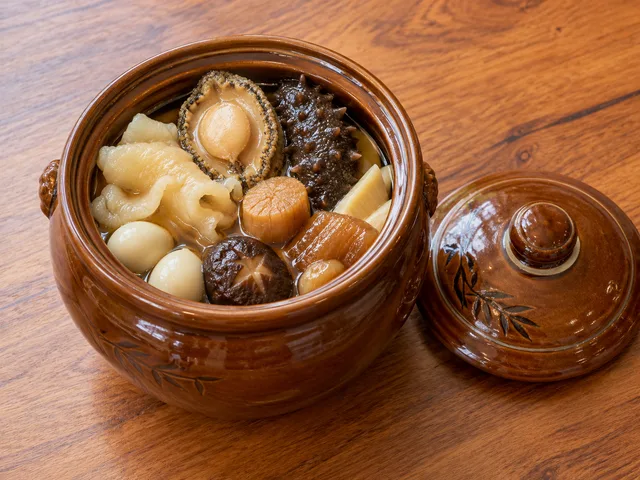
Buddha jumps over the wall
Fuzhou’s most famous banquet soup, often followed by taro paste.
Read about Buddha jumps over the wall →Lychee pork
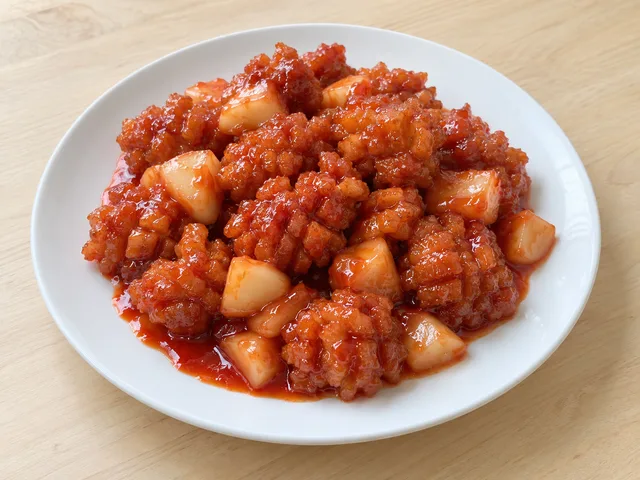
Fuzhou’s sweet and sour pork, cut to look like lychees.
Read about lychee pork →Milk tea
Where taro paste found its second life.
Read about milk tea →Fujian classics
- Buddha Jumps Over the Wall
Banquet jar soup · Banquets and New Year dinners
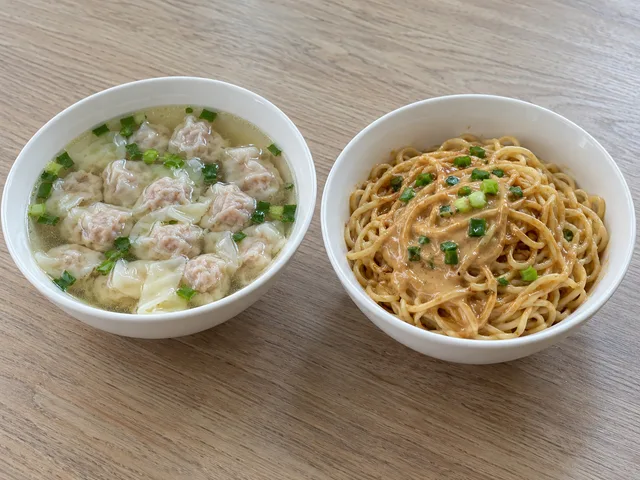
- Shaxian Bianrou and Banmian
Wontons and tossed noodles · Any meal, often late at night
- Lychee Pork
Sweet-and-sour fried pork · Family meals and banquets
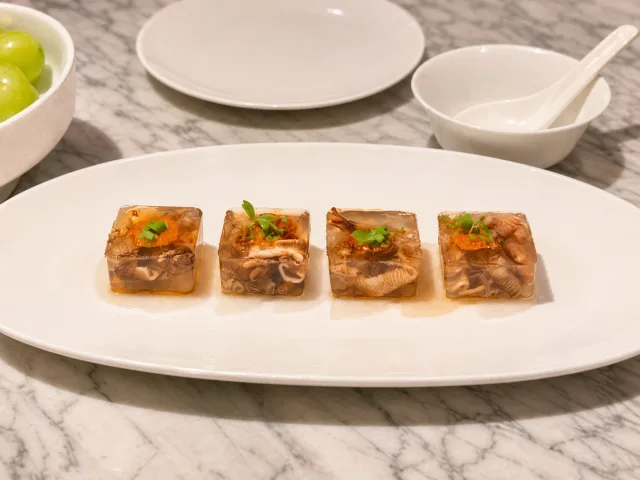
- Tusundong (Sea Worm Jelly)
Cold seafood jelly · Snack, summer evenings
Sweets from other regions
FAQ
Questions about Taro Paste
Is taro paste the same as yam paste or orh nee?
Yes. Orh nee is the Teochew name; in Singapore and Malaysia taro is often called yam, so menus say yam paste.
Why is some taro paste bright purple?
Taro alone gives a pale lilac-grey. A vivid purple paste usually contains purple sweet potato or coloring.
Is taro paste vegetarian?
Not traditionally: Fuzhou and Teochew versions use lard. Tea-shop and bakery versions often use milk, butter or oil instead.
Did Lin Zexu really serve taro paste to foreigners?
It is a popular Fuzhou story, but no record from his time supports it.
Sources
Sources and further reading
- 1 “Mashed Taros (芋泥, Yu Ni)”Fujian Provincial People’s Government (January 8, 2025) ↗
- 2 “Teochew food in Singapore”Culturepaedia, Singapore Chinese Cultural Centre ↗
- 3 Miao Jinjin, “Composition analysis and comprehensive evaluation of amino acids in Fuding betel nut taro” (福鼎槟榔芋中氨基酸组成成分分析与综合评价) (in Chinese)Southeast Horticulture, 2025, no. 3 ↗
- 4 “Macu launches taro paste boba fresh milk” (麻古茶坊推「芋泥波波鮮奶」) (in Chinese)Marie Claire Taiwan (December 24, 2020) ↗
- 5 “Suddenly the hit of this winter” (这个冬天突然爆火!): salty milk teas displace the autumn–winter sweet flavors (in Chinese)Huanqiu (2025) ↗
- 6 Chinese Cookbook: Fujian (中国菜谱·福建), p. 228: taiji taro paste (in Chinese)Chinese Cookbook editorial group, China Financial and Economic Publishing House (1982), indexed by laocp.tech ↗
- 7 Fuzhou, paradise for taro paste lovers (video, in Chinese)Wo Shi Yi Zhou (我是一粥), Bilibili (July 8, 2024) ↗
- 8 Fuzhou’s taro paste, from the old peanut-soup shop to the market (video, in Chinese)Da Biaoge 995 (大表哥995猪猪精), Bilibili (December 22, 2023) ↗
- 9 A scoop of taro paste costs 6 yuan outside; a whole plate at home (video, in Chinese)A Chen Chi Bao Le (阿晨吃饱了), Bilibili (December 3, 2022) ↗
- 10 Qing-dynasty taiji taro paste (video, in Chinese)Gu Ren Shi (古人食), Bilibili (December 25, 2017) ↗
- 11 Meiyabo peanut soup shop on Laoyaozhou Street, Fuzhou, founded 1937 (video, in Chinese)Xue Gao Xia Jack (jack是雪糕侠), Bilibili (January 3, 2024) ↗
Last updated November 2026