
01
Fish on a bed of garlic
Garlic, shallots, fish and a lid; no water.
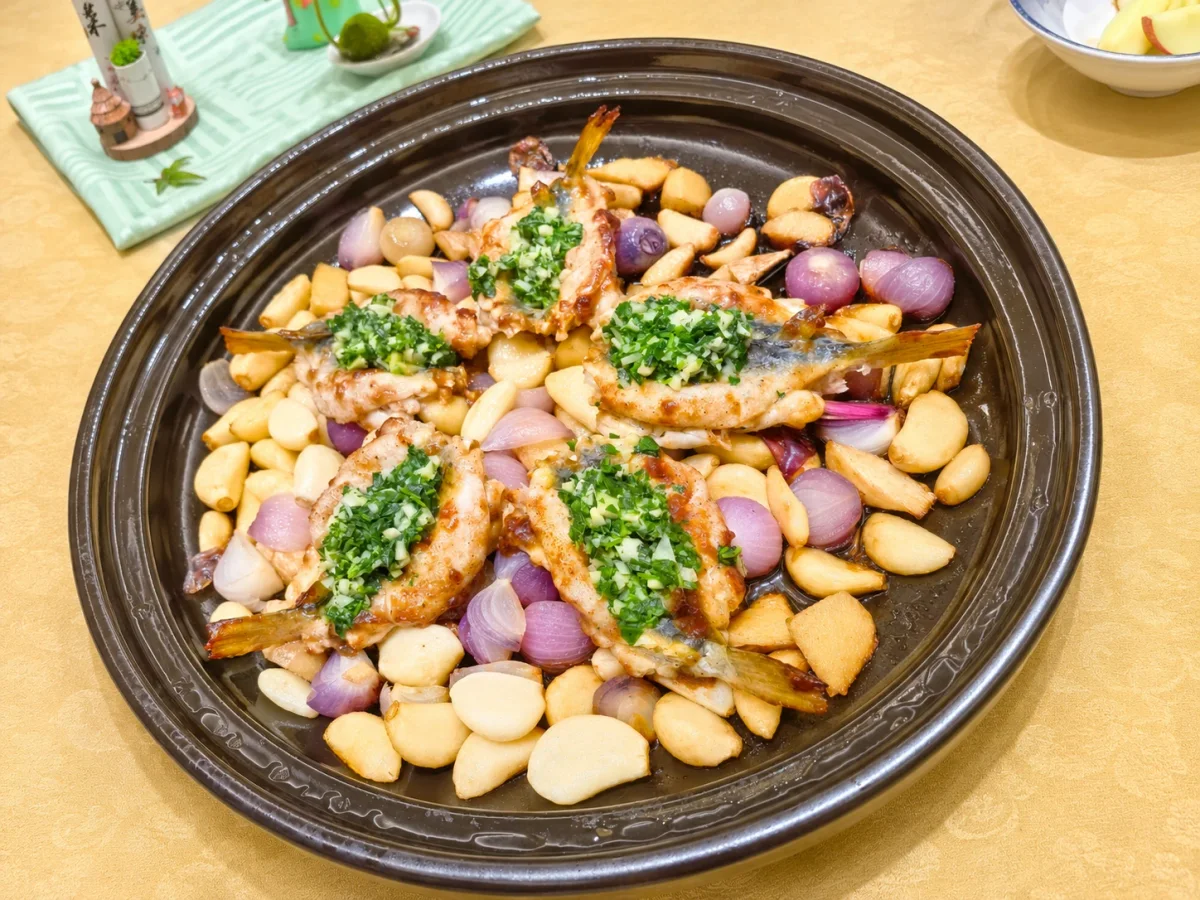
Brought to the restaurant table, the claypot is wide and shallow and glazed almost black. It holds five small yellow croakers, opened out flat with their tails still on, the flesh browned and glazed at the edges. Each one is topped with a thick stripe of finely chopped scallion greens and garlic. Underneath and all around is a deep bed of whole peeled garlic cloves, some golden, some still pale, mixed with small purple shallots, many cut in half, a few blistered and collapsing from the heat.
Nothing in the pot is liquid. In a Cantonese 生焗, a “raw bake”, the raw fish goes into a very hot claypot with a large quantity of aromatics, the lid goes on, and everything cooks in the steam that the garlic, shallots and fish give off. A few spoonfuls of seasoned sauce may go in, and at the end a splash of rice wine is poured round the rim, where it sizzles and fills the pot with fragrance, but no water is added.
Fried slowly in the oil until they colour, then steamed under the lid, the garlic cloves turn soft and sweet, and the shallots almost melt. Diners eat them along with the fish.
02
Jeh jeh: cooking in a hissing claypot
The family of dishes this one belongs to began on Guangzhou’s pavements.
Jeh jeh, 啫啫 in Cantonese, imitates the hiss and spit of food landing in a scorching pot. The method began at roadside stalls in Guangzhou around the 1970s. Out on the street the wind kept blowing the flame about, so a wok never held a steady heat for stir-frying. Cooks found a way round it: they heated a claypot until it was very hot, fried ginger, garlic and scallion in it, threw in the meat or fish with a sauce, tossed it, put the lid on and let it cook for a few minutes in the trapped heat.
Ginger, scallion and garlic are called the three treasures of jeh jeh. The dish has to reach the table still hissing, so at Huishijia in Guangzhou the cooks carry the claypots out themselves rather than handing them to the waiters. Some cooks pour a little spirit or rice wine into the pot at the end and let it flare for a moment.
Eel, pigeon, chicken and many other ingredients get the same treatment, and in recent years jeh jeh claypots have become one of the steadier growth areas in Chinese restaurants, with chains named after the dish. Fish is a natural fit, because it cooks fast and the aromatics cover any muddy or fishy taste.
03
Large and small yellow croaker
Two related fish share the name, and both nearly disappeared from the sea.
Chinese markets sell two fish as 黄鱼, yellow fish, or 黄花鱼. The large yellow croaker, 大黄鱼, Larimichthys crocea, grows to 80 cm and is golden when fresh. The small yellow croaker, 小黄鱼, Larimichthys polyactis, is commonly about 30 cm, with red lips and a grey-gold back. Both live in the Yellow Sea and East China Sea, and with cuttlefish and hairtail they were known as the four great sea products of China’s coast.
Both were overfished to collapse in the 1970s. The small yellow croaker’s catch later recovered. The large yellow croaker did not: it is listed as Critically Endangered, and most large yellow croaker eaten in China today is farmed. Farming began after scientists solved hatchery rearing at the end of the twentieth century, and it is concentrated around Ningde in eastern Fujian, where four of every five large yellow croakers in the country are raised, mostly in sea cages, and the industry is worth more than 20 billion yuan. Small yellow croaker is wilder and much harder to breed; a hatchery in Xiangshan, Zhejiang, only managed it at scale around 2020.
For a claypot, cooks use either. A large fish is filleted and cut into pieces two or three fingers wide; small ones, like those in our photograph, can go in whole or opened out flat. Yellow croaker suits the dish because its flesh is tender, almost like tofu when it is cooked briefly, with few small bones.
04
Why a claypot
Thick clay holds heat, which is the whole point.
A Chinese claypot, 砂锅, or 煲仔, “little pot”, in Cantonese, is made of clay mixed with sand and fired at a very high temperature, usually glazed inside and left rough outside. Its thick walls take time to heat up and then hold that heat for a long while. For jeh jeh and claypot baking that is exactly what is wanted: once the pot is scorching, the fish cooks from below and from the trapped steam above, and the pot keeps the dish hissing all the way to the table.
The weakness of clay is sudden temperature change, which can crack it. Cooks heat a claypot gradually, starting low and turning the heat up, and they heat it dry until it is very hot before adding oil, which also stops the garlic and fish from sticking. A cold pot taken straight to a fierce flame, or a hot one splashed with cold water, is how claypots break.
05
The method
Three stages: season the fish, fry the aromatics, bake under the lid.
The fish is cleaned carefully, with the black lining of the belly and any blood scraped away. A large fish is filleted and cut into pieces; small ones are opened out. The flesh is seasoned lightly with salt, white pepper and a little cooking wine, and many cooks coat it with egg white and cornflour. The starch matters: it keeps the juices in, so the fish stays tender instead of drying out and the pot does not flood with water.
The pot is heated, oiled, and the aromatics go in: plenty of garlic, left whole or halved rather than crushed, shallots, ginger and the white parts of scallions. They are fried slowly until they smell toasted and catch a little colour at the edges, because they supply almost all of the flavour. The heat is turned down, the fish is arranged on top, and some cooks add a few spoonfuls of sauce made from soy sauce, a little sugar and oyster sauce.
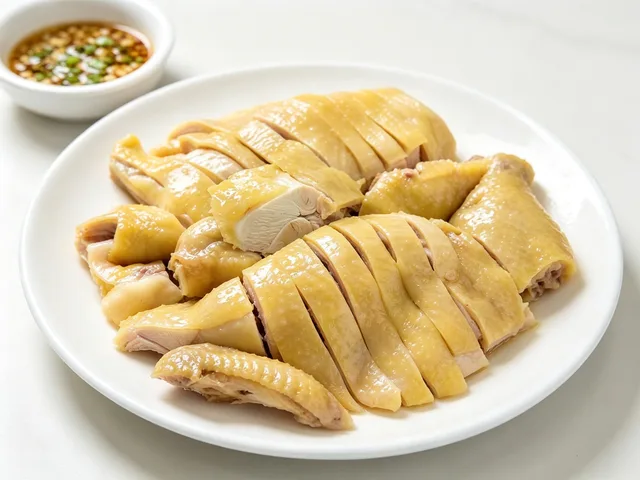
The lid goes on and the pot cooks over medium heat for four to six minutes. Then rice wine is poured round the edge of the lid, two more minutes, and the dish is done. The fish can also be finished with a ginger and scallion relish, finely chopped ginger, scallion and salt with very hot oil poured over, the same relish served with white cut chicken; the green topping on the five small croakers above is a version of it, heavy on scallion and garlic.
| Ingredient | When | Why |
|---|---|---|
| 蒜子 whole garlic cloves | First, fried slowly | Fragrance; turns sweet and soft |
| 红葱头 shallots | With the garlic | Sweetness and moisture |
| 姜 ginger | With the garlic | Covers fishiness |
| 黄鱼 yellow croaker | On top, lid on | Bakes in the steam |
| 米酒 rice wine | Round the rim at the end | A burst of aroma |
| 姜葱蓉 ginger-scallion relish | Over the fish | Fresh, salty finish |
06
Claypot yellow croaker at home
About fifteen minutes, most of it watching the garlic.
For 2 to 3 people: 1 large yellow croaker of about 600 g, or 4 to 5 small ones; ½ teaspoon salt, a pinch of white pepper, 1 teaspoon Shaoxing or cooking wine, 1 tablespoon cornflour; 2 heads garlic, peeled, about 25 cloves; 8 small shallots, halved; 5 slices ginger; 3 scallions, whites cut in lengths and greens chopped; 3 tablespoons oil; 1 tablespoon light soy sauce, 1 teaspoon oyster sauce and ½ teaspoon sugar mixed with 2 tablespoons water; 2 tablespoons rice wine.
- 1. Prepare the fish
Clean the fish, scraping out the black belly lining. Cut a large fish into pieces two or three fingers wide; open small ones out flat. Season with the salt, pepper and wine, then toss with the cornflour.
- 2. Heat the pot
Put the dry claypot on low heat, then raise it gradually to medium-high until it is very hot. Add the oil.
- 3. Fry the aromatics
Add the garlic, shallots, ginger and scallion whites and fry, stirring, for 4 to 5 minutes until fragrant and lightly golden at the edges.
- 4. Bake
Turn the heat down, lay the fish on the aromatics and spoon over the sauce. Cover and cook on medium heat for 5 to 6 minutes. Pour the rice wine round the edge of the lid, cook 1 to 2 minutes more, scatter over the scallion greens and take the pot to the table.
Never pour cold liquid into a hot empty claypot, and set it down on a board or cloth, not a cold stone counter.
07
Ordering it
Look for it among the claypots, not the steamed fish.
Find it on the menu
Look for 砂锅焗黄鱼, 生焗黄鱼, 啫啫黄鱼 or 蒜子焗黄鱼, usually in the claypot section.
Eat it fast
It arrives sizzling. Lift the lid at the table and eat while the pot is still hissing.
Eat the garlic
The soft, sweet garlic cloves and shallots are half the dish.
With it
Plain rice, a green vegetable and a soup, or claypot rice if you want to stay with the clay.
08
More from Guangdong
Other pages on the atlas.
Claypot rice
Rice cooked in the same kind of pot, with a crisp crust.
Read about claypot rice →White cut chicken
Poached chicken with the ginger-scallion relish.
Read about white cut chicken →Qingyuan chicken
The free-range chicken Guangdong argues over.
Read about Qingyuan chicken →Guangdong food
Dim sum, roast meats and the freshest seafood.
Explore Guangdong →Guangdong classics
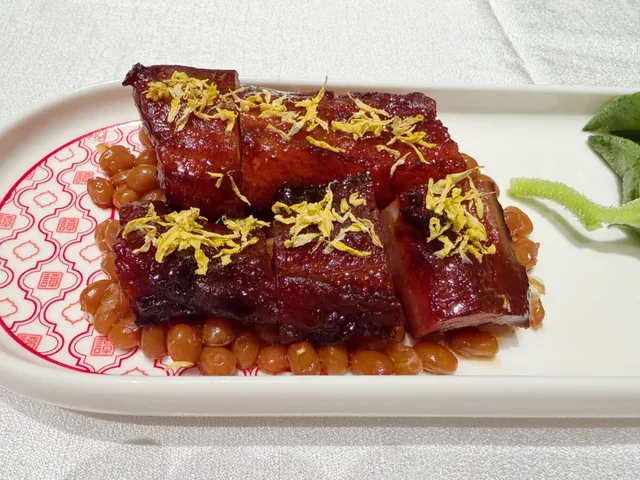
- Char Siu
Roast pork · Lunch or dinner, with rice
- White Cut Chicken
Poached chicken · Lunch or dinner
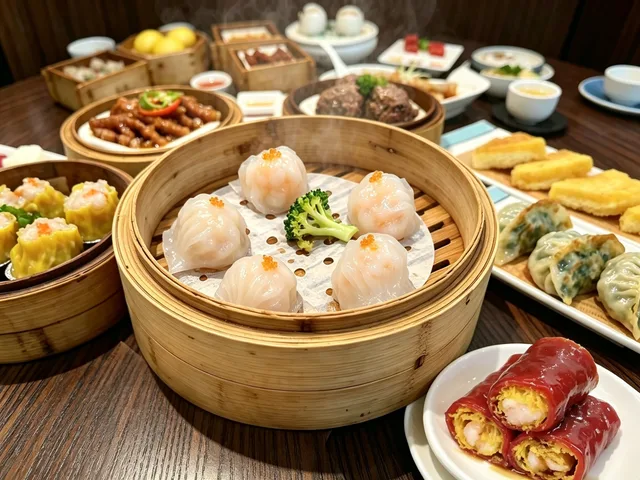
- Cantonese Yum Cha
Yum cha · Morning tea, weekends with family
- Egg Fried Rice
Fried rice · Lunch, dinner, end of a meal
- Beef Chow Fun
Fried rice noodles · Lunch, dinner or late-night supper
- Mooncake
Festival pastry · Mid-Autumn Festival
FAQ
Questions about Claypot Yellow Croaker
What is claypot yellow croaker?
Yellow croaker baked on a bed of fried garlic, shallots and ginger in a covered, very hot claypot, with no water added.
What does jeh jeh mean?
It is Cantonese for the hissing sound food makes in a scorching claypot, and the name of the style of cooking.
Is the yellow croaker wild?
Usually not. Wild large yellow croaker is critically endangered; most on sale is farmed, much of it around Ningde in Fujian.
Can I use another fish?
Yes. Any tender fish with few bones works; jeh jeh claypots are also made with eel.
Why add cornflour?
It holds in the juices, so the fish stays tender and the pot does not turn watery.
Sources
Sources and further reading
- 1 Wu Jianfeng, Zhou Yi and Song Rongjun, “A new fishermen’s song: eastern Fujian’s large yellow croaker grows into a big industry” (2026) (in Chinese)Xinhua News Agency ↗
- 2 Lin Bo and Zhang Fangfang, “Xiangshan cracks large-scale breeding of small yellow croaker and releases 300,000 fry” (2020) (in Chinese)China News Service ↗
- 3 Claypot dishes report 2024 (砂锅菜发展报告2024) (in Chinese)Jiemian, from Hongcan ↗
- 4 Larimichthys crocea (large yellow croaker)Wikipedia ↗
- 5 Larimichthys polyactis (small yellow croaker)Wikipedia ↗
- 6 Clay pot cookingWikipedia ↗
- 7 Ever seen chefs run the food to the table? Huishijia’s flagship in Guangzhou (video, in Chinese)Zhentan Gao Wenqi (真探高文麒), Bilibili (July 2023) ↗
- 8 Jeh jeh chicken in a claypot: the sauce is everything (video, in Chinese)Lao Fan Gu (老饭骨), Bilibili (June 2025) ↗
- 9 Claypot-baked yellow croaker, quick and simple (video, in Chinese)Feng Xiaochu de Caipu (冯小厨的菜谱), Bilibili (March 2022) ↗
- 10 Yellow croaker baked in a claypot with ginger and scallion, not a drop of water (video, in Chinese)Xiao Chu Yu Xiaoyu (小厨余小渔全网同名), Bilibili (May 2024) ↗
Last updated November 2026