
01
Clear beef broth, seasoned by you
The self-service table at one Mangshi shop in 2025 held more than twenty condiments.
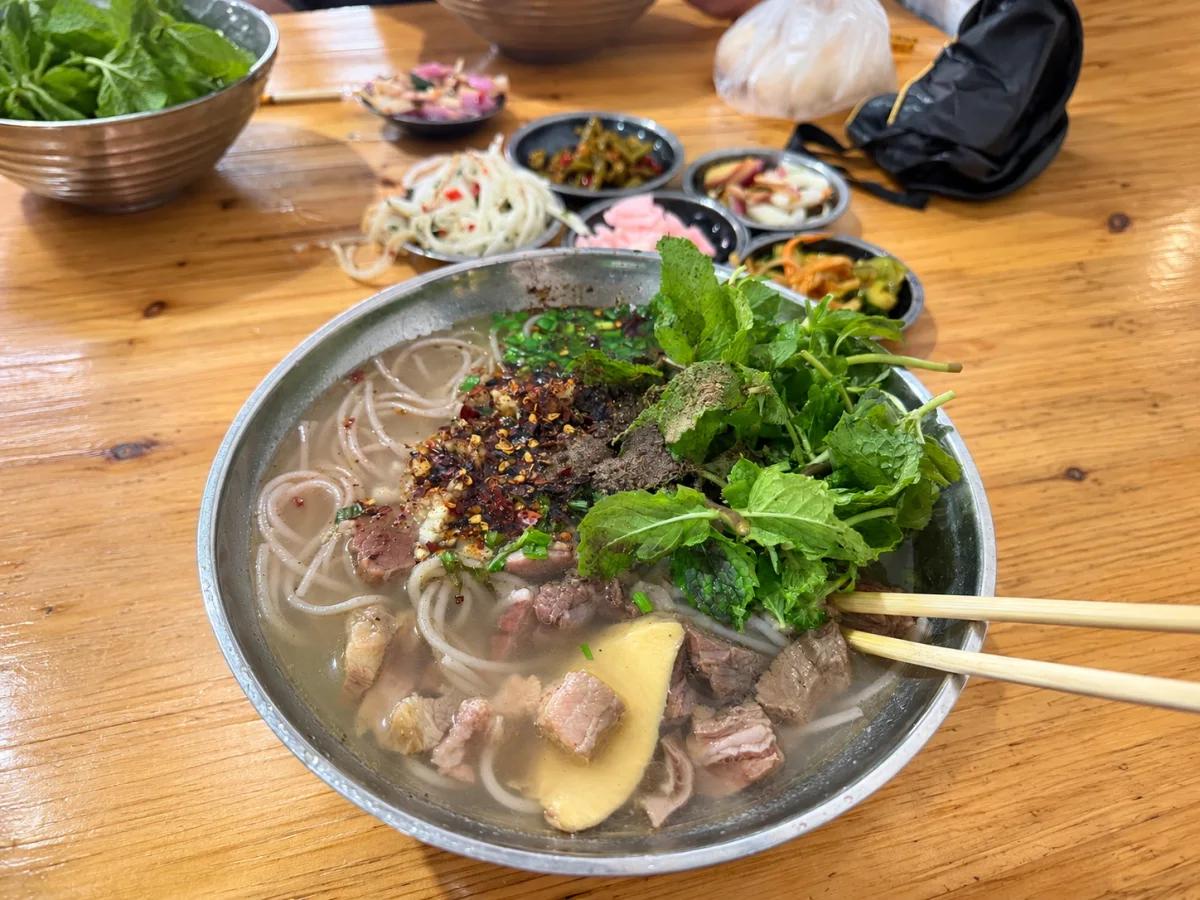
A steel bowl of thin rice noodles in clear broth, with slices of beef and tendon, a fistful of fresh mint and coriander on one side and a spoonful of dark chilli flakes on the other, is how most people end up eating it; in our photograph a row of little dishes from the condiment table stands behind it. What arrives from the kitchen is plainer, just noodles, beef and broth. Everything else you add.
Mangshi is the capital of Dehong, a prefecture of Dai, Jingpo and other peoples on the Myanmar border; its Dai name, Menghuan, is said to mean the place where the day first breaks. In Mangshi, breakfast has to begin with a bowl of clear-broth beef rice noodles, and the trick is to follow the locals around the condiment table and take a little of everything they take.
The Yunnan food writer Zhang Shiqiu lists Dehong’s stewed-beef noodles among the province’s breakfast bowls, and notes that in Yunnan a breakfast shop is practically a rice-noodle shop. Lemon wedges and tree-tomato sauce on the table, the book says, are the sign of a Dai-style breakfast of Dehong or Xishuangbanna.
02
The condiment table
The table is the point of the meal.
Twenty-odd bowls and bottles line the table: fresh mint, coriander, chives and celery, lemons, tomato paste, coarse salt, pepper, ground tsaoko, garlic, chilli oil, Sichuan pepper oil and ginger-garlic oil. The strangest-looking thing is a piece of wood. It is a branch of mountain pepper, mujiangzi, and Zhang Shiqiu’s book explains that you scrape its bark with a knife to get a ready-made seasoning with a sharp, citrusy scent; a single stick like that looks likely to outlast the shop itself. Squeezing the lemons and scraping the root are the ritual of a Mangshi bowl, and in 2024 a thirty-year-old breakfast shop also set out coral peppers with a lemon-and-citrus aroma.
| Condiment | What it is | Use |
|---|---|---|
| 薄荷 mint | Fresh mint leaves | A handful on top |
| 香菜 芹菜 韭菜 | Coriander, celery, chives | Chopped greens |
| 柠檬 lemon | Lemon wedges | Squeeze for sourness |
| 木姜子 mountain pepper | A branch of litsea, scraped with a knife | Citrusy, peppery |
| 番茄 tomato paste | Tomato or tree-tomato paste | Sour and fruity |
| 辣椒油 花椒油 | Chilli oil, Sichuan pepper oil | Heat and numbness |
| 姜蒜油 草果 | Ginger-garlic oil, ground tsaoko | Warm spice |
| 碾盐 胡椒 | Coarse ground salt, pepper | Seasoning |
03
Beef, broth, and noodles or ersi
Choose your noodle and your beef.
Shops usually offer two or three kinds of noodle. At a breakfast shop that had been selling for thirty years by 2024, there were fine noodles, semi-dry, chewy and strongly scented of rice, and thick fresh rice noodles, smooth and springy. Many people choose ersi instead, strands cut from cakes of steamed, pounded rice; Zhang Shiqiu points out that Baoshan, Tengchong and Mangshi, less than 150 kilometres apart, each have their own distinct ersi, Mangshi’s being fine.
The beef is fresh rather than cured, cooked tender with plenty of tendon, and the broth is made from beef bones, clear and savoury before anything is added. Some shops also do a sour version, the beef stewed in a broth soured with sour papaya and tomato. Yunnan’s south-western borderlands, Mangshi among them, raise the humped gaofeng zebu cattle, China’s only zebu breed.
04
The rest of a Mangshi day
Beef noodles are only breakfast.
A whole day of eating in Mangshi can run from clear beef ersi in the morning to sapie noodles, a Dai dish. Its kusa version is a dipping sauce of raw minced beef mixed with the bitter green juice taken from a cow’s stomach, which coats cool, slippery noodles and tastes rather like Cantonese herbal tea, bitter with a sweet aftertaste; the lemon version uses cooked minced beef and lime. Then there is xidoufen, a smooth porridge of peas soaked overnight and ground fresh each morning, poured over ersi with peanut oil, sesame oil, soy, chilli and coriander, and eaten with grilled baba.
In the afternoon Mangshi snacks on chicken feet drowned in sauce and sweet paolada, and in the evening many people head to Mangxing, a village on the edge of town where house after house grills skewers over charcoal, generous with the meat and grilled crisp.
05
Pine-needle roast pigeon
Mangshi’s other famous meat is a pigeon roasted over pine.
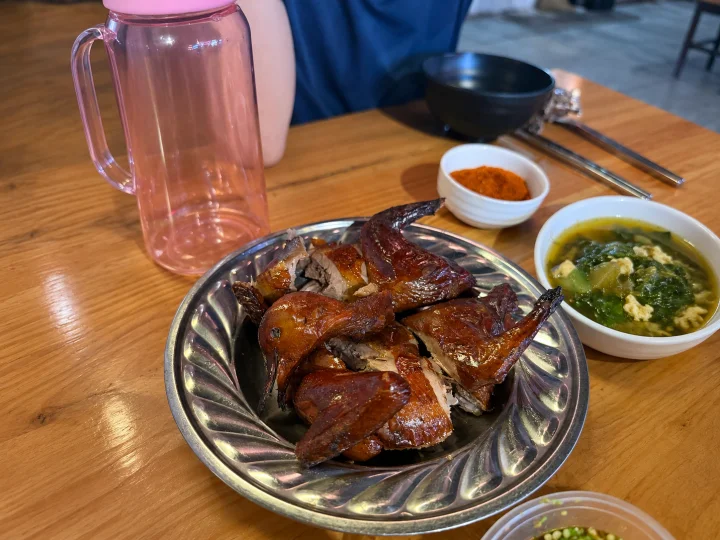
Pine-needle roast pigeon, songzhen kao ruge, has become one of Mangshi’s draws. At a small family shop in 2025, where an order took about an hour, it was done like this: the charcoal stove is lit, the pigeon is dipped in soy sauce and roasted over burning dried needles of Yunnan pine, which the owners pick and dry themselves, until the skin is lacquered and golden. It comes chopped on a plate with a dish of dry chilli powder,; it is best eaten on the spot rather than delivered. By 2025 the style was popular in many places in Yunnan.
Pine-needle roast pigeon
Our own photograph of the roast pigeon.
Sources [5]
06
Live crab from across the border
In the evening, Mangshi eats crab.
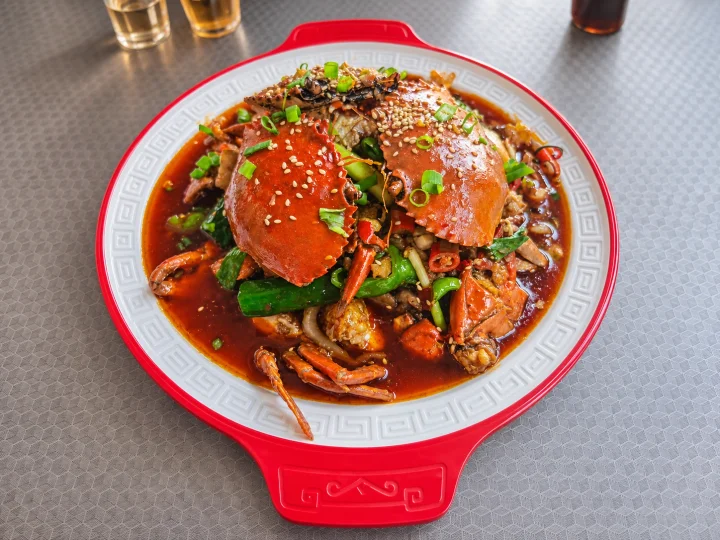
Live crab, huo pangxie, is the other local speciality. In 2023 two of the town’s well-known crab restaurants served crabs of three or four to the jin, cooked to order: stir-fried spicy with chilli and bean paste, with ginger and scallion, or simply steamed and served with three dipping sauces. The second restaurant, named after the border town of Ruili, took twenty minutes to cook a pot; its crabs came from the Myanmar side. At the end, the leftover spicy sauce was good for stirring noodles into. The crabs are small, a mouthful or two of meat each, so one jin per person is about the right pace. The steamed ones taste sweet and clean without any sauce at all; the spicy ones, red with chilli oil and full of vegetables, were the favourite. Dinner for two cost 238 yuan at one restaurant and 314 at the other.
Spicy live crab
Our own photograph of a plate of spicy crab.
Sources [6]
07
Clear beef rice noodles at home
The broth takes time; the rest is shopping for herbs.
For 4: 1.5 kg beef bones; 600 g beef shin or brisket with tendon; ginger; salt; 500 g fresh rice noodles (or dried, cooked); to serve, fresh mint, coriander, chopped celery and chives, lemon wedges, chilli flakes or chilli oil, a little ground tsaoko, chopped tomato, and mountain-pepper (litsea) oil if you can find it.
- 1. Broth
Blanch the bones, then simmer them with ginger in plenty of water for 3 to 4 hours, skimming, until clear and savoury. Salt lightly.
- 2. Beef
Simmer the beef in the broth for about 2 hours until tender, lift out, cool and slice.
- 3. Noodles
Blanch the noodles, put them in bowls, lay the beef on top and ladle over boiling broth.
- 4. Season
Set out the herbs and condiments and let everyone build their own bowl.
Be generous with mint and lemon; the broth is meant to be plain so the condiments can do the work.
08
How to order it
Go early for noodles, book ahead for pigeon.
Breakfast
Popular shops have queues before nine in the morning.
Price
A small bowl about 10 yuan in 2024 and 2025; add extra fresh beef for more.
Noodle
Choose fine, thick or ersi; clear broth or sour.
Condiments
Take a little of everything, then adjust; scrape the mountain-pepper stick.
Pigeon and crab
Order roast pigeon an hour ahead; crab is cooked to order by weight.
09
More from Yunnan
Other pages on the atlas.
Tengchong grilled pork rice noodles
Pine-fire pork over red rice noodles, also from western Yunnan.
Read about Tengchong noodles →Ersi
Rice-cake noodles, the alternative to rice noodles.
Read about ersi →Crossing-the-bridge noodles
Yunnan’s best-known bowl.
Read about crossing-the-bridge noodles →Yunnan food
Rice noodles, mushrooms and Dai flavours.
Explore Yunnan →Yunnan classics
- Tengchong Grilled Pork Rice Noodles
Rice noodles with fire-grilled pork · Breakfast or lunch
- Crossing-the-Bridge Noodles
Rice-noodle soup · Lunch or dinner
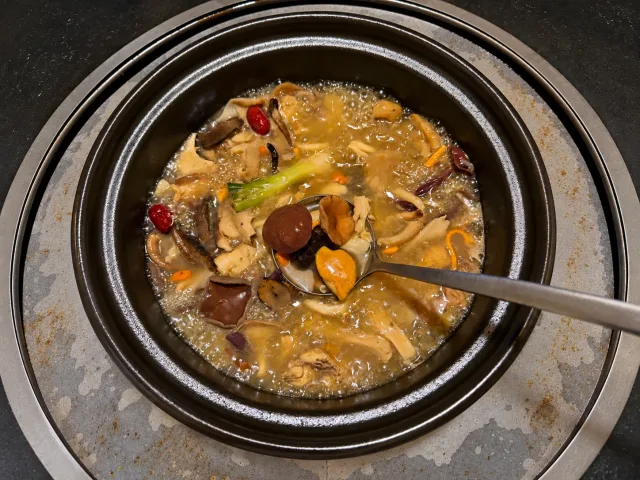
- Steam Pot Chicken
Soup · Lunch or dinner
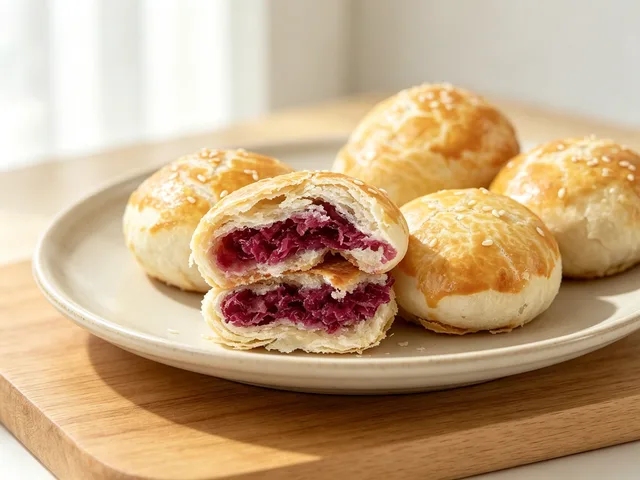
- Flower Cake
Rose pastry · Bakery snack or boxed gift
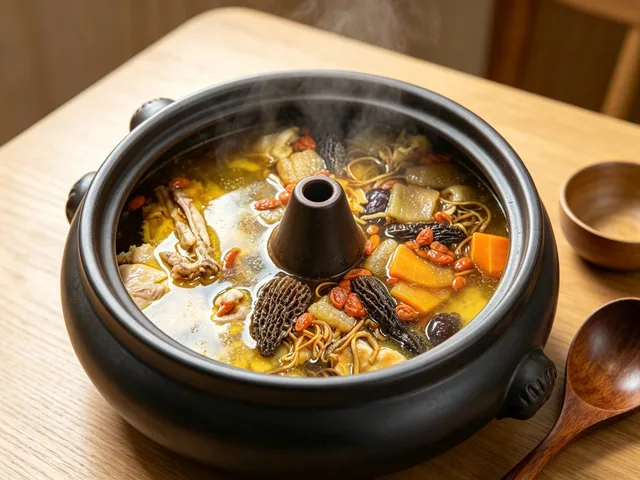
- Mushroom Hot Pot
Wild mushroom hot pot · Rainy season, June to September
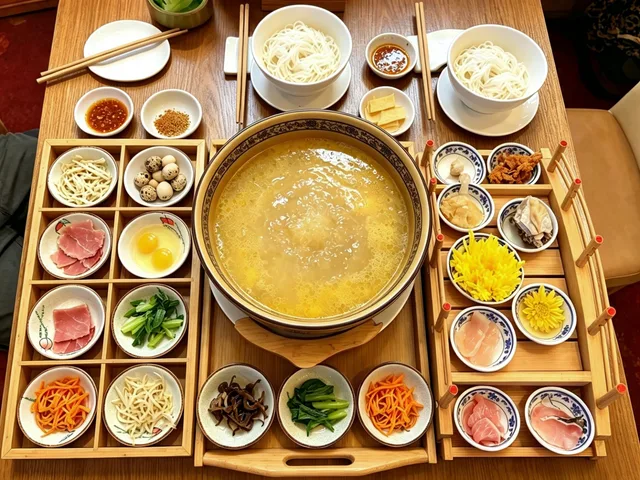
- Ersi
Pounded-rice noodles · Mostly breakfast
Noodles from other regions
FAQ
Questions about Mangshi Beef Rice Noodles
What are Mangshi beef rice noodles?
Rice noodles or ersi in clear beef-bone broth with fresh beef and tendon, seasoned from a table of herbs and condiments.
Where is Mangshi?
The capital of Dehong prefecture in western Yunnan, on the border with Myanmar.
What is the stick on the table?
A branch of mountain pepper (mujiangzi); scrape the bark with a knife for a citrusy seasoning.
Is it spicy?
Only if you add chilli; the broth itself is clear and mild.
How much does it cost?
About 10 yuan for a small bowl in 2024 and 2025.
What is pine-needle roast pigeon?
Pigeon dipped in soy sauce and roasted over burning dried pine needles; order about an hour ahead.
Where do the crabs come from?
Some Mangshi live-crab shops get theirs from the Myanmar side of the border.
Sources
Sources and further reading
- 1 Zhang Shiqiu, Tabian Qingshan Chifan Qu (踏遍青山吃饭去): “What do Yunnan people eat?”, “Rice noodles, king of the rice staples” and “Rice foods beyond rice noodles” (in Chinese)Yunnan People’s Publishing House, 2025; WeRead edition ↗
- 2 Mangshi, Dehong: clear-broth beef rice noodles, Mangxing village barbecue and the golden pagoda (video, in Chinese)A Xing Tan Dian (阿星探店), Bilibili (March 2025) ↗
- 3 Mangshi for a few yuan: clear beef broth, sour beef broth, pea porridge and sapie noodles (video, in Chinese)Mixue Shiji (米雪食记), Bilibili (April 2025) ↗
- 4 Eating rice noodles in all sixteen Yunnan prefectures: a thirty-year breakfast shop in Mangshi (video, in Chinese)Bai Jun (白浚baijun), Bilibili (May 2024) ↗
- 5 An hour’s wait for Mangshi pine-needle roast pigeon (video, in Chinese)Lao Wang zai Zhongguo (老王在中国), Bilibili (October 2025) ↗
- 6 Live crab, a must in Mangshi: two crab restaurants in one night (video, in Chinese)Tuixiu Erren Zu (退休二人组), Bilibili (May 2023) ↗
Last updated November 2026