
01
A bowl built from a counter of toppings
Seafood, pork and beef can all go into the soup.
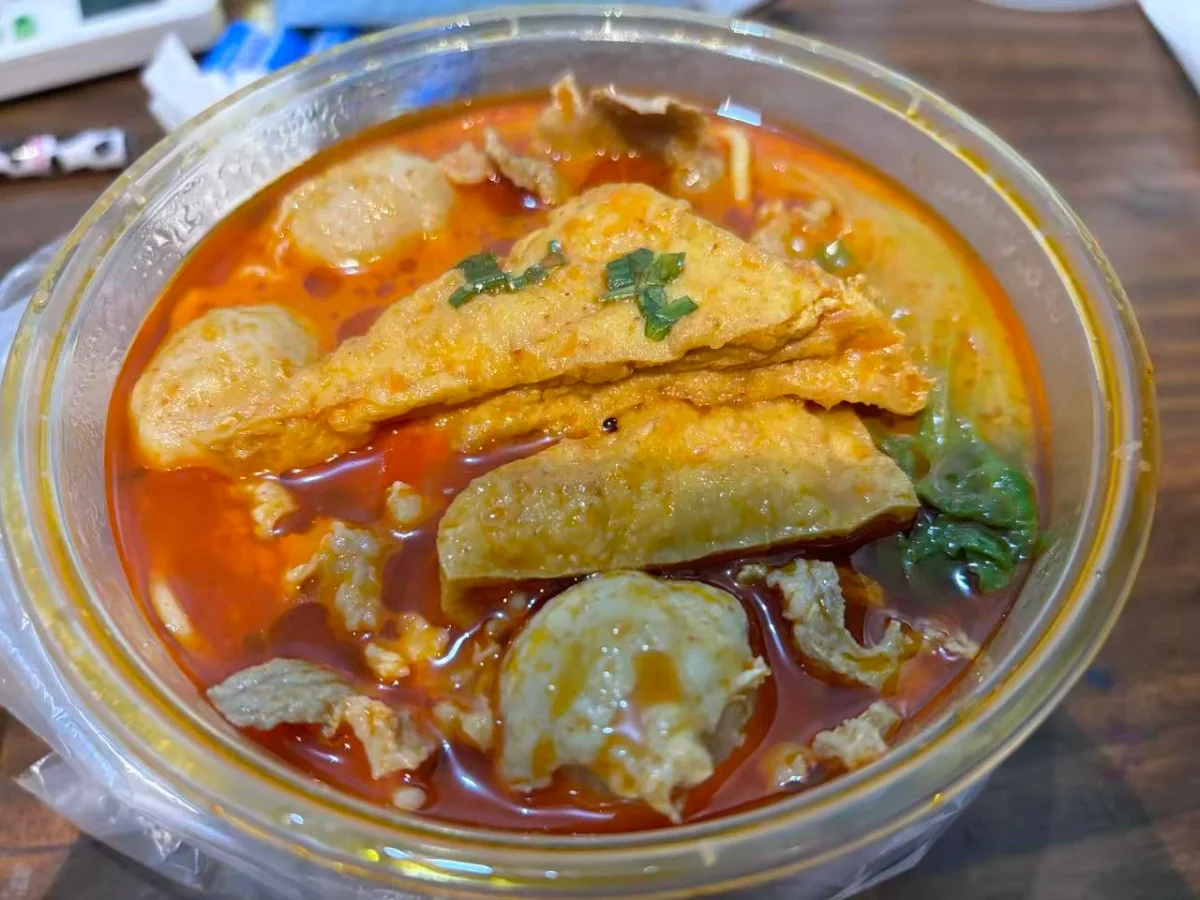
A shacha noodle shop is laid out like a market stall. Along the counter sit trays of toppings: prawns, slices of shark, goose, tofu, pork, beef, bean sprouts and greens. You point at what you want, the cook drops it into a basket with a handful of yellow wheat noodles and dips it in boiling water for a few seconds, tips it all into a bowl and ladles over the broth.
The broth is thick and orange-red, savoury with shrimp, nutty from peanut, warm with chilli and a little sweet, and it coats the noodles.
Because you choose the toppings, every bowl is different and so is the price. At a 30-year-old shop in Jinjiang, Quanzhou, a bowl heaped with shark, goose, prawns and tofu cost 25 yuan in 2025, and the broth was not watery at all.
02
Satay that came home from the Nanyang
Shacha is satay, pronounced the Minnan way.
The word 沙茶 is read shā chá in Mandarin, but in the Minnan language of southern Fujian it sounds close to “sa-te,” the Malay and Indonesian word for satay; 沙茶 and 沙嗲 are the same word. Since the Ming and Qing dynasties people from Quanzhou, Zhangzhou and Xiamen have sailed to work in Singapore, Penang and Malacca, and they brought curry and shacha back with them.
Once home, the sauce changed. Local workshops kept the Southeast Asian spice idea but adjusted the oil, salt and heat to Minnan taste, and the result became “Minnan shacha sauce.” A 1960 national cookbook already records the story for a Zhangzhou dish of shacha grilled pork, which it says came from Java and had been made by the Zhangzhou chef Ouyang Shu for more than forty years. Southeast Asian satay sauces often use coconut milk and lemongrass.
Liu Ruixing, who returned to Quanzhou from Indonesia in the 1960s at fifteen, speaking Javanese, runs a shacha stall with his wife, frying peanut butter and spices into sauce and pouring in rich stock. His children and grandson have learned to make it too.
03
Shacha sauce: shrimp, shallot, garlic, chilli and peanut
Noodle shops make their own; the old formula is simple.
A 1960 cookbook prints a Zhangzhou recipe for shacha powder. Chopped prawns, a lot of chopped garlic and shallot are fried in peanut oil until golden-red, chopped chilli goes in for a minute, and the whole lot is ground to a powder; peanut butter, dried in the wok, is mixed in at the end, and the powder is boiled with sugar into a sauce. The quantities are 4 liang of prawns, 1 jin each of garlic and shallot, 4 liang of peanut oil, half a jin of chilli and 4 liang of peanut butter.
Modern sauces work on the same idea. Most Minnan homes keep a jar, but noodle shops fry their own sauce. When the sauce goes into the soup, it is usually fried again with peanut butter, as in a 1988 Fujian recipe that grinds shacha chilli paste and peanut butter together in the wok before adding stock.
Peanut has long been grown locally. Ming and Qing records called peanuts “foreign beans,” and by the Qing dynasty peanut oil was a main cooking fat in coastal Fujian.
04
The broth
Shops build the soup on bone stock and shacha.
The base is a pork bone stock, simmered from early morning. Shacha sauce, fried again with peanut butter, garlic and sometimes a little sugar, is stirred in until the stock turns thick and orange. A 1984 Fujian snack book gives the old proportion for a shacha hot pot, a winter dish in Xiamen: three liang of shacha to two jin of bone stock, about 150 grams to a litre, seasoned with soy sauce.
Getting it right takes time. One shop that opened behind Quanzhou Normal University in 2018 took nearly two years to settle its broth; the owner’s father, a former ship’s cook, gets up after five every morning to make the stock.
05
What to put in it
The choices fall into three groups.
Tofu drinks up the broth. At the Jinjiang shop in 2025 the extras cost more than the noodles themselves, and three or four prawns came to 6 yuan. The noodles there were soft rather than chewy.
| Group | Examples | Why people order them |
|---|---|---|
| Seafood | Prawns, shark slices | Firm and springy |
| Meat | Pork, beef, goose | Sliced thin and blanched; goose is sweet, with no gaminess |
| Soakers | Tofu, bean sprouts, greens | Tofu soaks up the thick broth |
06
Xiamen, Zhangzhou and the rest of the shacha family
The sauce runs through all of southern Fujian cooking.
Xiamen is the city most associated with shacha noodles, one of its traditional famous dishes, found on every street. Quanzhou and Jinjiang make the same bowl, with their own favourite toppings such as goose and shark. In Zhangzhou, shacha goes into a hot pot with peanut and local seafood, and a 1984 Fujian snack book records a Xiamen winter pot of shacha broth with thin-sliced beef and greens cooked at the table.
The same book records shacha pork skewers: pork brushed with shacha chilli oil, grilled over charcoal and served with toast and pickled radish, mustard greens and ginger. Quanzhou cooks shacha crab and shacha beef, and at a 2025 food fair one stall turned Japanese oden into a shacha stew. “Everything can be shacha,” its chef said.
07
Shacha noodles at home
With a jar of shacha sauce, the broth takes twenty minutes.
For two bowls: 1 litre pork bone stock (or chicken stock); 4 tablespoons shacha sauce (Bullhead or a Minnan brand); 1 heaped tablespoon smooth peanut butter; 2 cloves garlic and 2 shallots, minced; 1 teaspoon sugar; 1 tablespoon light soy sauce; 1 tablespoon cornstarch mixed with water; 250 g fresh yellow alkaline noodles; toppings of choice, for example 8 prawns, 100 g sliced pork liver or lean pork, fish balls, fried tofu puffs, a handful of bean sprouts and greens; chopped Chinese chives or scallion.
- 1. Fry the sauce
Warm a tablespoon of oil and fry the garlic and shallot until golden. Add the shacha sauce and peanut butter and stir over low heat for a minute until fragrant and smooth.
- 2. Make the broth
Pour in the stock, add the sugar and soy sauce, and simmer for 10 minutes. Thicken lightly with the cornstarch slurry so it coats a spoon. Taste for salt and chilli.
- 3. Blanch
In a separate pot of boiling water, cook the toppings briefly, seafood and liver for 30 to 60 seconds, then the noodles and sprouts for a few seconds until hot.
- 4. Assemble
Put noodles and toppings in bowls, ladle the hot broth over and scatter chives.
For a homemade sauce, follow the 1960 recipe: fry 1 jin each of chopped garlic and shallot with 4 liang of chopped prawns in 4 liang of peanut oil until golden-red, add half a jin of chopped chilli for a minute, grind, and mix in 4 liang of peanut butter dried in the wok.
08
How to order it
Point, pay by weight or piece, and wait.
Choose at the counter
Pick toppings from the trays; each has its own price, and the noodles and broth are a base charge.
Budget
A bowl with several toppings was about 25 yuan in Jinjiang in 2025.
Prawns
Three or four prawns were about 6 yuan in Jinjiang in 2025.
Add tofu
Tofu soaks up the broth.
Allergies
The broth contains peanut and shrimp; it is not suitable for peanut or shellfish allergies.
09
More from southern Fujian and beyond
Other pages on the atlas.
Hong Kong satay beef noodles
Another satay noodle, from Hong Kong cafés.
Read about satay beef noodles →Tusundong
Southern Fujian’s sea worm jelly.
Read about tusundong →Chaoshan beef hot pot
Where shacha is the dipping sauce.
Read about Chaoshan beef hot pot →Fujian food
From Fuzhou to the Minnan coast.
Explore Fujian →Fujian classics
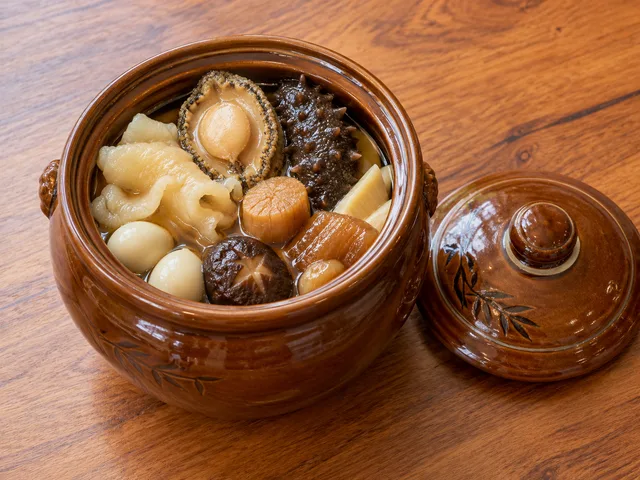
- Buddha Jumps Over the Wall
Banquet jar soup · Banquets and New Year dinners
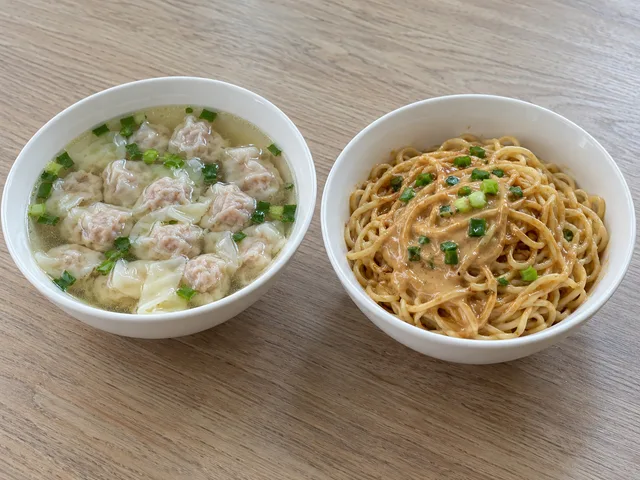
- Shaxian Bianrou and Banmian
Wontons and tossed noodles · Any meal, often late at night
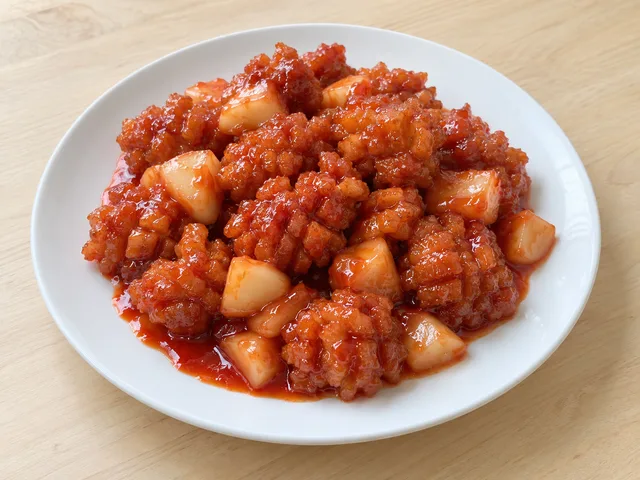
- Lychee Pork
Sweet-and-sour fried pork · Family meals and banquets
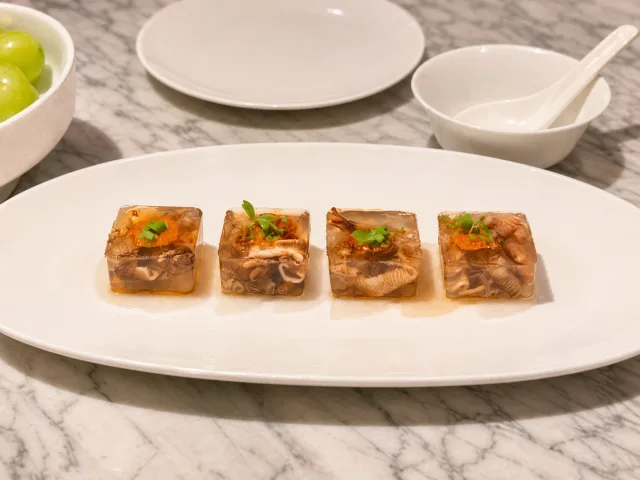
- Tusundong (Sea Worm Jelly)
Cold seafood jelly · Snack, summer evenings
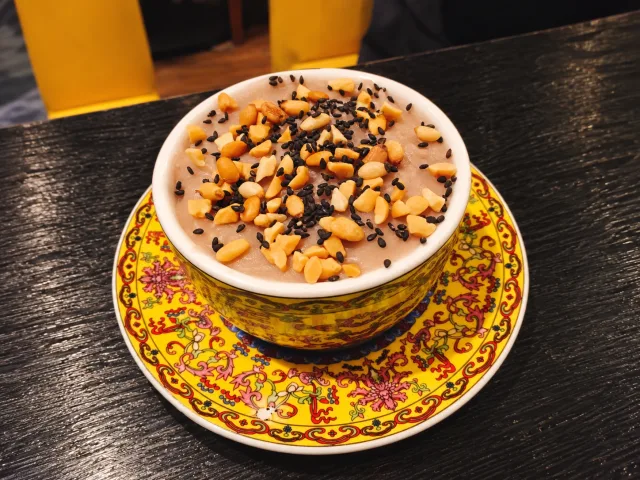
- Taro Paste
Taro dessert · End of a banquet; snack
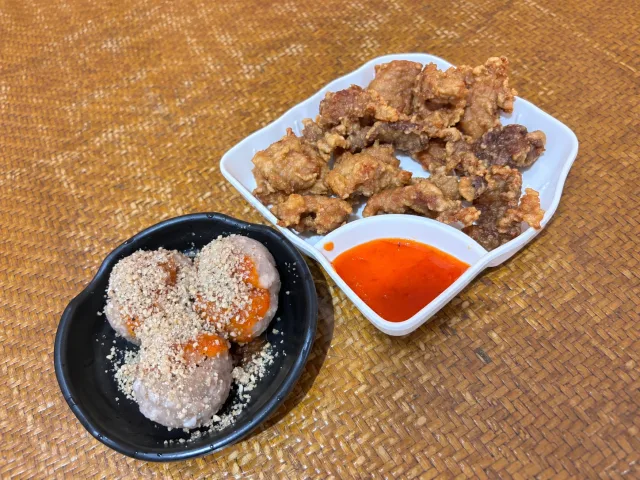
- Quanzhou Vinegar Pork and Taro Balls
Fried vinegar pork and steamed taro balls · Snack or side dish
Noodles from other regions
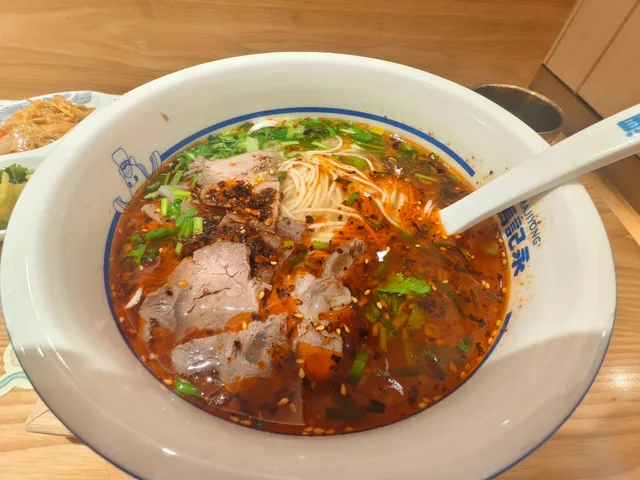
FAQ
Questions about Quanzhou Shacha Noodles
What are shacha noodles?
A southern Fujian noodle soup: yellow noodles and toppings of your choice, such as seafood, meat and tofu, in a thick broth of stock and peanut-rich shacha sauce.
Is shacha the same as satay?
The name is the same word, sa-te, read the Minnan way, and the sauce came from Southeast Asian satay, but Fujian shacha uses shrimp, shallot, garlic, chilli and peanut, while Southeast Asian satay often uses coconut milk and lemongrass.
Are shacha noodles spicy?
Mildly. The broth is warm and savoury rather than fiery; ask for more chilli if you want it.
Are they from Quanzhou or Xiamen?
Both. Xiamen is the best-known home, but Quanzhou, Jinjiang and Zhangzhou make them everywhere.
How much do they cost?
It depends on the toppings; a well-loaded bowl was about 25 yuan in Jinjiang in 2025.
Can people with peanut allergies eat them?
No. The broth is made with peanut and shrimp.
Sources
Sources and further reading
- 1 Noodles with satay sauce (shachamian) (2019)China Daily, Xiamen ↗
- 2 Famous Chinese Dishes, vol. 10: Fujian, Jiangxi, Anhui (中国名菜谱·第十辑), p. 66: shacha grilled pork, with a recipe for shacha powder (in Chinese)Light Industry Press (1960), indexed by laocp.tech ↗
- 3 Chinese Snacks: Fujian (中国小吃·福建风味), p. 106: shacha beef pot, a Xiamen winter snack (in Chinese)Fujian Catering Service Company (1984), indexed by laocp.tech ↗
- 4 Chinese Snacks: Fujian, p. 105: shacha grilled pork skewers with toast (in Chinese)Fujian Catering Service Company (1984), indexed by laocp.tech ↗
- 5 Famous Chinese Dishes, new edition: Fujian (中国名菜谱·福建风味), p. 79: shacha chicken, with shacha chilli paste and peanut butter (in Chinese)China Financial and Economic Publishing House (1988), indexed by laocp.tech ↗
- 6 How foreign flavours became Fujian food: sweet potato, Quanzhou beef and shacha (December 2025) (in Chinese)Fujian Daily group (in Chinese, PDF) ↗
- 7 Jinjiang food: a 40-year ginger duck house and a 30-year shacha noodle shop (video, in Chinese)Danniu Shi Zouqi (丹牛食走起), Bilibili (March 2025) ↗
- 8 A Quanzhou shacha stall run by a couple for half a lifetime (video, in Chinese)Daolai Documentary Lab (稻来纪录片实验室), Bilibili (July 2024) ↗
- 9 A young owner’s shacha noodle shop behind Quanzhou Normal University (video, in Chinese)Quanzhou Chengji (泉州城记), Bilibili (June 2024) ↗
Last updated November 2026