
01
Wuhan’s summer bowl
From breakfast streets to late-night restaurants, from high-end hotels to street carts, cold noodles are on Wuhan’s tables all summer.
Wuhan’s noodle habits change with the season. For most of the year the city breakfasts on hot dry noodles, 热干面. When summer arrives, the street carts put up signs reading “liangpi and cold noodles sold,” and cold noodles take over breakfast. They stay on the menu through the evening too: at the night-market tables people order a bowl of cold noodles with a plate of edamame and beer.
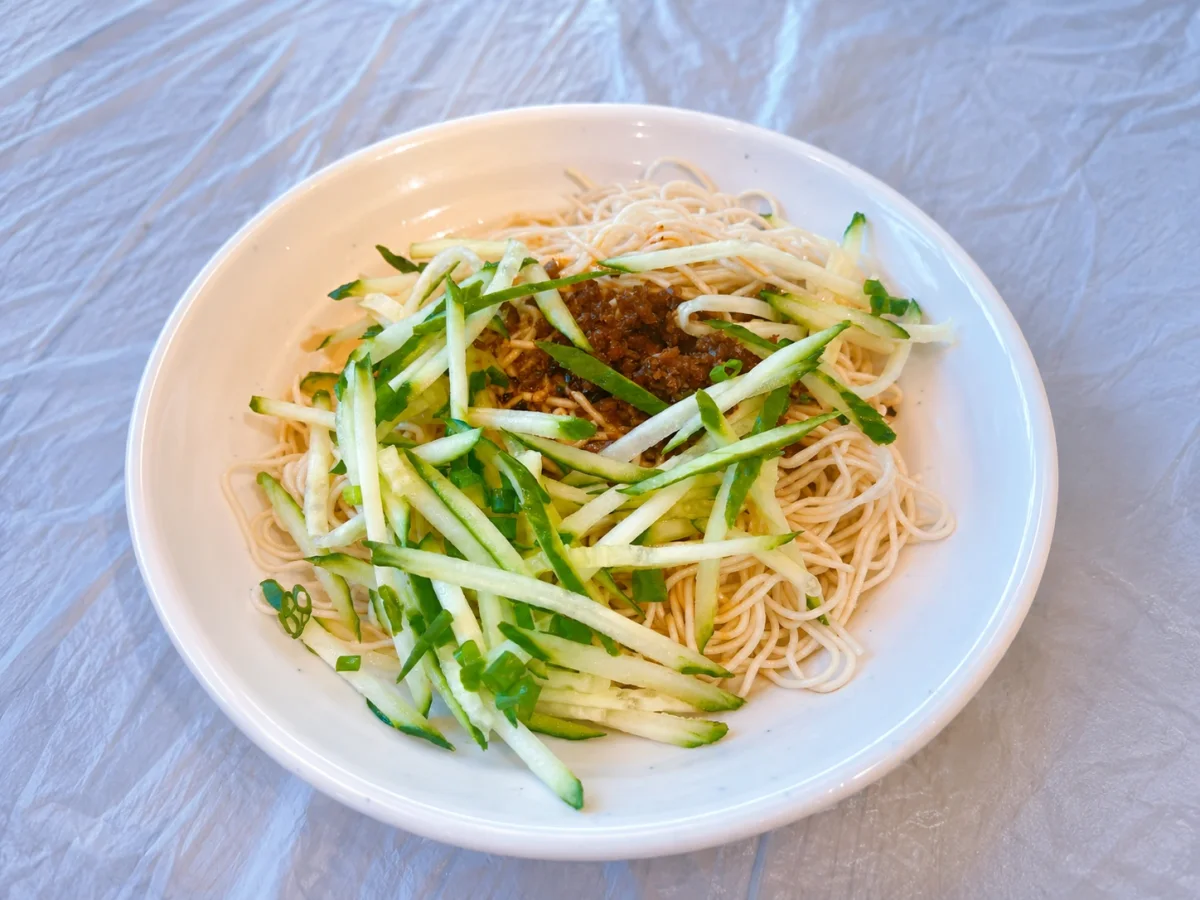
The bowl looks plain: a heap of fine yellow noodles under a dark dressing, scattered with something crisp. It tastes cool and sharp, nutty from sesame, pungent from garlic and ginger, a little sweet and a little hot. It is a blend of north and south: northern sesame paste, the fine alkaline noodles of Sichuan, vinegar and sesame oil, a little sugar, and chilli that is fragrant rather than fiery. Whether it should have sesame paste at all is argued over again every summer.
02
Fanning the noodles
The technique is borrowed from hot dry noodles, with one difference.
Wuhan’s noodle shops have a word for what they do every morning: 掸面, dan mian, roughly “shaking out the noodles.” A 1966 national cookbook recorded how the famous hot dry noodle shop Lao Cai Lin Ji did it: the noodles are boiled for two or three minutes in a big pot of water at a rolling boil, drained onto the board, blown with an electric fan, doused with sesame oil, then lifted high with long bamboo chopsticks and shaken in front of the fan until cool and separate. The oil coats each strand so the noodles do not stick, and the quick cooling keeps them springy.
Cold noodles use the same method with a change in timing. Hot dry noodles are taken out at about seventy percent cooked, because they will be dipped in boiling water again before serving. Cold noodles are eaten as soon as they are fanned, so they are cooked to seventy or eighty percent in a 2021 description, and to about ninety percent, with a hint of white at the core, in a 2024 account. That makes cold noodles harder to fan than hot dry noodles: success or failure is a matter of seconds.
At Cai Lin Ji, cold noodles were a by-product of hot dry noodles, a little fanned alongside the morning’s batch; the old shop left a big batch of noodles lying in a bamboo tray in front of an electric fan. Few shops still fan their own hot dry noodles properly today.
03
Sesame paste and ginger-garlic water
A 1956 handbook lists sesame paste, ginger-garlic water and water-cut noodles as the main ingredients.
Does Wuhan cold noodle have sesame paste? The Wuhan Catering Trade Handbook, compiled by the city’s catering company and published in 1956, lists three main ingredients: sesame paste, ginger-garlic water and water-cut noodles. Ginger and garlic, much cheaper than sesame paste, made up 13.4 percent of the cost of a bowl. The ginger and garlic are minced and steeped in boiling water rather than added raw, which gives a sharp, clean heat and moistens the noodles at the same time. Careful shops use single-clove garlic and small yellow ginger, crushed and boiled, and that water alone can make a bowl taste spicy with no chilli in it.
The sesame paste is thinned with sesame oil, never water, until it falls from a spoon in a thin thread, which cooks call “hanging a line”; then it coats the noodles without making them clump, and leaves only a thin film in the bowl. The soy sauce is a seasoned one, boiled with spices; the vinegar is usually a blend of dark aged vinegar and fragrant vinegar, softened with sugar and warm water. Chilli oil goes on last.
Bowls without sesame paste exist too. That version descends from Sichuan’s mouthwatering cold noodles, 口水凉面.
04
From a bird’s nest of sausage to the “all-in” bowl
What goes on top has changed with every generation.
The toppings have their partisans too: kelp, cucumber, bean sprouts, ham sausage and peanuts each have their fans. In the 1940s the Hongpanlou restaurant at Simenkou sold an assorted cold noodle with about ten toppings, dried shrimp, jellyfish skin, mung bean sprouts and mustard seed among them, and char siu or eel for the grander version. The old Huibinlou restaurant arranged sausage and cucumber shreds on top like a small bird’s nest with jellyfish and bean sprouts in the middle. Neighbourhood stalls kept it simpler: diced radish on the Jiang’an side of the river, preserved mustard tuber in Qiaokou.
People who grew up in the 1980s and 1990s remember the “all-in” bowl, 全料凉面, which children carried home from the stall in a pot from the kitchen: cucumber, kelp, liangfen jelly, jellyfish, peanuts, and extra ham sausage if they could talk the seller into it. Some sellers added pickled chillies, sour radish, dried shrimp or a century egg.
Since the 1990s private stalls have added century egg, jellyfish, beef or shrimp. Newer shops pile on twenty or more toppings and charge 15 to 30 yuan, sometimes over 100, and the noodles disappear under them. The crayfish restaurants go the other way: just preserved mustard and cucumber.
05
Hot dry noodles and Shashi eel noodles
Cold noodles are not simply hot dry noodles served cold.
Elsewhere in Hubei, a 1984 snack book records the summer cold noodle of Shashi, on the Yangtze upstream from Wuhan: alkaline noodles cooled in water and dressed with ginger-garlic water, red vinegar and chilli sauce, topped with pieces of eel fried crisp in sesame oil and a few lengths of celery.
| Dish | Noodles | Dressing and toppings |
|---|---|---|
| Hot dry noodles 热干面 | Fanned at 70% to 80% cooked, reheated in boiling water to serve | Sesame paste, soy, preserved mustard, dried shrimp, scallion; eaten hot |
| Wuhan cold noodles 凉面 | Fanned at 70% to 90% cooked, served cool | Sesame paste, ginger-garlic water, vinegar, chilli oil; crisp vegetables |
| Shashi eel cold noodles 鳝鱼凉面 | Alkaline noodles rinsed in cold water | Ginger-garlic water, red vinegar, chilli sauce, crisp-fried eel, celery |
| Sichuan cold noodles | Fine alkaline noodles | Red chilli oil, often no sesame paste |
06
Wuhan cold noodles at home
An electric fan and a pair of long chopsticks are the only special equipment.
For 2 bowls: 250 g fresh thin alkaline noodles (Hong Kong-style wonton noodles or fresh “yellow noodles”); 2 tablespoons sesame oil for tossing. Dressing: 2 tablespoons Chinese sesame paste loosened with 2 to 3 tablespoons sesame oil; 3 cloves garlic and a thumb of ginger, minced and steeped in 4 tablespoons boiling water; 1 tablespoon light soy sauce; 1 tablespoon Zhenjiang or aged vinegar mixed with 1 teaspoon sugar and 1 tablespoon warm water; chilli oil to taste. Toppings: cucumber shreds, a little diced preserved mustard tuber (zhacai) or pickled radish, bean sprouts, chopped scallion; optional century egg.
- 1. Cook almost through
Boil the noodles in plenty of water until just tender with a thread of white in the centre, usually 1 to 2 minutes for fresh noodles. Drain well; do not rinse.
- 2. Oil and fan
Spread the noodles on a tray, pour over the sesame oil and toss. Set an electric fan blowing on them and lift and shake them with long chopsticks for several minutes until cool and separate.
- 3. Make the dressing
Stir the sesame paste and oil until it falls from the spoon in a thin thread. Strain or keep the ginger-garlic water as it is; mix the vinegar with sugar and warm water.
- 4. Dress and top
Put the noodles in bowls. Add soy, ginger-garlic water, vinegar and sesame paste, then chilli oil, then the toppings. Mix thoroughly before eating.
The noodles can be fanned an hour ahead and kept covered at room temperature; dress them just before serving.
07
How to order it
In Wuhan, summer is cold noodle season from breakfast to late night.
When
Through the summer, at breakfast and late at night. In 2025 one old shop served them from 4 p.m. to 2 a.m., another from 5:30 to 10 a.m. with a daily limit.
Plain or loaded
A plain bowl cost 7 or 8 yuan in 2021; a deluxe bowl with century egg, beef and sausage 22 yuan. Crayfish restaurants varied: 8 yuan for a small portion at one, 20 to 25 yuan a bowl at another.
Say what you want
Ask for more or less garlic water (蒜水), and more or less chilli.
Pair it
For breakfast with iced sweet rice wine; at night with crayfish, edamame or braised meats and a beer.
Mix it well
Stir everything up from the bottom before eating; the paste and dressings sit under the noodles.
08
More from Wuhan
Other pages on the atlas.
Hot dry noodles
Wuhan’s year-round breakfast, from the same fanned noodles.
Read about hot dry noodles →Crayfish
Wuhan’s summer feast, served with cold noodles.
Read about crayfish →Three-delicacy doupi
Another Wuhan breakfast classic.
Read about doupi →Hubei food
Wuhan, Jingzhou, Xiangyang and more.
Explore Hubei →Hubei classics
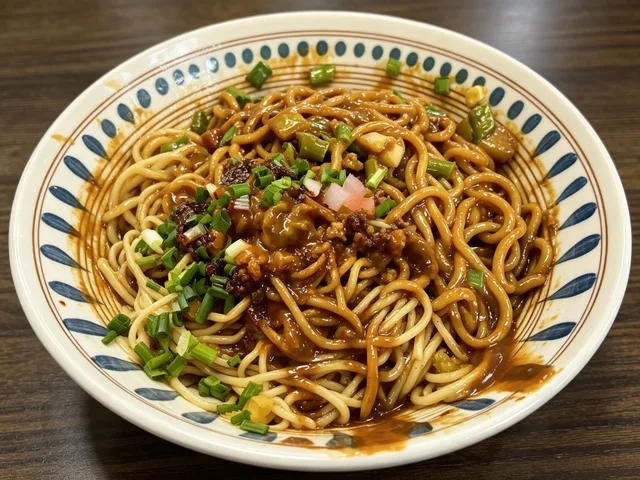
- Hot Dry Noodles
Breakfast noodles · Breakfast
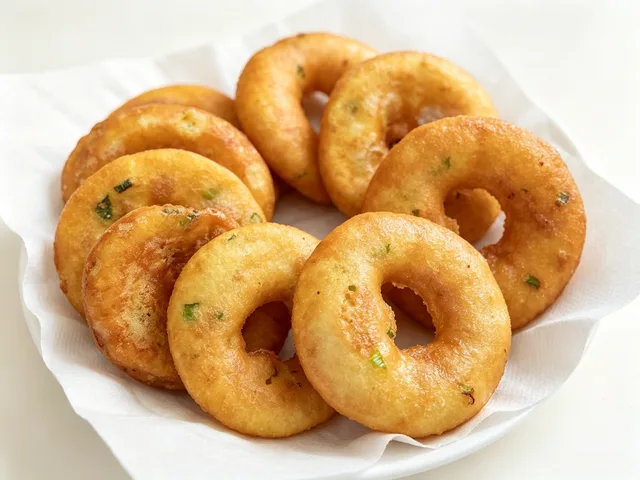
- Mianwo
Breakfast fritter · Breakfast
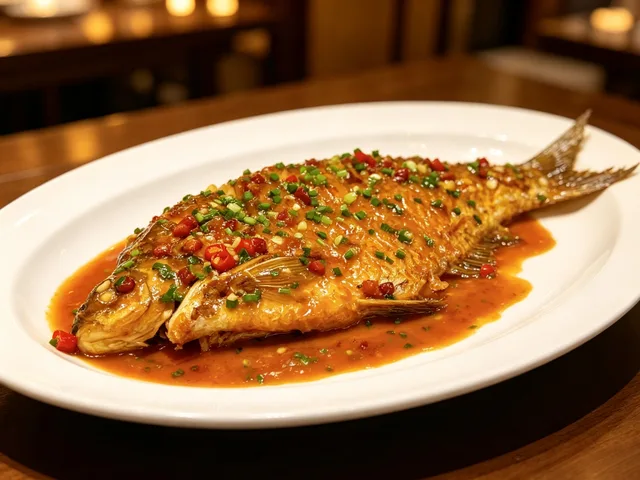
- Wuchang Fish
Steamed whole fish · Lunch, dinner or banquet
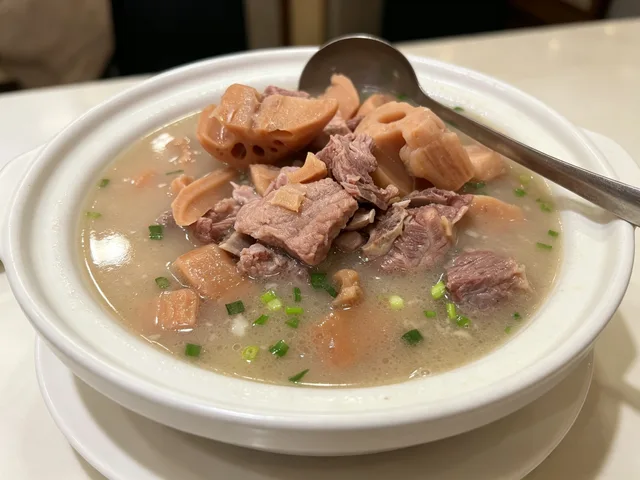
- Pork Rib and Lotus Root Soup
Soup · Cold days, winter solstice and New Year’s Eve
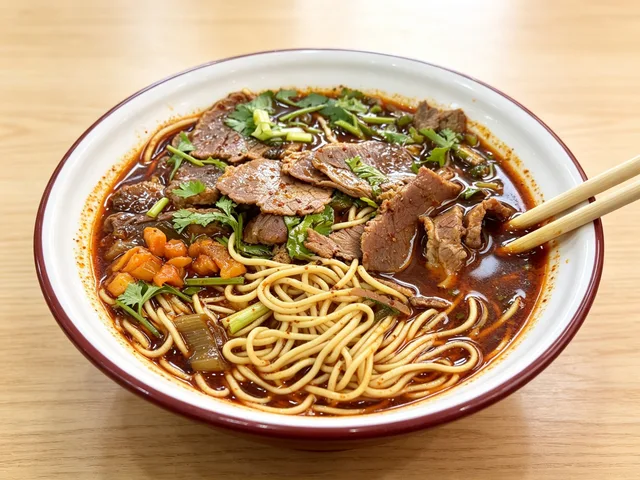
- Xiangyang Beef Noodles
Beef noodle soup · Early breakfast
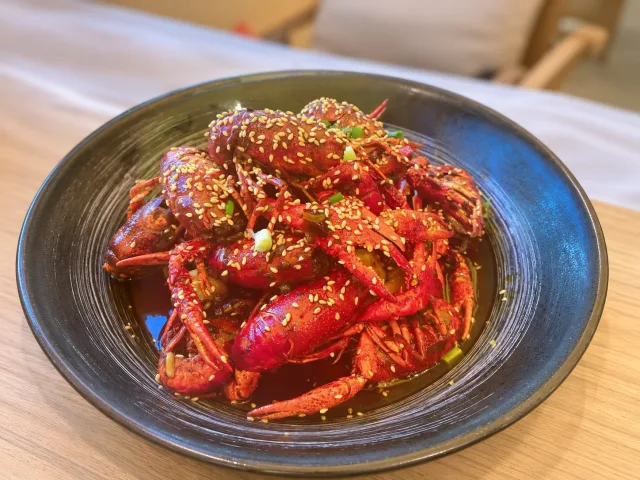
- Crayfish
Spiced crayfish by the basin · Summer nights, with beer
FAQ
Questions about Wuhan Cold Noodles
What are Wuhan cold noodles?
Thin alkaline noodles cooked almost through, tossed with sesame oil and fanned cool, then dressed with sesame paste, ginger-garlic water, vinegar, soy and chilli oil and topped with crisp vegetables.
How are they different from hot dry noodles?
Hot dry noodles are fanned at seventy to eighty percent cooked and reheated to serve; cold noodles are eaten cool as soon as they are fanned, with ginger-garlic water and vinegar.
Do Wuhan cold noodles have sesame paste?
Traditionally yes: a 1956 Wuhan catering handbook lists sesame paste, ginger-garlic water and noodles as the main ingredients. Some newer shops leave it out.
What is ginger-garlic water?
Minced ginger and garlic steeped in boiling water; it gives a sharp, clean heat and loosens the noodles.
When can I eat them?
Mostly in summer, while the heat lasts, at breakfast stalls, crayfish restaurants and night markets.
How much do they cost?
About 7 to 8 yuan for a plain bowl in 2021 and around 20 yuan for a deluxe one.
Are they spicy?
Mildly; the chilli oil is fragrant, and much of the heat comes from garlic and ginger.
Sources
Sources and further reading
- 1 The soul of cold noodles is sesame paste: Wuhan’s summer noodle and where to eat it (2021) (in Chinese)Wuhan Municipal Culture and Tourism Bureau, via The Paper (in Chinese) ↗
- 2 Wuhan cold noodles: is it all right to leave out the sesame paste? (2025) (in Chinese)Wuhan Municipal Culture and Tourism Bureau, via Changjiang Daily’s cjn.cn (in Chinese) ↗
- 3 “Give me back my Wuhan cold noodles”: retired masters of Cai Lin Ji and Huibinlou on the old way (2024) (in Chinese)HANS Hansheng (汉声), via NetEase (in Chinese) ↗
- 4 Famous Chinese Dishes, vol. 12: Hunan and Hubei (中国名菜谱·第十二辑), p. 147: hot dry noodles from Lao Cai Lin Ji, with the fanning method (in Chinese)Light Industry Press (1966), indexed by laocp.tech ↗
- 5 Chinese Snacks: Hubei (中国小吃·湖北风味), p. 121: hot dry noodles (in Chinese)China Financial and Economic Publishing House (1984), indexed by laocp.tech ↗
- 6 Chinese Snacks: Hubei, p. 112: Shashi cold noodles with crisp eel (in Chinese)China Financial and Economic Publishing House (1984), indexed by laocp.tech ↗
- 7 A bowl of cold noodles completes a Wuhan summer (video, in Chinese)Wuhan Municipal Culture and Tourism Bureau, Bilibili (June 2022) ↗
- 8 Wuhan crayfish and cold noodles: a 25-yuan bowl with sesame paste (video, in Chinese)Rourou Da Sousuo (肉肉大搜索), Bilibili (May 2021) ↗
Last updated November 2026