
Define the boundary
Start with stock, fat, sauce and cross-contact—not visible vegetables
The linked dishes are test cases for asking precise questions. Suitability depends on the complete preparation and the diner’s actual vegetarian, vegan or allergy boundary.
01
First, translate “vegetarian” into a kitchen-ready boundary
A general preference, lacto-ovo vegetarian diet, vegan diet, Buddhist vegetarian practice and medical allergy are not interchangeable.
我吃素, wǒ chī sù—“I eat vegetarian food”—can open the conversation, but it does not complete it. A lacto-ovo vegetarian should say that egg and dairy are acceptable. A vegan diner normally needs to exclude meat, poultry, seafood, egg, dairy, animal stock and animal fat. Some Buddhist vegetarian diners also avoid the five pungent plants, including garlic, scallion, chives and related alliums. State only the rules that actually apply to you.
Handle allergies as a separate medical conversation. Use 我对花生过敏, wǒ duì huāshēng guòmǐn—“I am allergic to peanuts”—or substitute the exact written allergen. Ask about sauce, garnish, shared frying oil, woks, knives and other cross-contact. A vegetarian restaurant may still use soy, wheat, sesame, peanuts and tree nuts extensively.
02
Choose a compatible restaurant before modifying dishes
The kitchen’s stocks, sauces and standard workflow often matter more than how many vegetables appear on the menu.
A dedicated vegetarian restaurant, Buddhist vegetarian venue or restaurant with a separate vegetarian menu will usually make verification easier. Look for 素食, vegetarian food; 素菜, vegetarian dishes; 斋菜, Buddhist vegetarian food; or 净素, strictly vegetarian or vegan in some contexts. These labels are useful clues, but policies on egg, dairy, honey, processed ingredients and pungent alliums still vary.
A meat-stock noodle specialist, barbecue shop or seafood restaurant may have very few compatible dishes. That does not make the staff unhelpful; the kitchen may have prepared its broth and sauces before service. Ask “Which dishes do you normally make vegan?” rather than ordering a complex signature and trying to remove every structural ingredient afterward.
04
Treat plant-led dishes as candidates, not guarantees
Simple dishes with visible ingredients are usually easier to verify, but the restaurant’s answer still determines suitability.
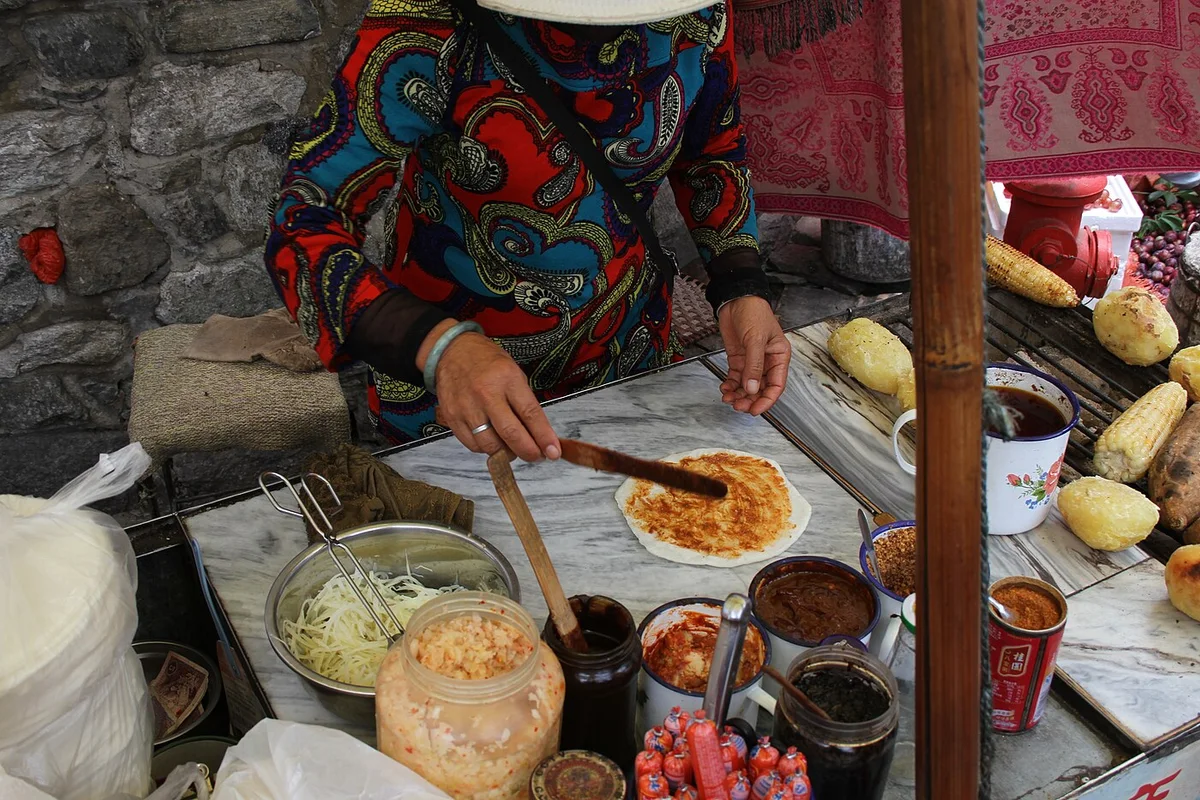
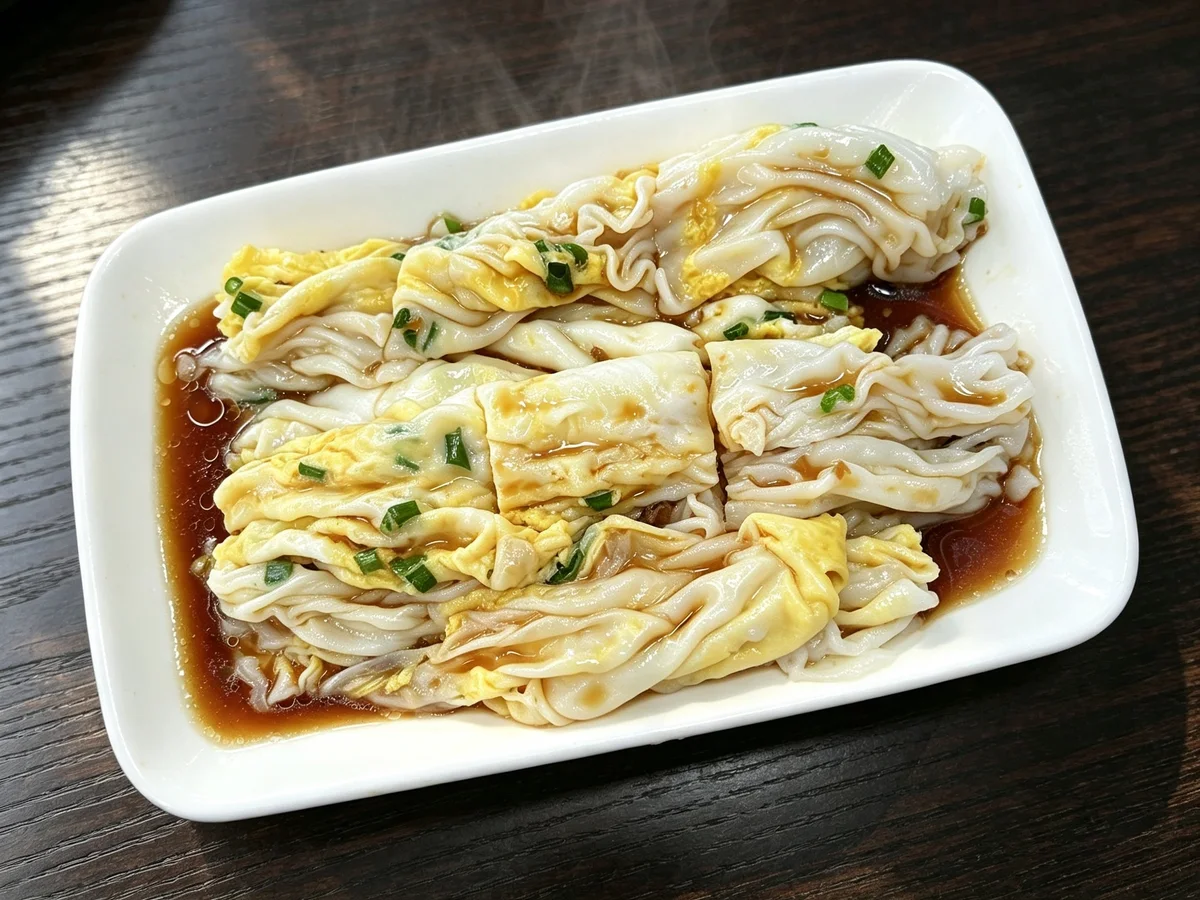
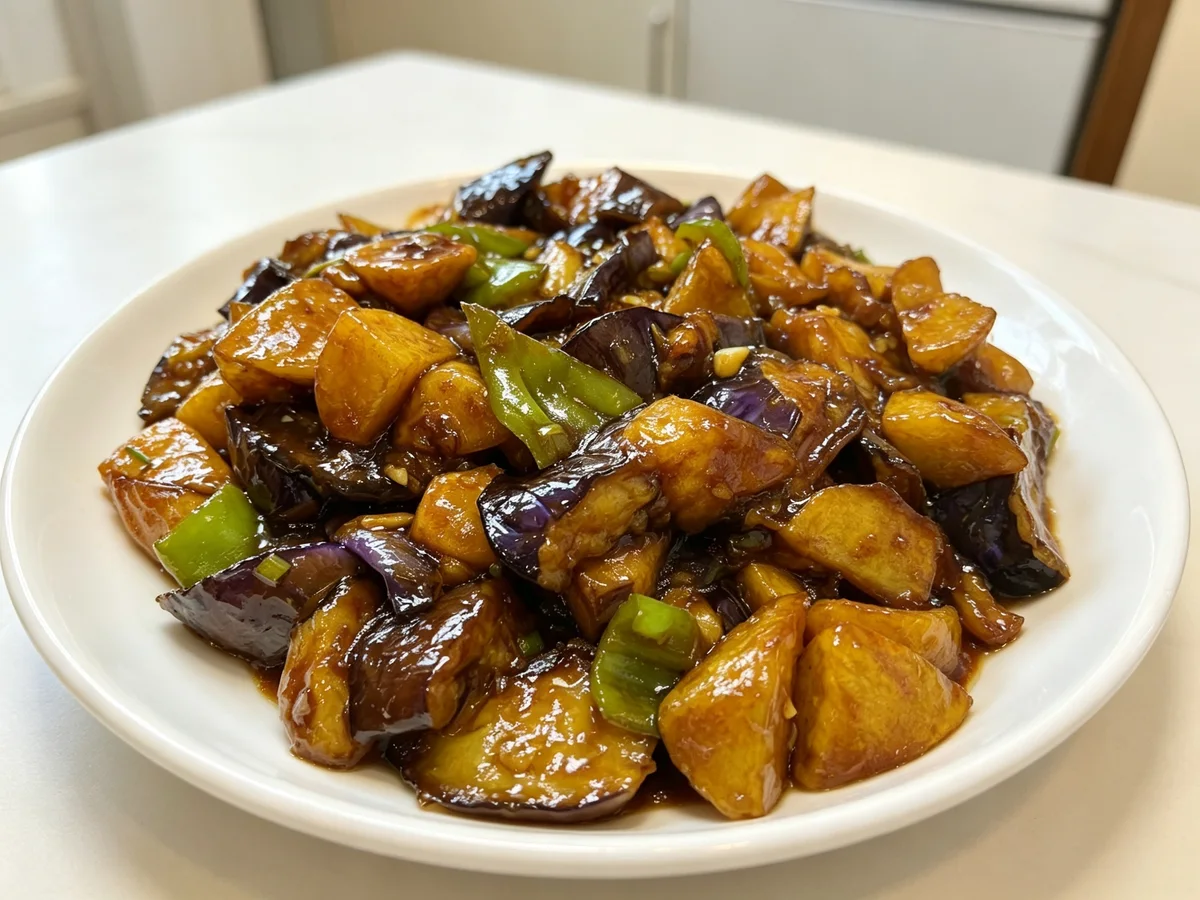
Smashed cucumber, blanched or stir-fried seasonal greens, simply prepared tofu and plain rice are often easier to check than dishes built on a compound sauce. Di san xian centers on potato, eggplant and pepper, yet its sauce and shared frying oil still matter. Erkuai or rice noodles require questions about stock, minced topping and egg; a vegetable rice-noodle roll may still involve sauce, egg or dried shrimp.
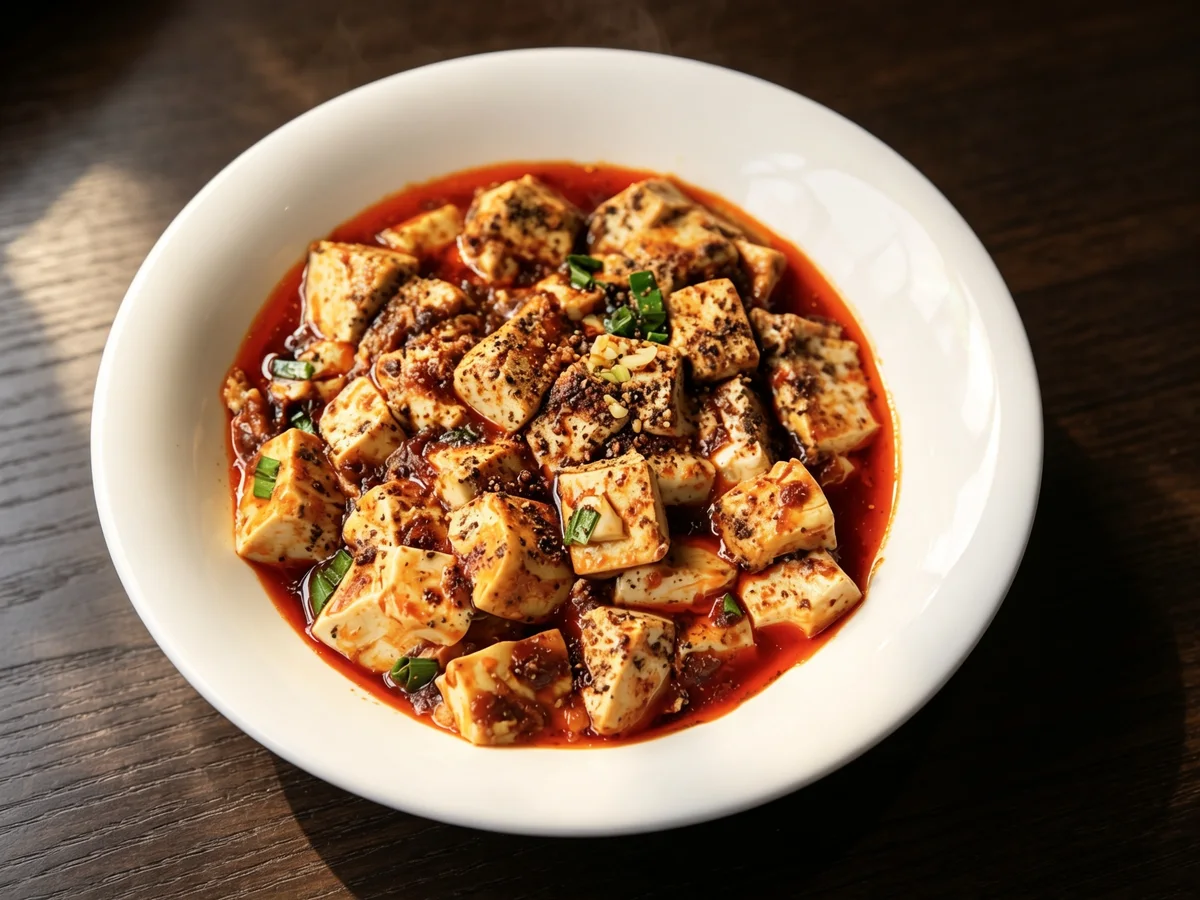
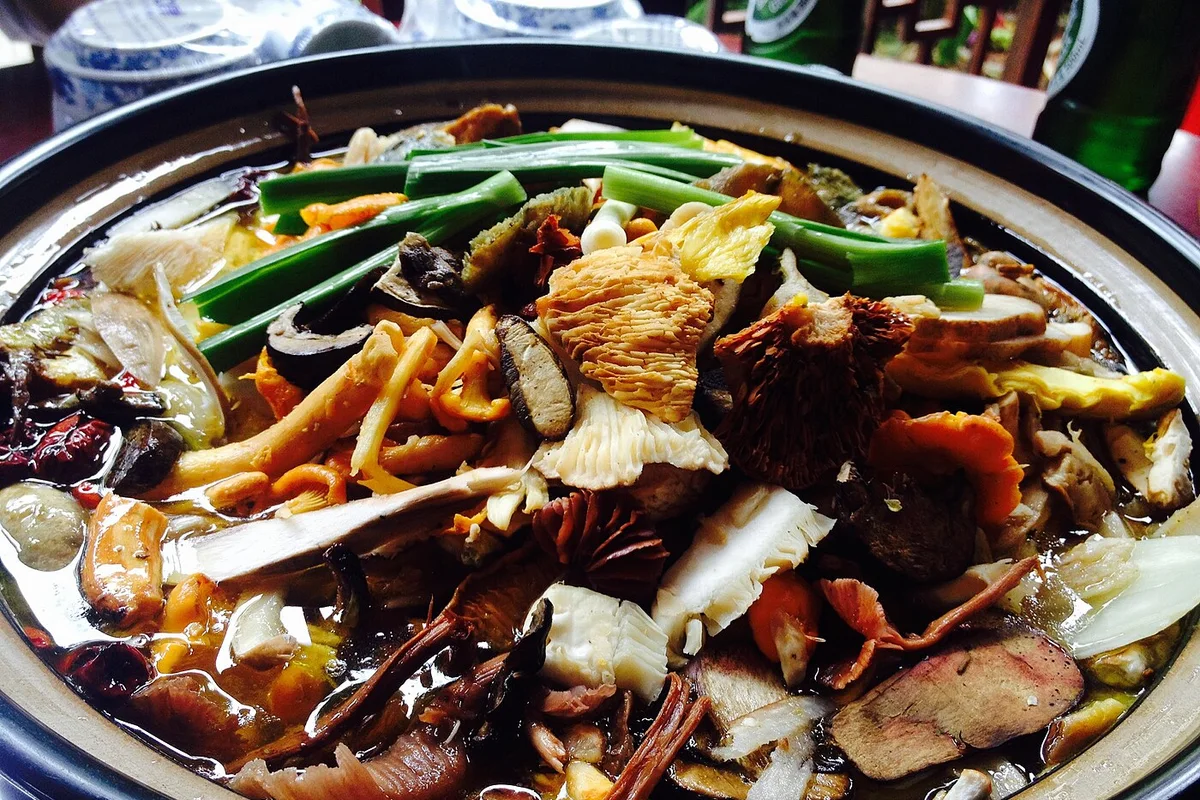
Mapo tofu often contains minced beef or pork. Mushroom hot pot may use animal stock, and vegetable dumplings may contain egg, dried seafood or animal fat. Coconut desserts such as qingbuliang can include condensed milk, cream or ice cream. Photographs reveal shape and main ingredients—not the base broth, seasoning system or cooking equipment.
06
Use short, specific questions—and accept an honest “not sure”
A few questions tied to the actual order are easier to answer than an exhaustive translated card.
Begin with 我吃素, then add the relevant sentence: “I do not eat meat, seafood, egg, dairy, animal stock or lard.” Ask whether the chosen dish contains 肉汤 meat stock, 蚝油 oyster sauce, 鱼露 fish sauce, 虾皮 dried shrimp or 鸡精 chicken seasoning. “哪些菜本来就可以做纯素?” asks which dishes the kitchen already makes vegan. Repeat the two or three critical exclusions when confirming the order.
Uncertainty about a premade sauce or stock is useful honesty. A diner with a preference can move to a simpler dish; a strict vegan may choose a clearly labeled product or specialist restaurant; someone managing a severe allergy should leave when safe preparation cannot be verified. Courtesy cannot replace reliable ingredient information.
Quick-reference tool
Hidden ingredients by restaurant format
A vegetable name describes the visible center, not the complete preparation.
| Format | Common hidden issue | Best question |
|---|---|---|
| Vegetarian / Buddhist restaurant | Different policies on egg, dairy, honey, five pungent plants or processed ingredients | Does this dish meet every exclusion I have listed? |
| Noodle or congee shop | Meat stock beneath vegetable toppings, plus minced meat or egg | What is in the broth and what is in the topping? |
| Stir-fry restaurant | Lard, oyster sauce, chicken seasoning, dried shrimp or a shared wok | Which dishes are routinely vegan? Does the oil or sauce contain animal ingredients? |
| Hot pot | Meat-based tomato or mushroom broth and shared strainers or tongs | Is the base broth vegan, and can the pot and tools remain separate? |
| Dumpling / dim-sum shop | Egg, dried shrimp or animal fat in “vegetable” filling; shared steamers and dips | What is in the filling, wrapper and dipping sauce? |
| Dessert shop | Condensed milk, cream, ice cream or gelatin in coconut desserts | Does the base or any topping contain dairy or animal-derived gelling agents? |
Explain vegan requirements separately from a medical allergy; the latter also requires a cross-contact and shared-equipment discussion.
Field method
A vegan order in a mixed restaurant
The menu has a vegetable section but no vegan symbol. Four people will share dishes, and one diner avoids every animal-derived ingredient.
Worked example
Worked example: vegan diner at a mixed restaurant
The menu has vegetable pages but no vegan symbol, and the group is ordering family style.
- Step 1 · State the rule early
Explain no meat, seafood, egg, dairy, animal broth or lard before the group selects dishes.
- Step 2 · Ask for existing options
Request two dishes the kitchen already makes within those rules instead of modifying a complex signature.
- Step 3 · Confirm the actual preparation
For the greens, check cooking fat, oyster sauce and chicken seasoning; for tofu, check minced meat and stock. Drop any dish whose base cannot be changed.
- Step 4 · Manage the shared table
Place vegan dishes together, use clean serving utensils and keep meat sauces away. Do not gamble on a seasoning that remains uncertain after service.
The conversation stays focused on existing dishes, oil, sauce, stock and utensils. That is shorter and more reliable than pointing at vegetables or removing visible meat after service.
FAQ
Frequently asked questions
Does 素菜 always mean vegan?
Not necessarily. It signals vegetarian food, but egg, dairy, honey, shared oil or animal-derived seasoning may still need confirmation depending on the restaurant.
Is tofu in China usually vegetarian?
Tofu itself is plant-based, but dishes may include minced meat, meat stock, dried seafood or oyster sauce. Ask about the complete dish.
Can Chinese hot pot be vegetarian?
Yes when the broth and dipping sauce are suitable and cross-contact is acceptable to you. Confirm that “mushroom” or “tomato” broth is not meat-based.
What should someone with a serious allergy do?
State the exact allergy explicitly in Chinese and English, ask about sauces, shared oil and equipment, and leave if the kitchen cannot verify cross-contact. A vegetarian label does not manage medical risk.
Sources
Sources and further reading
These sources support the food names, regional context, techniques and dining practices used in this guide. Individual restaurants, households and cities still vary.