
Three to start with
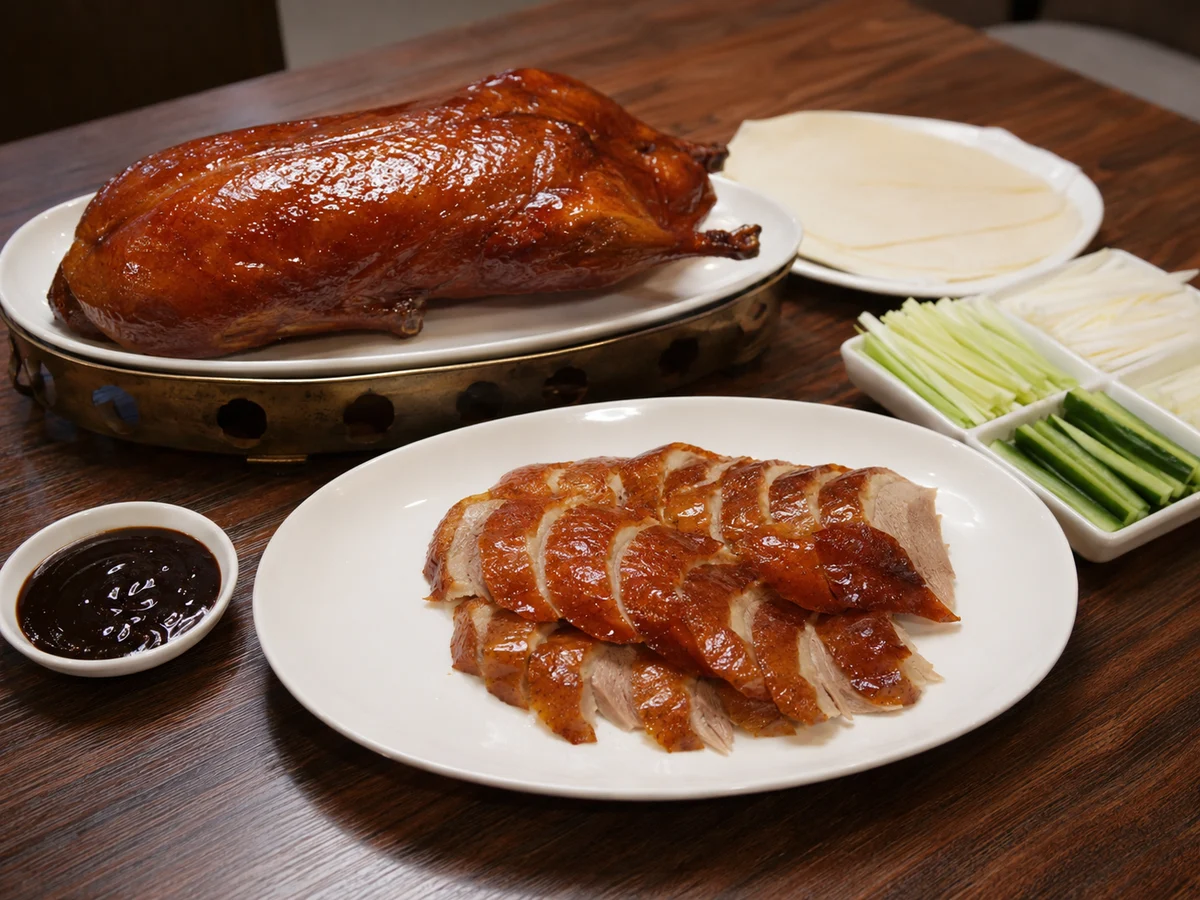
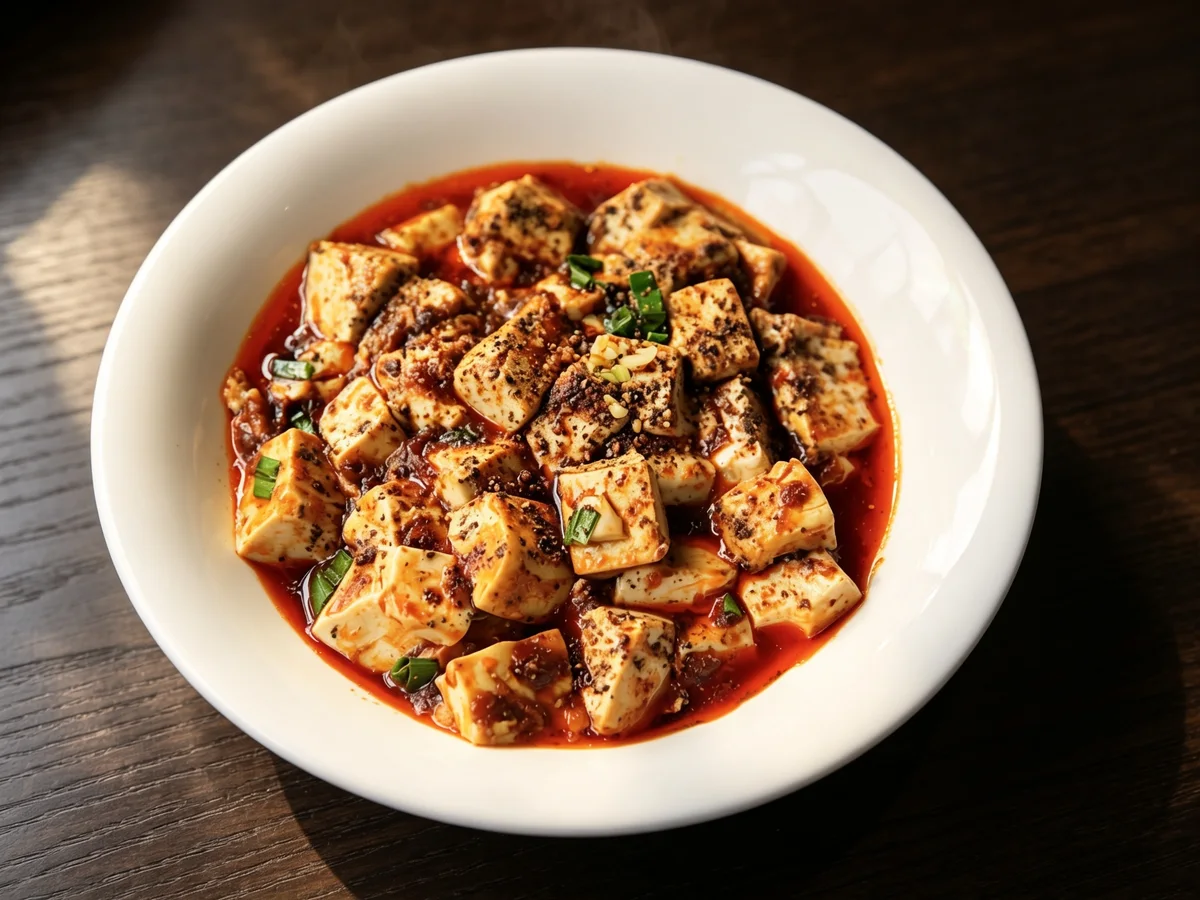
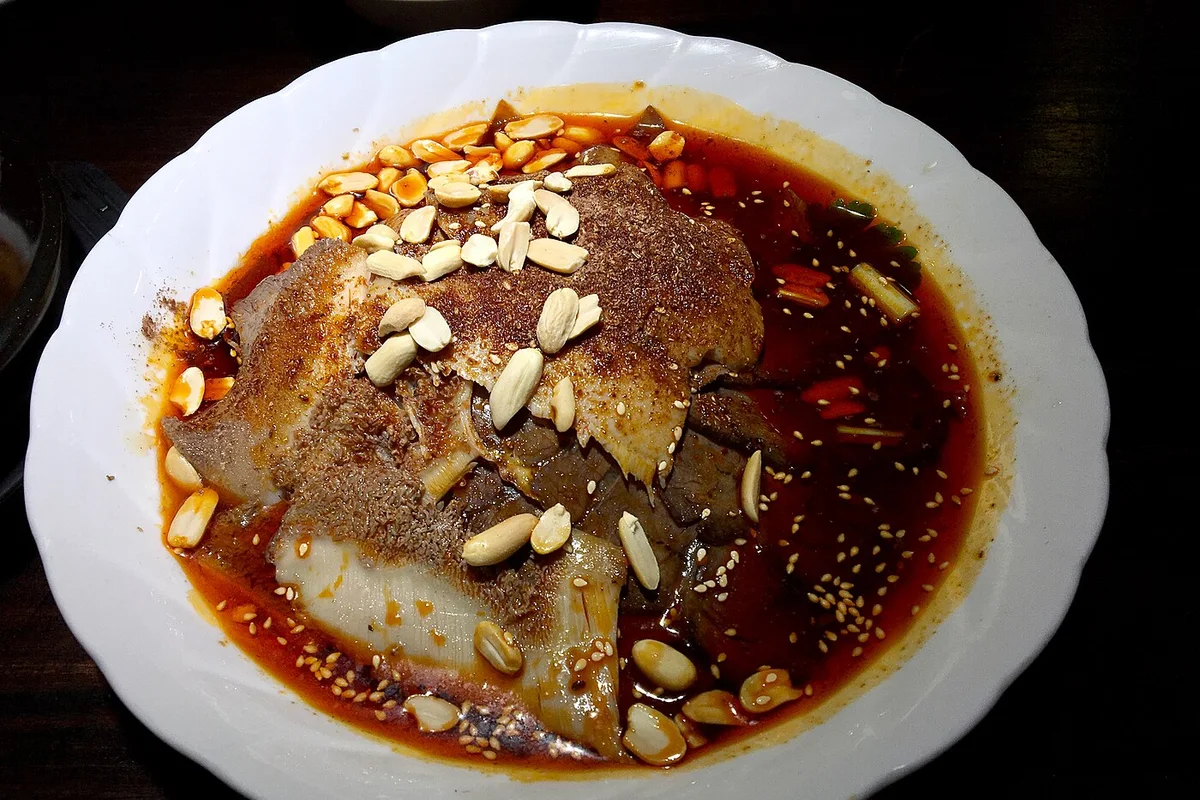
Peking duck, mapo tofu and fuqi feipian
One dish named after a city, one after a person and one whose name hides what is in it: the three kinds of name that make Chinese menus hard to translate.
01
Common Chinese dishes and their English names
The second column is Beijing’s official translation; the third is what English menus, cookbooks and diners usually say.
| Chinese | Pinyin | Official English (Beijing, 2008) | Usual English name |
|---|---|---|---|
| 北京烤鸭 | Běijīng kǎoyā | Beijing Roast Duck | Peking duck |
| 片皮鸭 | piànpí yā | Not listed | Peking duck, on Hong Kong and Guangdong menus |
| 烧鹅 | shāo é | Not listed | Cantonese roast goose (siu ngo) |
| 白切鸡 | báiqiē jī | Sliced Boiled Chicken (Served with Soy Sauce, Ginger Sauce or Ginger and Scallion Sauce) | White-cut chicken |
| 蜜汁叉烧 | mìzhī chāshāo | Honey-Stewed BBQ Pork | Char siu, Cantonese barbecued pork |
| 饺子 / 水饺 | jiǎozi / shuǐjiǎo | Jiaozi | Dumplings |
| 锅贴 | guōtiē | Guotie (Pan-Fried Meat Dumplings) | Potstickers |
| 包子 | bāozi | Baozi | Steamed buns |
| 小笼汤包 | xiǎolóng tāngbāo | Baozi Stuffed with Juicy Pork | Xiaolongbao, soup dumplings |
| 馒头 | mántou | Mantou | Plain steamed buns |
| 馄饨 / 云吞 | húntun / yúntūn | Wonton | Wontons |
| 烧麦 | shāomai | Shaomai (Steamed Pork Dumplings) | Siu mai, shumai |
| 笋尖鲜虾饺 | sǔnjiān xiān xiājiǎo | Steamed Jiaozi with Shrimp and Bamboo Shoots | Har gow, shrimp dumplings |
| 春卷 | chūnjuǎn | Crispy Spring Rolls (脆皮春卷) | Spring rolls |
| 粽子 | zòngzi | Zongzi (Glutinous Rice Wrapped in Bamboo Leaves) | Zongzi, sticky rice dumplings |
| 汤圆 | tāngyuán | Tangyuan (Glutinous Rice Balls) | Tangyuan |
| 油条 | yóutiáo | Youtiao (Deep-Fried Dough Sticks) | Youtiao, Chinese crullers |
| 豆汁儿 | dòuzhīr | Douzhir (Fermented Soybean Milk) | Douzhi |
| 麻婆豆腐 | mápó dòufu | Mapo Tofu (Sautéed Tofu in Hot and Spicy Sauce) | Mapo tofu |
| 宫保鸡丁 | gōngbǎo jīdīng | Kung Pao Chicken | Kung pao chicken |
| 鱼香肉丝 | yúxiāng ròusī | Yu-Shiang Shredded Pork (Sautéed with Spicy Garlic Sauce) | Fish-fragrant pork |
| 回锅肉片 | huíguō ròupiàn | Sautéed Sliced Pork with Pepper and Chili | Twice-cooked pork |
| 夫妻肺片 | fūqī fèipiàn | Couple’s Sliced Beef in Chili Sauce | Fuqi feipian |
| 水煮牛肉 | shuǐzhǔ niúròu | Sliced Beef in Hot Chili Oil | Water-boiled beef |
| 担担面 | dàndàn miàn | Noodles in Chili Sauce, Sichuan Style | Dan dan noodles |
| 北京炸酱面 | Běijīng zhájiàng miàn | Noodles with Soybean Paste, Beijing Style | Zhajiang noodles |
| 京酱肉丝 | jīngjiàng ròusī | Sautéed Shredded Pork in Sweet Bean Sauce | Jingjiang shredded pork |
| 木须肉 | mùxū ròu | Moo Shu Pork (Sautéed Sliced Pork, Eggs and Black Fungus) | Moo shu pork |
| 地三鲜 | dì sān xiān | Sautéed Potato, Green Pepper and Eggplant | Di san xian |
| 咕噜肉 | gūlū ròu | Gulaorou (Sweet and Sour Pork) | Sweet and sour pork |
| 红烧狮子头 | hóngshāo shīzitóu | Stewed Pork Ball in Brown Sauce | Lion’s head meatballs |
| 佛跳墙 | fó tiào qiáng | Fotiaoqiang (Steamed Abalone with Shark’s Fin and Fish Maw in Broth) | Buddha jumps over the wall |
| 羊肉泡馍 | yángròu pàomó | Pita Bread Soaked in Lamb Soup | Yangrou paomo |
| 涮羊肉 | shuàn yángròu | Hot Pot, Mongolian Style | Copper pot mutton, Mongolian hot pot |
| 剁椒鱼头 | duòjiāo yútóu | Steamed Fish Head with Diced Hot Red Peppers | Chopped chili fish head |
| 冰糖葫芦 | bīngtáng húlu | Bingtanghulu (Crispy Sugar-Coated Fruit on a Stick) | Tanghulu |
“Not listed” means the 2008 Beijing list has no entry for that dish name. Several well-known dishes are missing from it, among them 锅包肉, 凉皮, 肉夹馍, 油泼面, 热干面 and 过桥米线; their English menus mostly use pinyin, such as guo bao rou, liangpi, roujiamo and youpo noodles, with a short description.
02
Why Chinese dish names are hard to translate
A Chinese dish name may describe the cooking, honor a person or place, or tell a small joke, and English handles each differently.
The food writer Fuchsia Dunlop, who trained as a cook in Sichuan, wrote about the problem for the Financial Times in August 2008, as Beijing finished its official menu list. The first difficulty is technical vocabulary. In her Sichuan training she learned 56 standard cooking methods. A word like 熘, liū, means cutting an ingredient, cooking it in oil or water and then adding a separately made sauce, and English has no short word for it. Even 炒, stir-frying, divides into ordinary stir-frying, flash-frying over a fierce flame (爆) and dry-frying in an almost dry wok (干煸).
The second is that English food words are too broad. “Dumpling” covers boiled jiaozi, purse-shaped steamed shaomai and pleated steamed baozi, and 粉 can mean wheat flour, rice noodles, glass noodles or starch jelly. Pinyin alone does not fix it: 烤 and another “kao” are both cooking methods in Sichuan, and 咸 (salty) and 鲜 (savory, umami) are both spelled xian. Sichuan alone has more than five thousand named dishes.
The third is tone. 麻婆豆腐 sounds affectionate in Chinese and like an insult translated literally, “pockmarked old woman’s tofu.” 鸡豆花 is chicken breast pounded to a paste and set to look like the cheapest street tofu pudding, a joke that “chicken tofu” loses. 担担面 recalls the shoulder pole a street seller carried; “shoulder-pole noodles” keeps the meaning and loses the sound, and “dan dan noodles” keeps the sound and loses the meaning.
Most Chinese dish names follow one of four patterns. Many state the method, cut and main ingredient, like 京酱肉丝, “Beijing-sauce shredded pork.” Some name a person or place: 麻婆豆腐, 东坡肉, 北京烤鸭. Some name a flavor that is not an ingredient: 鱼香 has no fish and 宫保 is an official’s title. And some are pictures: 蚂蚁上树, “ants climbing a tree,” is glass noodles with minced pork, and 狮子头, “lion’s head,” is a large pork meatball.
Sources [1]
03
The official rules: Beijing’s 2008 menu list and the 2012 book
Before the 2008 Olympics, Beijing wrote rules for translating its menus, and they are still the closest thing China has to a standard.
Chinese menus were known for their mistranslations. 童子鸡, a young chicken, appeared as “chicken without sexual life”; 夫妻肺片 as “husband and wife’s lung slice”; 四喜丸子, four-joy meatballs, as “four glad meat balls”; 木须肉 as “wood mustache meat”; and one restaurant rendered 火爆腰花, flash-fried pig kidney, as “pork flower.” In December 2007 the Beijing Municipal Government’s foreign affairs office and the city’s commerce bureau compiled Chinese Menu in English Version (中文菜单英文译法), with a preface dated February 2008. It was a 170-page book of suggested names for more than two thousand dishes.
In 2012 the foreign affairs office and the city’s office for promoting foreign-language use published an expanded book, Meishi Yiyuan: Chinese Menu in English Version (美食译苑——中文菜单英文译法), giving English names to 2,158 Chinese dishes across the main regional cuisines. Restaurants may follow it, but it is not compulsory. Chen Lin, a professor at Beijing Foreign Studies University, explained why 童子鸡 became Spring Chicken: English describes a young animal’s age by the seasons, and a chicken that has not reached maturity is a spring chicken. Lion’s head could not stay “red burned lion head,” he added, or a foreign guest would complain to an animal protection group. On 20 June 2017 China’s Standardization Administration released a series of national standards for English in public services, GB/T 30240, covering thirteen fields from transport and tourism to catering and accommodation, the last in Part 9, GB/T 30240.9; they took effect on 1 December 2017. Their general rule is not to translate word for word, and the launch used “four glad meat balls” as an example of the Chinglish they were meant to end.
The rules are simple to apply. Start with the main ingredient, then add the others with “with,” or the sauce with “in.” Or start with the cooking method as a past participle, “Sautéed,” “Braised,” “Steamed,” then the ingredient. Use the shape or texture when that is the point, “Crispy Chicken.” Keep a person’s or place’s name when the dish is known by it, “Mapo Tofu,” or add “Beijing Style.” For foods that are distinctively Chinese and already known abroad, use pinyin: Jiaozi, Baozi, Mantou, Huajuan, Shaomai. Keep spellings English already uses, such as Tofu, Kung Pao Chicken, Chop Suey and Wonton. When the Chinese name says nothing about the food, write the pinyin and explain it: Fotiaoqiang, Guotie (Pan-Fried Dumplings), Douzhir (Fermented Soybean Milk).
Two smaller rules show how carefully the list was made. Countable nouns go in the plural unless a dish has only one piece or the pieces are too small to count. And “in” means the main ingredient sits in its sauce, Steamed Beef Ribs in Black Bean Sauce, while “with” means the sauce or dip is separate or poured over afterward. Dunlop praised the translators for keeping useful Chinese words, but noted what any list loses: the poetry of words like 翡翠, “jade,” for green food, and the story of the pockmarked woman behind mapo tofu.
| Rule | Example | Official English |
|---|---|---|
| Main ingredient + with + other ingredients | 白灵菇扣鸭掌 | Mushrooms with Duck Webs |
| Main ingredient + in + sauce | 冰梅凉瓜 | Bitter Melon in Plum Sauce |
| Cooking method + main ingredient | 火爆腰花 | Sautéed Pig Kidney |
| Method + ingredient + sauce | 京酱肉丝 | Sautéed Shredded Pork in Sweet Bean Sauce |
| Texture or shape + ingredient | 脆皮鸡; 玉兔馒头 | Crispy Chicken; Rabbit-Shaped Mantou |
| Person or place + ingredient | 麻婆豆腐; 北京炸酱面 | Mapo Tofu; Noodles with Soybean Paste, Beijing Style |
| Pinyin for distinctively Chinese foods | 饺子; 包子; 馒头; 烧麦 | Jiaozi; Baozi; Mantou; Shaomai |
| Keep spellings English already uses | 豆腐; 宫保鸡丁; 杂碎; 馄饨 | Tofu; Kung Pao Chicken; Chop Suey; Wonton |
| Pinyin plus an explanation | 佛跳墙; 锅贴; 油条 | Fotiaoqiang (…); Guotie (Pan-Fried Dumplings); Youtiao (Deep-Fried Dough Sticks) |
04
Peking duck, Beijing roast duck, sliced-skin duck and roast goose
Most searches for a dish’s English name are about duck, and the answer depends on which duck.
北京烤鸭, Běijīng kǎoyā, is Beijing Roast Duck in the official list, and a restaurant’s own duck becomes, for example, Quanjude Roast Duck. In English the usual name is still Peking duck: Peking is the older spelling of Beijing, and the dish’s English name kept it. In Beijing, 烤鸭 on its own, kǎoyā, “roast duck,” already means this dish. In Hong Kong and Guangdong the same carved duck with pancakes is 片皮鸭, “sliced-skin duck,” and English menus there call it Peking duck. 北京填鸭 is the bird, not the dish: the white duck fattened for the oven, called the Pekin duck as a breed.
Two Cantonese roasts are different dishes. 烧鸭, siu aap, is Cantonese roast duck, seasoned inside, roasted whole and chopped on the bone. 烧鹅, siu ngo, is Cantonese roast goose, usually written simply roast goose in English; Guangzhou diners also order the upper or lower half, 上庄 or 下庄, which have no English names at all.
Peking duck
How the duck is roasted, carved and rolled, and all its names.
Read the Peking duck guide →Roast goose
Cantonese roast goose, the upper and lower halves, and roast duck.
Read the roast goose guide →05
There is no single Chinese word for dumpling
“Dumpling” is an English word for several Chinese foods, and each has its own Chinese name.
If you want the Chinese for the boiled, crescent-shaped dumplings of northern China, it is 饺子, jiǎozi, or 水饺 when boiled. Beijing’s official lists drop “dumpling” and write Jiaozi, with the filling added after it: Jiaozi Stuffed with Pork and Chinese Cabbage. Pan-fried ones are 锅贴, Guotie (Pan-Fried Meat Dumplings), called potstickers in American English. 馄饨, húntun, called 云吞 in Cantonese, are thin-skinned wontons, usually in soup. 烧麦 or 烧卖 are open-topped Shaomai.
Buns are a separate family. 包子, Baozi, are leavened and pleated on top; 馒头, Mantou, are plain steamed buns. The official list files 小笼汤包, the Shanghai-style soup dumpling, under baozi, as Baozi Stuffed with Juicy Pork, which matches the Jiangnan habit of calling them buns, though English speakers know them as xiaolongbao or soup dumplings. The Cantonese shrimp dumpling 虾饺, har gow in Cantonese, is listed as a kind of jiaozi: Steamed Jiaozi with Shrimp and Bamboo Shoots.
Types of Chinese dumplings
Jiaozi, wontons, xiaolongbao, baozi and shaomai, told apart by wrapper and cooking.
Read the dumpling guide →06
Kung Pao, tofu, wonton and chop suey: spellings older than pinyin
Some English dish names were fixed before pinyin existed, and the official list keeps them.
宫保鸡丁 would be gōngbǎo jīdīng in pinyin, but English learned it as Kung Pao chicken, an older romanization, and the Beijing list keeps Kung Pao Chicken. 木须肉 stays Moo Shu Pork, explained as sliced pork with eggs and black fungus, and 鱼香 stays Yu-Shiang, explained as a spicy garlic sauce. Tofu, Wonton and Chop Suey (杂碎) are kept because English already uses them. Peking for Beijing belongs to the same layer of older spellings.
Some Chinese food words came into English through Cantonese and the southern dialects spoken by early emigrants, and English already borrows them the way it borrows French kitchen words like sauté: wok, wonton, dim sum, and tea itself, which came from a Fujian dialect. That is why a menu may say wonton and dim sum in Cantonese sound, but jiaozi and baozi in Mandarin pinyin.
07
Names that do not say what is in the dish
These are the names most likely to confuse a diner, with what the official English says.
鱼香 yúxiāng, “fish-fragrant”
No fish: the name comes from the sweet, sour, garlicky chili seasoning associated with cooking fish in Sichuan. Official English: Yu-Shiang Shredded Pork (Sautéed with Spicy Garlic Sauce).
夫妻肺片 fūqī fèipiàn, “husband and wife lung slices”
Almost never contains lung; it is braised beef and offal in chili oil, named after a Chengdu couple. Official English: Couple’s Sliced Beef in Chili Sauce.
Read about fuqi feipian →蚂蚁上树 mǎyǐ shàng shù, “ants climbing a tree”
Glass noodles with specks of minced pork. Official English: Sautéed Vermicelli with Spicy Minced Pork.
狮子头 shīzitóu, “lion’s head”
A large, soft pork meatball. Official English: Stewed Pork Ball in Brown Sauce.
开水白菜 kāishuǐ báicài, “cabbage in boiling water”
Cabbage hearts in an elaborate clear stock made with meat; the plain name hides the stock. Official English: Chinese Cabbage in Soup.
童子鸡, 叫化鸡, 口水鸡
Young chicken, “beggar’s chicken” and “mouth-watering chicken”: Steamed Spring Chicken, Beggar’s Chicken (Baked Chicken) and Steamed Chicken with Chili Sauce.
干煸四季豆 gānbiān sìjìdòu
Dry-fried green beans sound vegetarian, but the official name gives it away: Dry-Fried Green Beans with Minced Pork and Preserved Vegetables.
锅包肉 guōbāoròu
Not in the Beijing list. It is Harbin’s crisp sweet-and-sour pork slices, written guo bao rou on English menus.
Compare guo bao rou and sweet and sour pork →09
Reading a Chinese dish name, one character at a time
Take 京酱肉丝 and 干煸四季豆, two dishes found on many menus, and read them from the characters.
- 1. Find the main ingredient
Look for 鸡 chicken, 鸭 duck, 鱼 fish, 虾 shrimp, 牛 beef, 羊 lamb or mutton, 豆腐 tofu. 肉 on its own almost always means pork. In 京酱肉丝 it is 肉, pork; in 干煸四季豆 it is 四季豆, green beans.
- 2. Find the cut
丁 diced, 丝 shredded, 片 sliced, 块 chunks, 末 minced. 肉丝 is shredded pork.
- 3. Find the method
炒 and 爆 are stir-fried, 红烧 braised brown, 蒸 steamed, 炸 deep-fried, 拌 dressed cold, 干煸 dry-fried. 干煸四季豆 are beans dry-fried in the wok until wrinkled.
- 4. Find the flavor or the story
京酱 is Beijing’s sweet bean sauce; 鱼香, 宫保, 麻辣 and 糖醋 are flavors; a person or place, 麻婆 or 北京, tells you where the dish comes from. Put it together and 京酱肉丝 is Sautéed Shredded Pork in Sweet Bean Sauce.
If the English on a menu does not match what the characters say, trust the characters, and ask about anything the name leaves out: the official name of the green beans shows minced pork that the Chinese does not mention.
Sources [2]
FAQ
Frequently asked questions
What is Peking duck called in Chinese?
北京烤鸭 (Běijīng kǎoyā), literally “Beijing roast duck.” Beijing’s official English is Beijing Roast Duck; in Hong Kong it is also 片皮鸭.
What is the Chinese word for dumpling?
There is no single word. Boiled northern dumplings are 饺子 (jiǎozi), wontons are 馄饨 or 云吞, pan-fried ones are 锅贴, and steamed buns are 包子 (bāozi).
Is there an official English translation for Chinese dishes?
Beijing published official lists in 2008 and 2012, the second covering 2,158 dishes, and a national standard for catering English followed in 2017. Restaurants are encouraged, not required, to use them.
Why is it Kung Pao chicken and not gongbao chicken?
Kung Pao is an older romanization of 宫保 that English adopted before pinyin. Beijing’s official list keeps Kung Pao Chicken because English speakers already know it.
What is guo bao rou in English?
锅包肉 is not in Beijing’s list. It is Harbin’s crisp sweet-and-sour pork slices; English menus usually write guo bao rou.
What is 烧鹅 in English?
Roast goose, or Cantonese roast goose; in Cantonese it is siu ngo. 烧鸭 is Cantonese roast duck, a different dish from Peking duck.
Why do some Chinese menus say “husband and wife lung slices”?
It is a word-for-word translation of 夫妻肺片. The dish is braised beef and offal in chili oil, and Beijing’s official name is Couple’s Sliced Beef in Chili Sauce.
Sources
Sources and further reading
- 1 Fuchsia Dunlop, “Lost in translation” (译得真“菜”), first published in the Financial Times Weekend, August 2008, in Xunwei Dongxi (寻味东西), Chinese edition (in Chinese)Shanghai Translation Publishing House (2022), WeChat Read
- 2 Chinese Menu in English Version (中文菜单英文译法): principles of translation and the Chinese dish listForeign Affairs Office of the Beijing Municipal Government and Beijing Municipal Commerce Bureau (December 2007; preface February 2008) ↗
- 3 Progress in the war on Chinglish: the 2017 national standards for English in public services, including Part 9, accommodation and cateringVictor Mair, Language Log (2017) ↗
- 4 Beijing publishes English names for 2,158 Chinese dishes (in Chinese)Wang Dongliang, Beijing Daily, via Sina News (13 March 2012) ↗
- 5 Four glad meat balls? National standards to rein in Chinglish (in Chinese)Dai Rui, Cover News, reprinted by Jiemian (20 June 2017) ↗
- 6 The best Peking duck in Hong Kong: 片皮鴨 on Hong Kong menus (in Chinese)Tatler Asia ↗
Last updated November 2026